


California’s new balanced budget offers Sacramento a measure of relief and reason for cautious optimism. The bigger question for the region is how durable that stability will be, particularly when the economic cycle turns.
More than any other California city, Sacramento’s economy is tied to decisions made at the state Capitol. Roughly one in five Sacramentans are state workers, and many local businesses, especially downtown, exist largely to serve them. Beyond that, state spending supports healthcare and education — two of the biggest employer sectors in Sacramento — while state contracts sustain businesses throughout the region.
California’s $351.7 billion budget balances for 2026–27 and sets aside $35.2 billion in reserves and other funds. It also provides ongoing support for public universities and community colleges. Yet the state still projects an $8.3 billion structural deficit by 2029–30.
There are signs Sacramento is broadening its economic base: The metro area added nearly 10,000 private-sector jobs in the year ending in June, even as government employment declined. Healthcare, advanced manufacturing and technology are among the growing sectors. It’s reason for optimism, but is it enough make the region resilient when state revenues weaken and spending tightens?
Our latest feature explores what the balanced budget means for the Capital Region and how durable that stability may be.
– Dakota Morlan, managing editor
Other stories you may have missed: Maples, Dogwoods and Quaking Aspens: Where to See Native Fall Colors Near Sacramento

One of the great pleasures of living in Northern California is watching seasons change multiple times as they move between the higher and lower elevations.
Device Brewing’s Closure Gave These Sacramento Brewers a New Start

Balance Beerworks opened this June at the location of a former well-known Sacramento craft brewer, Device Brewing.
Seeds, Cake Pans and an Xbox — Are You Making the Most of Your Sacramento Library Card?

If you have a library card, you’re almost certainly underutilizing that small, rectangular passport to America’s greatest success in sharing.
What the Life and Death of a Great Tree Teaches Us About Forest Management | Opinion

Here in Sacramento, we celebrate “Farm to Fork,” a connection to the land that touches our bellies. But when it comes to forestry, the enthusiasm fizzles.
Some recommendations from our editors
Jennifer: I recently discovered that the Center for Musical Arts, a music school in my neighborhood, hosts near-weekly jazz concerts in its cozy listening space. On Friday, I attended a show fronted by vocalist Aiko Shimada, who blends Japanese and Latin influences into her compositions. It was a great show with a talented band — so it was a surprise that I was the only person in the audience! By the second half, I was on a first-name basis with everyone in the group, and afterwards Ms. Shimada gave me three of her CDs as, she said, a token of appreciation for “sticking it out.” As much as I like keeping my local favorites under the radar, this place is a little too underrated, so I encourage anyone with an interest in jazz to check out their upcoming shows.
Dakota: Since I tend to read the horror genre year-round, I’ll share two of this year’s favorites for your spooky season reading enjoyment. Both books happen to be literary folk horror with gothic elements: “The Loney” by Andrew Michael Hurley is an atmospheric gem that transports you to the unforgiving landscape of an isolated English coastline with dark secrets, and “Harvest Home” by Thomas Tryon follows a family that moves to an idyllic New England farming community only to discover — you guessed it — more dark secrets.
Odds and ends
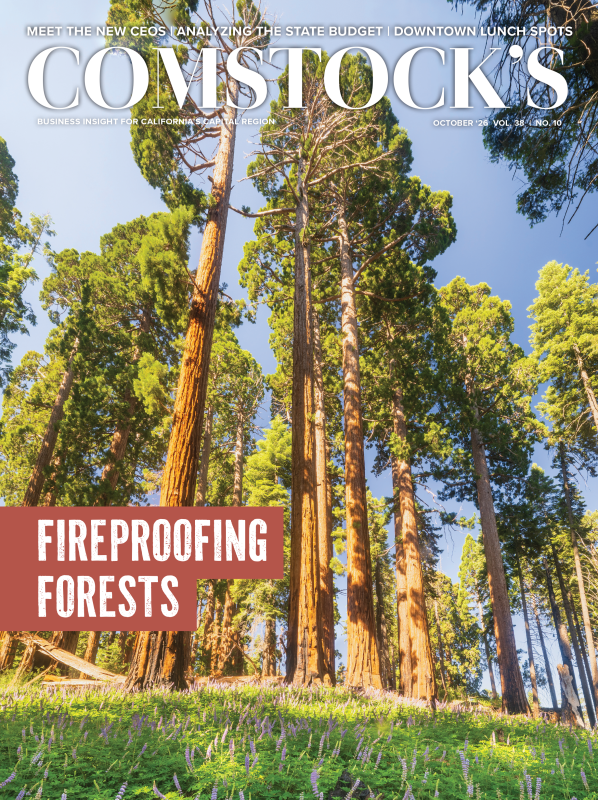
Our October issue explores controversial forest management methods, Sacramento’s new suite of CEOs, the elusive downtown rebound and more. Read it now on your computer, phone or tablet.
Follow us on Instagram, Facebook, X and LinkedIn for daily stories and extras.