


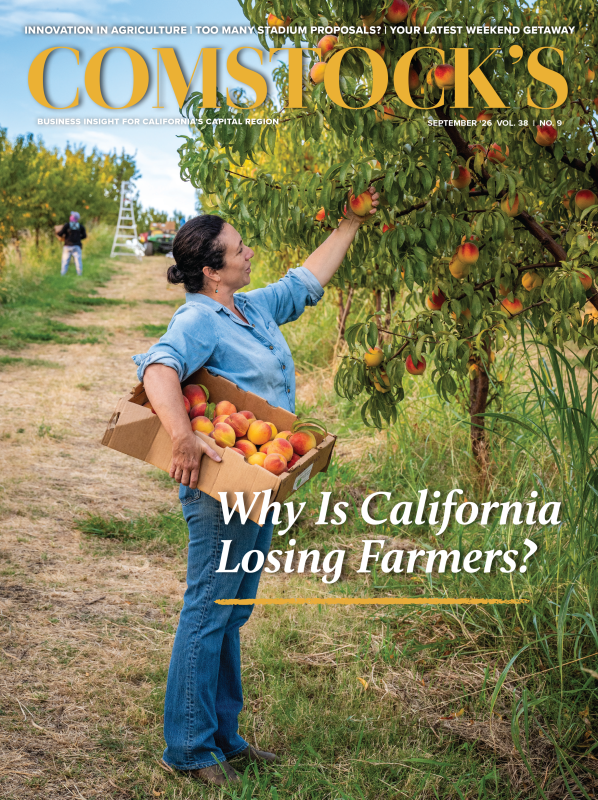
Water scarcity is driving Central Valley farmers to innovate, while abundance yields regulation. Our September issue digs into the paradoxes of California agriculture and the future of farming. Read it now on your computer, phone or tablet.
From a bird’s eye view, California is an agricultural state. About 40 percent of its land — roughly 40 million acres — is blanketed by patches of crops and rugged, non-irrigated rangeland. It’s an easy thing to forget in the coastal cities, but living in the Capital Region means moving through the seasons with a passive, if not proactive, awareness of the agrarian calendar.
It’s nearly autumn — harvest season for the state’s biggest cash crop, almonds, as well as cannabis, grapes, avocados and a variety of stone fruits and citrus. Mountain cattle will soon be driven to lower pastures for the winter.
The region’s abundance is celebrated in Sacramento each September with the elite-favorite Tower Bridge Dinner, which focuses on locally grown ingredients presented by local chefs, and every alternating year, the Terra Madre Americas food festival. Perhaps no other American city has embraced its agrarian roots more than the Farm-to-Fork Capital — a bet that seems to be paying off in terms of local enthusiasm and national attention.
But the bounty displayed at farmers markets may be deceiving — are the people who grow it actually making a living? Why are their numbers dwindling? For our September issue, we spoke with farmers who are struggling to survive in the nation’s leading agricultural state.
– Dakota Morlan, managing editor
Other stories you may have missed: Your Favorite Influencer Is Selling Something. Can You Tell?

As sponsored content becomes a routine part of social media, Sacramento-area influencers are managing the practical rules of disclosure.
The Data Center Backlash Is Here — and Big Tech Is Spending Big in Sacramento to Combat It

From CalMatters: The public has turned against data centers, prompting a flood of legislation in California. Business interests are trying to blunt the backlash.
Sacramento Summers Can Be Brutal. I Still Don’t Want This One to End | Opinion

“I thought a lot about summer this year, and I admit part of me dreaded it. The adult part. We’ve had some brutal summers in Sacramento. … But then the signs of summer started to kick in. My bare and barren backyard started coming to colorful life again,” writes Editor Judy Farah.
I Just Got a New Job, and the Scope of the Role Doesn’t Match the Description or Pay. Should I Bring It Up?
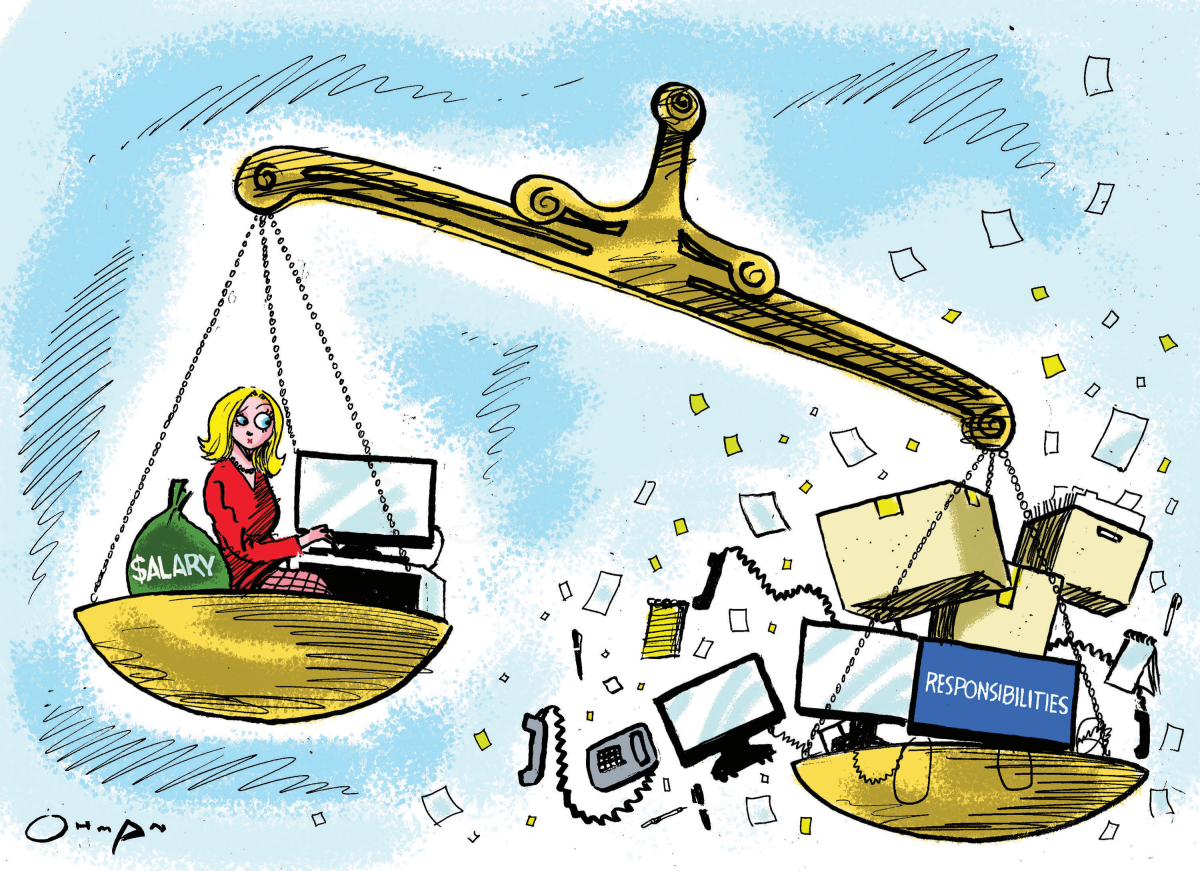
It can feel demoralizing to start a new job and realize you’re being underpaid. But should you address it? Evil HR Lady provides a playbook.
Financial Literacy Should Begin at Home | Opinion

“Since we live in a country that thrives on capitalism, not having any idea how the system works means always having to play catch-up,” writes President and Publisher Winnie Comstock-Carlson.
Some recommendations from our editors
Judy: After being No. 400 on my library’s wait list, it was finally my turn to read “Theo of Golden.” The book, which began as a self-published novel by 70-year-old former lawyer Allen Levi, has now sold over 3.5 million copies. “Theo of Golden” is a word-of-mouth book, which others recommend because of its feel-good tale of a kindly, mysterious stranger who comes to a small town and does good deeds. So now I’m recommending it to you!
Jennifer: The latest episode of one of my favorite podcasts, 99% Invisible, succeeds at what I aim for when assigning Comstock’s stories: It explains some of the coincidences and conspiracies that created the economic reality we live in today. This one is about a nearly obsolete but once-revolutionary invention: the 1-800 number. There were some details in the episode that I’ll store away for dinner-party infodumps for years to come. For example, did you know that Omaha, Nebraska, was once the national center of 1-800 call centers because it had a phone line capacity that far outweighed its population — and that was because the U.S. military developed it as the site for its Strategic Air Command during the Cold War based on the assumption that it would survive a nuclear attack on the coasts?
Odds and ends
Follow us on Instagram, Facebook, X and LinkedIn for daily stories and extras.