


Editor’s note: Comstock’s welcomes opinion pieces from a variety of perspectives. To submit a piece for consideration, please email Digital Editor Jennifer Fergesen at jfergesen@comstocksmag.com.
When I first joined California Almond Growers Exchange as a sales representative in September 1961, the entire California almond crop (66 million shelled pounds) was about what the industry sells and ships now in eight days! These were considered big almond crops in those days, and the job we all had at what is now called Blue Diamond Growers was to find new places and people to whom to sell them. Growers were planting more almond trees almost every year.
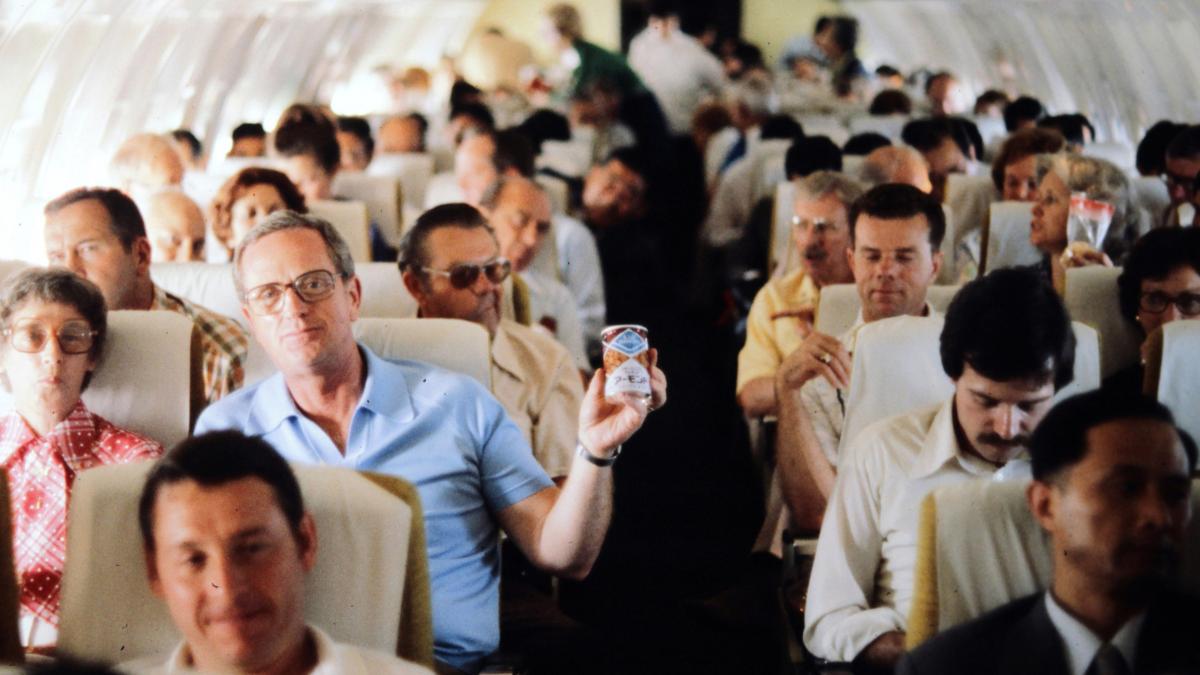
From left: North Carolina Sen. Jesse Helms, American Farm Bureau
President Bob Delano, Pres. Ronald Reagan, Blue Diamond Growers
CEO Roger Baccigaluppi, and Illinois Sen. Charles H. Percy
discuss the U.S. farm economy.

The CEO at California Almond Growers Exchange, or CAGE, in those days was Glenn Stalker, and while I did not report to him anything close to directly, I still remember him saying to me, and others in the late 1960s or early 1970s, “Where can we possibly sell all these almonds?”
Today the California crop is averaging near 3 billion pounds. California almond production is first in the world (75 percent), and by a wide margin, followed by Australia (9 percent), Spain (6 percent), Turkey and Portugal (2 percent each), followed in turn by very small production (about 1 percent) in Italy, Morocco, China and Tunisia. When I first joined CAGE, Italy had been the world’s top producer just a few years earlier.
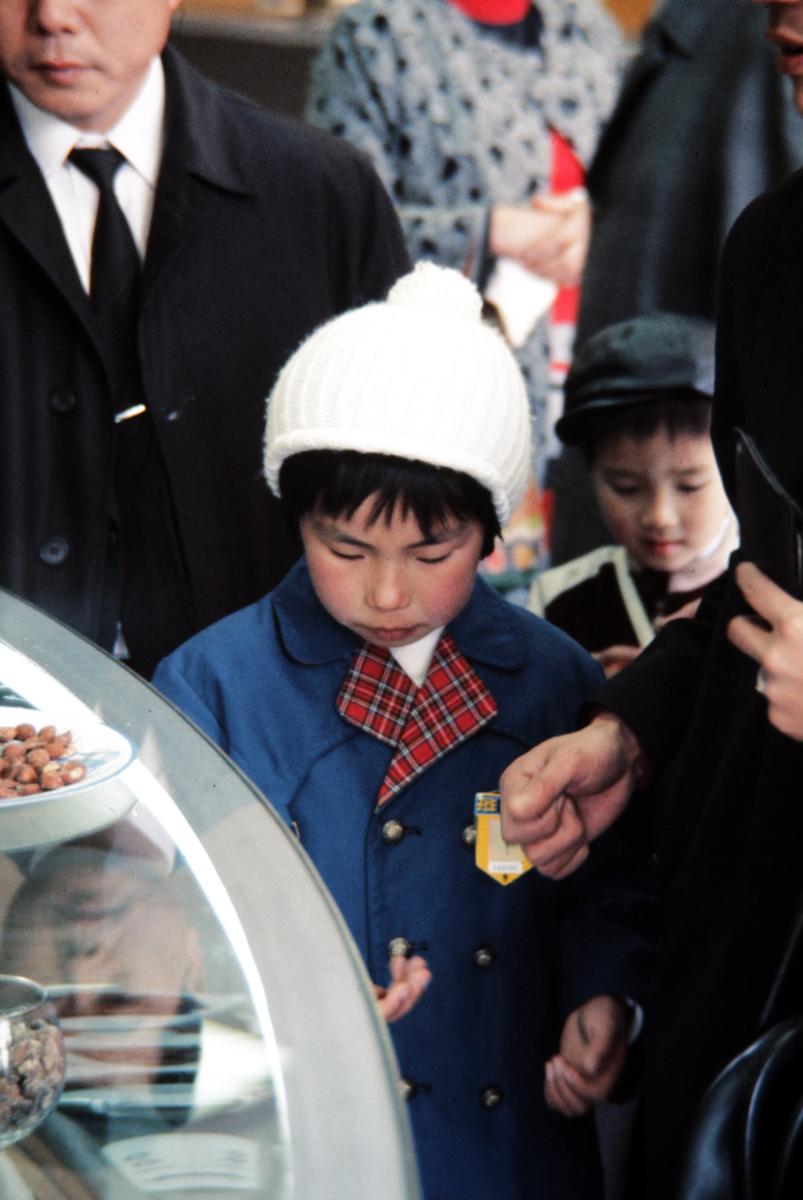
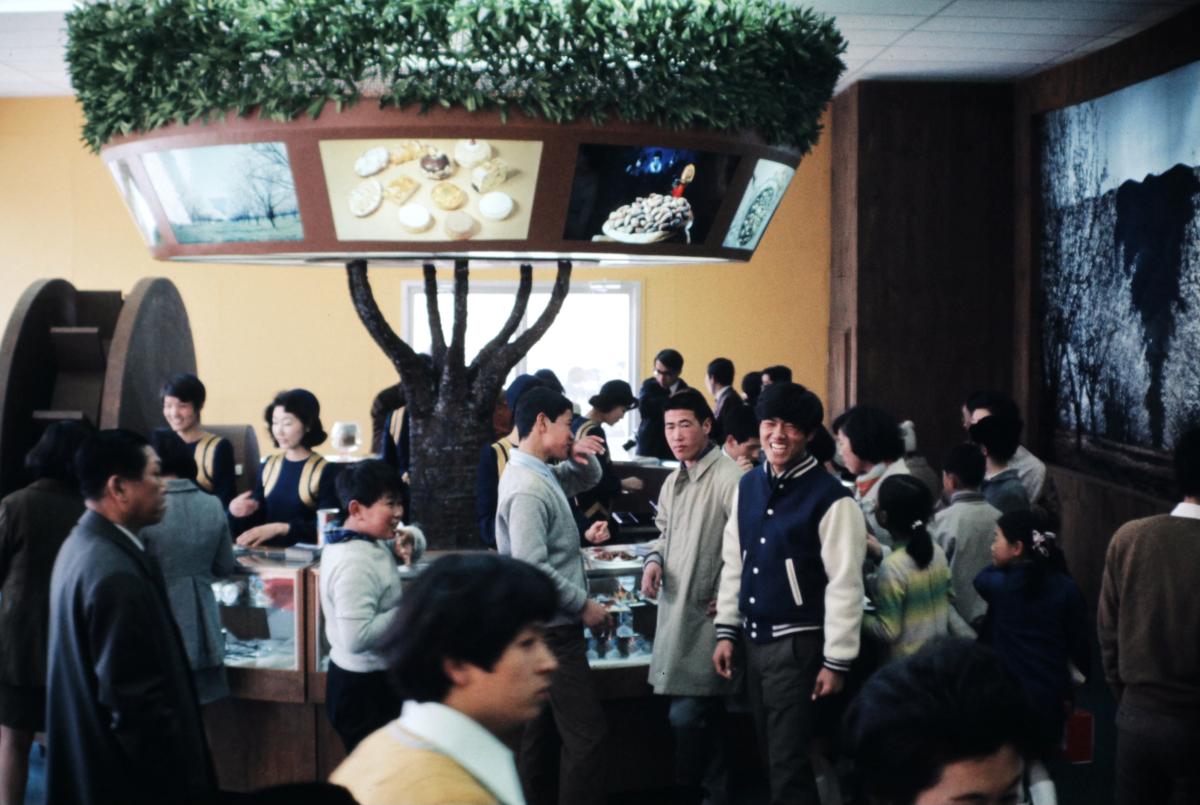
A child examines candied almonds at the Blue Diamond Growers
pavilion at the 1970 World Expo in Osaka.
Our next-door neighbor to the west was at that time the largest Del Monte cannery in the United States, possibly the world, which by that time was processing only peaches. Next door on the eastern side was a Golden State Creamery, which eventually became Foremast Dairy. To the north, our neighbors were more Del Monte facilities (storage) and the by-then-unused railyards of the old Sacramento Northern Railway.
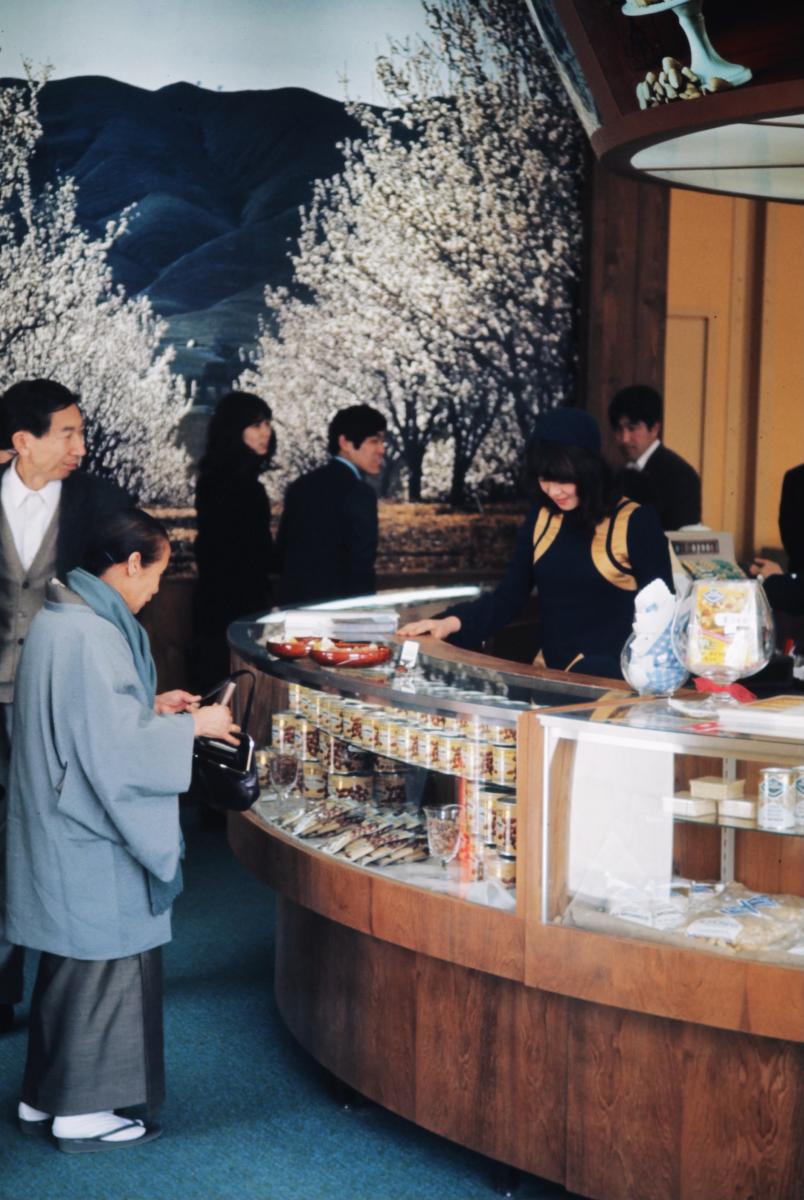
The Blue Diamond Growers pavilion featured a variety of
California almond products.
I mention all these neighbors because, while I was CEO, we acquired all of them over the years to deal with larger and larger crops every year. By the time I retired on Dec. 31, 1991, crops were close to 650 million pounds, nearly triple the crops when I became CEO and 10 times what they were when I joined the company.
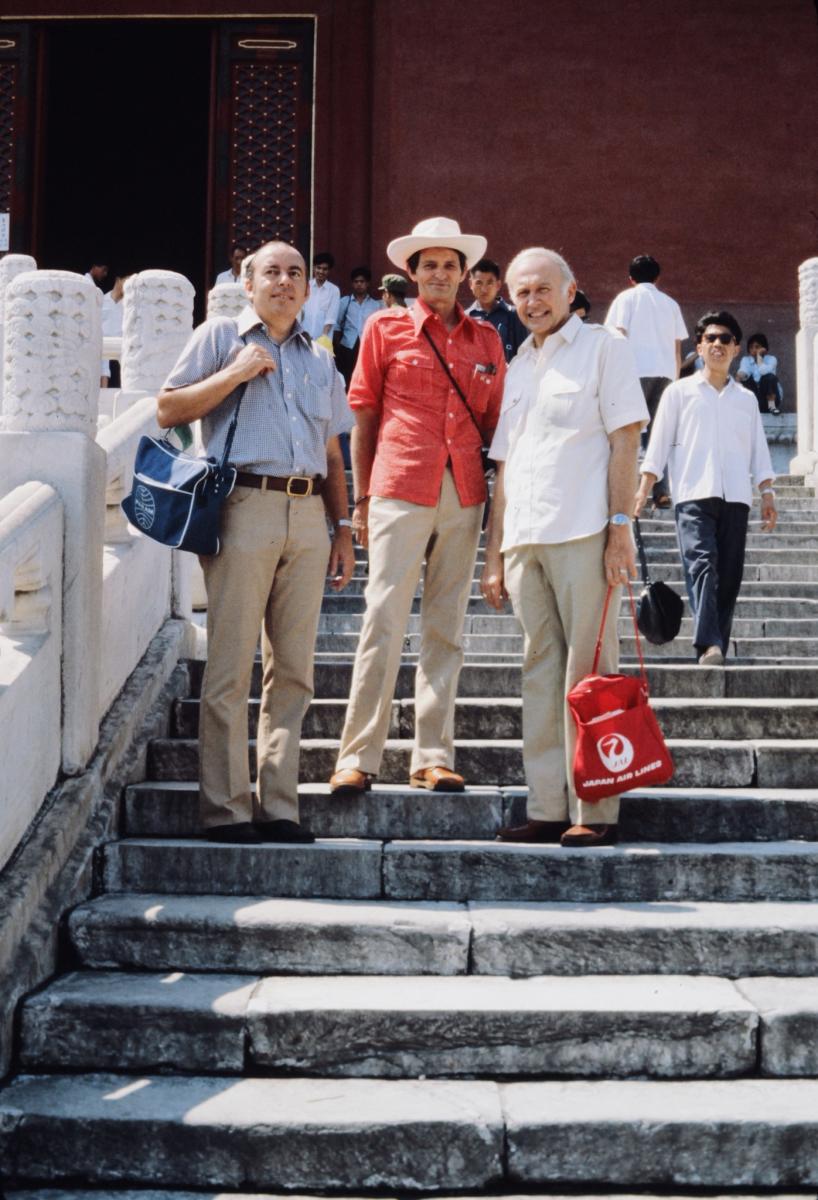
From left: Blue Diamond Growers CEO Roger Baccigaluppi,
California State Department of Food and Agriculture Director
Richard Rominger and California Director of International Trade
Richard King pose during a 1970s visit to China.
Sometime in the future all of this, from D Street north, across the Union Pacific (formerly Southern Pacific) tracks to the American River will be sold and converted to some new usage. Many have remarked on the future of this large downtown property, likely the biggest single property sale or conversion in modern Sacramento aside from the Railyards, so I will not speculate further. Whatever happens there will be a huge opportunity for the buyer(s) and, hopefully, the city.
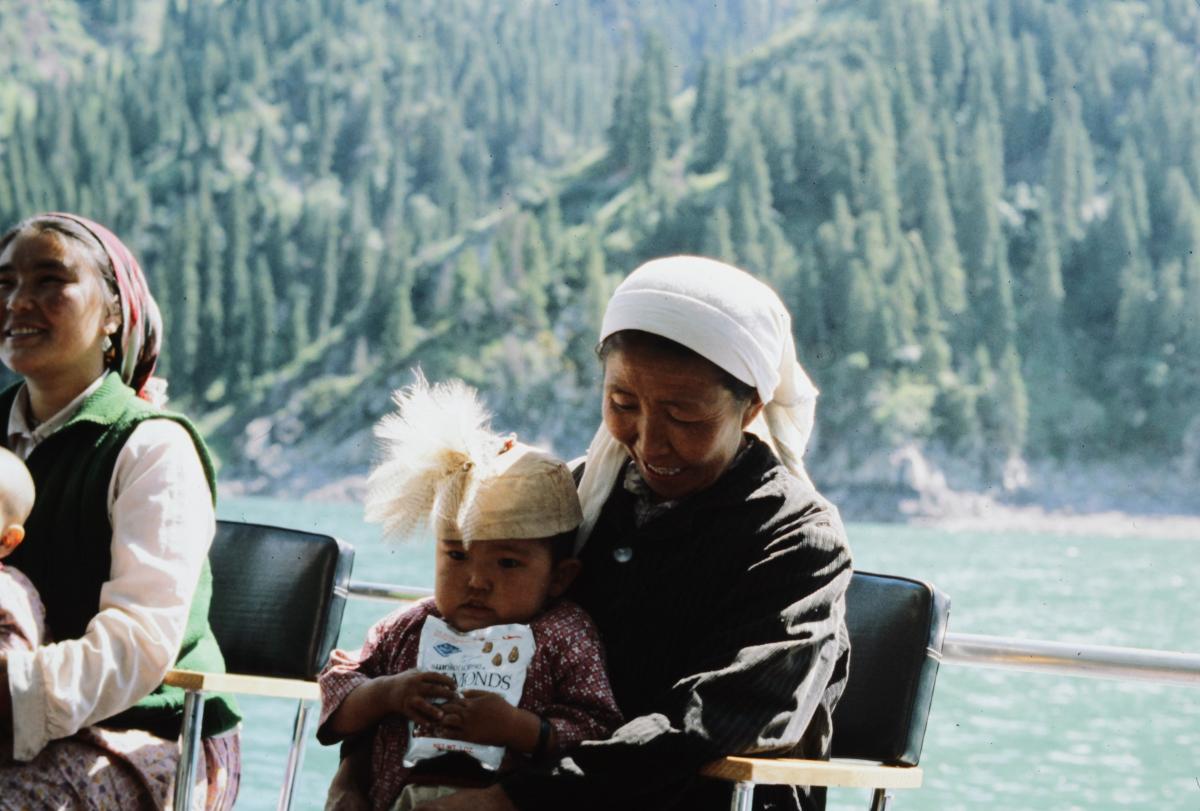
A child in western China near Urumqi hugs a bag of Blue Diamond
almonds.
Of course, it saddens me seeing all those facilities we added and nourished moving to Salida (which we also expanded) and Turlock. Those locations are much closer to the center of almond production these days, as was Sacramento in 1910, when CAGE was founded right here in the River City.
It is a new era, indeed, in the almond industry with 3 billion pounds of crops and exports to just one country, India, of more than 400 million pounds — twice as much as the entire production in California when I became CEO. Seven hundred million pounds are sold in the United States, more than four times the entire California production in the ‘70s. All of this didn’t just happen but was due to the efforts of an industry totally focused on increasing consumption wherever they could. I am proud to have been a part of Blue Diamond Growers, where we had a team of truly great people devoted to getting the best bottom line possible for our members.
The Blue Diamond Growers pavilion at the World Expo 1970 in Osaka
introduced some people to California almonds for the first time.
While others in the industry contributed to this growth, without Blue Diamond leading the way, it never would have happened. This started in the Sacramento facilities with the sorters who did a superb job of making Blue Diamond the finest — the industry standard. It is those people I am most concerned about as the company stops processing at 18th and C streets. It was sometimes generations of the same families, largely women, who made Blue Diamond almonds special. Some of these people will be able to move to jobs in the San Joaquin Valley facilities, but most, I suspect, will not.
In my first year with CAGE, we were already exploring and having some success in foreign markets. We even had an export manager in those days, when most companies did not. We were very simply growing a lot more almonds than we could sell here. We had to develop export markets as well as expand U.S. consumption. One of the great examples of this Blue Diamond leadership was India, which did not import a single pound of almonds from the U.S. in the early ‘70s but is now the second largest market in the world, after the United States, for the California product.
A Blue Diamond sack from circa 1970s displays the city it was
packed, Sacramento.

Recent years have been difficult for growers as supply has been in excess of demand. Falling prices make it difficult for growers to survive. Fortunately, after relentless increases over 65 years, the growth in acres planted to almonds has declined, and that combined with increasing growth in consumption, should bring better times. The never-ending growth in almond acreage and thus production has finally started to slow.
Nevertheless, almonds remain the largest crop in California in terms of planted acreage, the No. 1 U.S. specialty crop export in terms of value, way ahead of pistachios, frozen potatoes and wine. Almonds are also California’s second-highest value farm commodity after dairy products, but ahead of grapes, cattle, lettuce and strawberries.
While the headquarters’ offices, according to the company, will stay somewhere in this immediate area, as will the people who fueled this growth in sales, marketing, finance, HR, production technology and related departments, it was the predecessors of these people who set the tone and led the way to huge expansion and better profitability. While I left the company many years ago, I still cherish the memories of the thousands of committed people who really made the industry what it is today.
Roger Baccigaluppi is the former CEO of Blue Diamond Growers and a former member of Comstock’s Editorial Advisory Board.
Correction Feb. 24, 2026: A caption in a previous version of this article misidentified American Farm Bureau President Bob Delano as California Farm Bureau President Henry Voss.
–
Stay up to date on business in the Capital Region: Subscribe to the Comstock’s newsletter today.
Recommended For You
Why Big Brands Are Leaving Sacramento’s Historic Districts — and Small Businesses Are Thriving | Opinion
Preserved architecture, tax incentives and ambiance help small businesses flourish where large corporations falter
Despite increased maintenance and regulatory difficulties, Sacramento’s historic districts are home to many thriving businesses.
Tough Nut to Crack
Almonds bust then boom in China
Richard Waycott says there are no silver bullets in the remarkable double-digit growth of California almond exports to China but rather a carefully honed strategy built on introducing almonds to a “pre-existing snacking culture.”
The Way We Work: Mark Jansen
A glimpse into the daily life of Blue Diamond CEO Mark Jansen
Each issue, we dig into the working habits of a top executive in the Capital Region, providing insight into how they get things done.
Nut of the Future?
With droughts inevitable, more farmers are switching from almonds to pistachios, but not everyone is happy about it
Almond trees and grapevines will die if deprived of irrigation for a year or less in a dry place like the San Joaquin Valley, but pistachios can survive for years with almost no water. That means, in crisis-level droughts, the trees might persist where virtually all other crops die.