


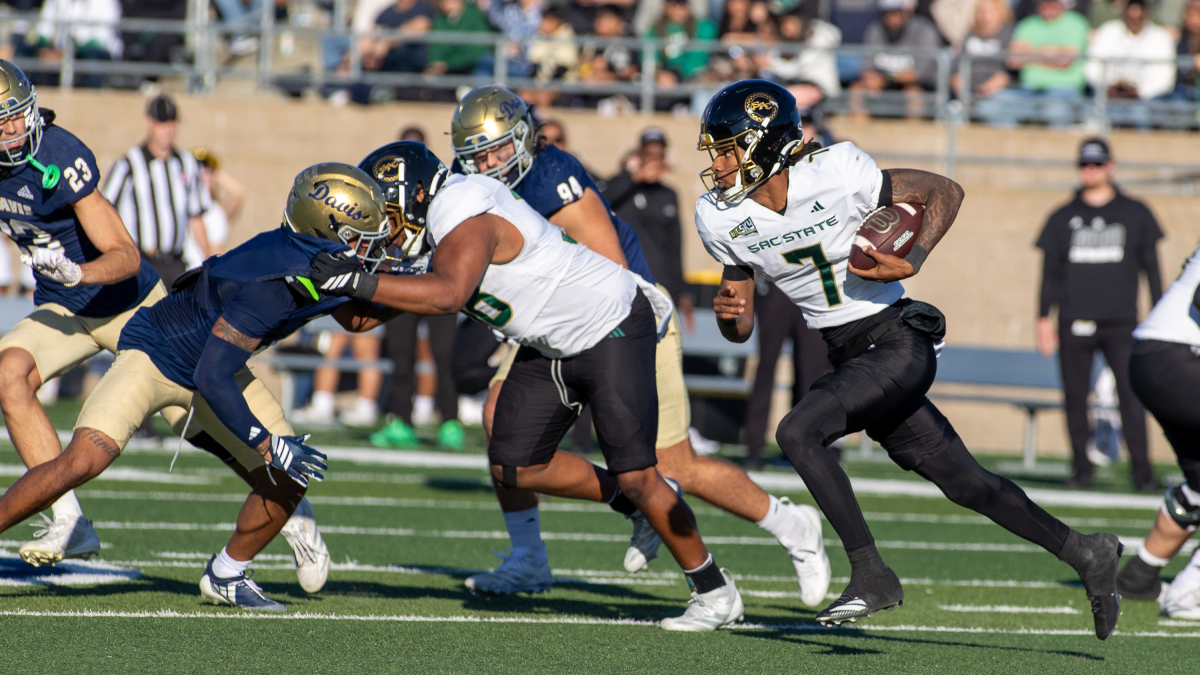
Excluding the weird COVID season, I haven’t missed a UC Davis football game since my freshman year in 2015. I was an active member of the Aggie Band, and anyone who knew me from Davis knew I bled blue and gold. As passionate as I was, I was always disappointed to see how little traction Aggie sports seemed to get outside of a handful of ESPN broadcasts and the men’s basketball team’s 2017 March Madness appearance. As someone who was on that trip and many others, I saw firsthand how enchanting sports and the culture around them could be.
But alas, I was from Sacramento, and besides the ever-struggling Kings, there were few places to feel that collective passion. The River Cats even won a national championship in 2019, and no one seemed to bat an eye.
That looks to be changing soon.
No matter what happens with Sacramento’s recently announced MLB bid, the region is poised to see substantial growth in college sports, which are prominent nationally but largely irrelevant here.
Related: Why Sacramento Thinks It Can Land Major League Baseball’s Next Expansion Team
The local schools have been caught up in the realignment wave hitting college athletics nationwide.
After a publicly broadcast realignment odyssey, Sacramento State football has found itself in the Mid-American Conference, a league composed primarily of schools from the Great Lakes region. The geography is odd, but the move gets the Hornets into the FBS (Football Bowl Subdivision), the top level of college football.
Meanwhile, most UC Davis non-football sports left the Big West Conference for the more prominent Mountain West Conference on July 1. While football is staying put for now, UC Davis has announced the “Aggie Ascent” initiative, which would pour $265 million into athletics facilities, including a major expansion to the football stadium that would add luxury boxes and an event space. This suggests UC Davis wants the option to move football up too. If both it and Sac State end up competing in the FBS, this presents a serious opportunity for the Sacramento area, which is an underserved sports market.
Of course, the two institutions serve different purposes. Like most CSUs, Sac State’s top mission is to provide Californians a solid and affordable education. Meanwhile, UC Davis is broadly geared toward research and offering a vast array of graduate programs.
If the institutional missions differ, so too do their vibes. Sac State is urban and condensed, squeezed between Union Pacific tracks and the American River. Like the city that surrounds it, the campus is packed to the brim with mature trees that turn stunning autumn shades when fall finally decides to visit. And despite recent efforts to shed its reputation, Sac State is still largely a commuter school. While that’s not inherently a bad thing, it unquestionably affects the feel of the campus and its culture.
Related: Star Power and Flashy Hires Are Kicking Off Sacramento State’s Sports Season
On the other side of the Yolo Causeway, UC Davis is an eclectic mix of agricultural roots, nerdy academia and hippie environmentalism. Founded in 1905 as the “University Farm,” the sprawling campus features picturesque sightlines, wide-open spaces and buildings ranging from sleek, postmodern laboratories to quaint former agricultural structures with wood-shingled sides. And wherever you go, you can’t help but notice there are bikes everywhere.
The vibe of each campus reflects the institution itself. Put succinctly, Sac State feels like somewhere you go to school at, while UC Davis feels like somewhere you go to school to. But while those differences are structural, they’re not inherent, and both schools can offer their students and the broader community a richer experience.
College can be far more than just classes. A degree can symbolize intangibles like personal growth, experimentation, relationships and identity. Sure, plenty struggle just to balance classes with other obligations, but the experiences can be life-changing.
A university with strong buy-in from students, faculty, alumni, and the general public can be a major community asset. When alumni feel a strong connection to a school, it’s easier to retain graduates locally. But on a more human level, when you see someone repping your same colors, you immediately feel a shared identity. And when more people identify with one of a community’s major institutions, more people are invested in the community itself.
In many ways, UC Davis naturally excels at cultivating buy-in. Cows, bikes, red buses and boba are all part of the quintessential Davis experience. Traditions like Picnic Day give the institution texture and a sense of shared history. The vast majority of students live in town, so you can spend your college years constantly running into people you know. In many ways, the geographic isolation from the rest of the Sacramento metro is an asset in terms of town culture.
Sac State is much more geographically central, but the surrounding neighborhoods like East Sacramento have strong identities outside of the university. And when you have a less geographically concentrated student body and neighborhoods that don’t revolve around university life, it’s harder to build the cultural gravity you’d find in a classic college town.
But it’s not impossible.
Over the last decade, a lot’s been changing near Sac State. New student housing projects have popped up on and near campus. There are thousands more beds within about a half-mile of the campus than there were before the pandemic, and thousands more beds are planned or under construction. If this continues, the area around Folsom Boulevard and 65th Street could end up being the densest part of the entire city, especially now that Sac State will require many students to live on campus starting this school year.
Related: Sacramento Fans Pack Sutter Health Park as A’s Lean Into Local Identity in 2026
Hornet football’s move to the MAC complements this trend.
While the pure economics of college football can be debated, few would debate the cultural impact football can have. And for what it’s worth, Sac State has had a decent football culture for being in the FCS, the lower Division I subdivision. You can find people tailgating, and attendance is decent. At the very least, it doesn’t feel like no one’s showing up.
Still, to most Sac State students, football is largely an afterthought. While most students from Roseville or Rancho Cordova won’t particularly care about opponents like Western Michigan or Miami (Ohio), the MAC still offers bigger names than the Big Sky. If the Athletics’ stay in Sacramento has shown anything, it’s that even a mediocre team on a higher level will draw far more attention than a solid lower-division team. That’s not fair to the River Cats, but it’s the way it is.
While Hornet Stadium has its charm, Sac State will need to upgrade to compete in the FBS. The university is exploring converting the former Cal Expo horse racing grandstand into a football stadium. This may be cheaper than rebuilding Hornet Stadium, and it’s surprisingly close to campus. It’s not hard to imagine scores of students walking along the levee to Cal Expo. The view of fall foliage from the Guy West Bridge on the way to a game could become a classic Sac State experience overnight.
Related: New $10 Million Home for Sacramento State Basketball a ‘Game Changer’ for Program
Alternatively, it wouldn’t be surprising if Sac State ends up playing at the 20,000-plus-seat Republic Stadium once it opens in 2028. This year, Sac State announced a $7.5 million partnership with Wilton Rancheria, the majority owner of the Republic FC, in which the tribe will be the “premier sponsors of Sac State football.” A stadium lease could be the next logical step in that relationship.
No matter which direction Sac State takes, its FBS move creates an opportunity to grow its regional presence. It also puts pressure on UC Davis to do the same, lest it be left behind.
While the Yolo Causeway marks a symbolic divide between Davis and Sacramento, both schools have many graduates throughout the region. While they’ll root for their alma maters, the market is still up for grabs because neither program has attained cultural prominence. Sure, Sac State has some billboards, and you can occasionally spot a Yolobus with an Aggies ad on J Street. And yes, Sac State even made a splash by signing Mike Bibby to coach men’s basketball. But outside of student-dense neighborhoods, you don’t see many Aggies or Hornets logos adorning the walls at bars, meet-and-greets at car dealerships or flags hung from porches on game day. If the region had already bought in, you would.
Related: Possible Last Causeway Classic in 71-Year History Is One to Remember
Imagine if both schools spent the next 15 years going all out building their fan base. A rekindled Causeway Classic between two now-FBS programs could be the region’s marquee sporting event rather than maybe getting as much attention as a random weekday Kings game. Bars from Auburn to Vacaville might host watch parties, and even those who don’t normally follow sports might make plans to watch instead of forgetting about it until passively lingering on a Sacramento Bee recap in their Facebook feed for a few seconds before scrolling on. Both schools would captivate public attention to an extent they rarely do for anything good.
Nowhere would feel it more than the campuses themselves. Right now, a student can go about their week at either campus without thinking twice about football. Even Davis, for all of its college town charm, struggles to generate a collective buzz around important games. But if each program continues to grow regionally, it would be harder not to pay attention.
Many bike-riding Davis students rarely cross the Causeway, but if there were events they felt they couldn’t miss, maybe Sacramento would feel a little closer. If Greater Sacramento wants to retain more graduates that we educate, the first step should be to expose them to the area more. Until we get a multimodal transit center with a light rail stop near the Mondavi Center (*cough cough* Gary May, make it happen), sports might be one of the best ways to bridge the Yolo Bypass.
Sure, UC Davis will always be a research university. Sac State will always be the region’s namesake campus. These separate identities complement each other in a way that can grow the pie in an underserved sports market. Yeah, I love to trash-talk the Hornets any chance I get, and I hope they never win a game again. But that’s because I know where my loyalties lie in a rivalry where picking sides is an act of civic pride.
Dylan Musgrove is a Sacramento-based attorney, a UC Davis alumnus and an aspiring professor.
–
Never miss a story: Get Comstock’s weekly newsletter delivered to your inbox.
Recommended For You
Possible Last Causeway Classic in 71-Year History Is One to Remember
The classic game between football rivals Sacramento State and UC Davis may come to an end
If Nov. 22’s Causeway Classic was truly the 71st and final chapter of the storied series between I-80 rivals Sacramento State and UC Davis, then the sendoff couldn’t have been more dramatic.
Star Power and Flashy Hires Are Kicking Off Sacramento State’s Sports Season
Lakers great Shaquille O’Neal and Sac Kings star Mike Bibby are among the personalities drawing attention to the sports program
Sacramento State’s sports teams have endured many lean
years. But the institution, which debuted its original sports —
basketball, baseball and tennis — in 1948, has embraced a
controversial change.
New $10 Million Home for Sacramento State Basketball a ‘Game Changer’ for Program
The Hornets are leaving ‘The Nest’ in the midst of historic investment in the university’s sports program
The move this season into a new 3,000-seat events center, home for Sacramento State’s men’s and women’s basketball teams, has finally happened, fueling a new optimism by sports fans at the university.
Why Sacramento Thinks It Can Land Major League Baseball’s Next Expansion Team
Region’s pitch for Major League Baseball leans on Sacramento area’s long baseball history and current A’s residency
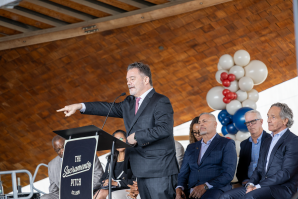
Capital Region officials recently launched a “Sacramento Pitch”
campaign aimed at bringing a Major League Baseball expansion
franchise to West Sacramento.