


Editor’s note: Comstock’s welcomes opinion pieces from a variety of perspectives. To submit a piece for consideration, please email Digital Editor Jennifer Fergesen at jfergesen@comstocksmag.com.
Each morning Rysa waltzed into the classroom with an effortless elegance, as though she carried her own quiet music with her. Rysa would smooth her long, dark braids, each careful plait suggesting the time and attention someone had given her. While she did not speak, her large deep-brown eyes tracked everything: faces, movement, friends, new classroom decor, an art project prepped for after lunch. Still waters run deep and it was obvious from her face that she was taking it all in knowingly.
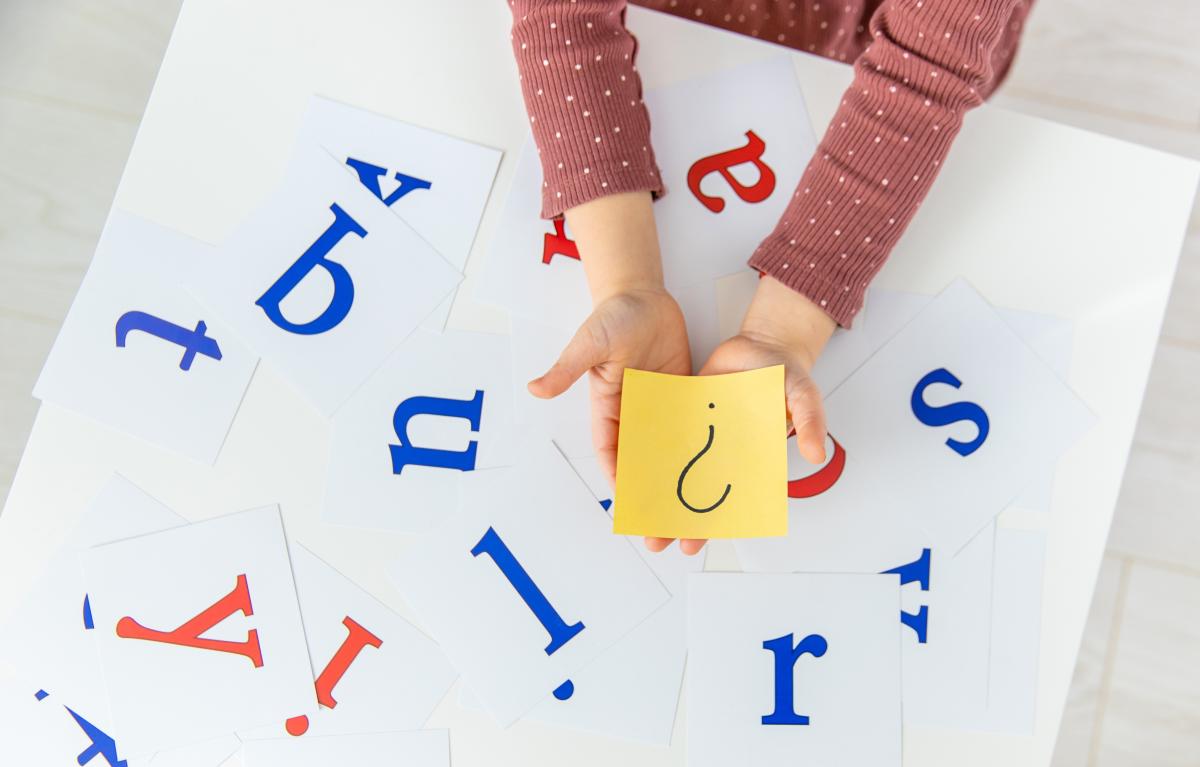
What Rysa didn’t know was that letters held sounds, or that sounds could become words, or that the moving captions beneath her favorite songs were meant to be read. It wasn’t because she couldn’t learn or didn’t want to learn. It was because Rysa was severely disabled and non-speaking, and somewhere along the way, that became the reason she was excluded from literacy instruction.
This story is not unusual. Today, roughly two-thirds of fourth graders in the United States read below grade level. For students with disabilities, the numbers are far worse as fewer than 20 percent reach proficiency. In Rysa’s school of about 1,000, literacy was addressed by offering phonics, blending, and decoding to all students except Rysa and her disabled classmates. These methods – the Science of Reading best practices – were not implemented with kids like Rysa.
For generations, students with significant disabilities have been placed on a different path where literacy is treated as aspirational rather than essential. They are given exposure instead of instruction, taught to memorize sight words instead of decode, and given functional reading activities instead of being provided direct instruction.
The assumption beneath it all is rarely spoken aloud but deeply entrenched: If a child cannot speak fluently, she cannot read meaningfully.Yet that assumption is wrong. Here is what we need to do to make sure students like Rysa learn to read:
Use evidence-based methods for everyone. When Rysa came to my classroom, I did not use a special reading program designed for “students like her.” I used the same evidence-based methods every other student was using but I adapted them. When assessing what she knew in literacy I did not ask her to make the sound of a letter or group of letters I pointed to, but rather I made the associated sound or played an automated voice using the sound and then Rysa pointed, tapped, used eye gaze or gestures to show whether she knew the letter-sound correspondence or not.Teachingphonological awareness, phonics, decoding, vocabulary and comprehension is essential for all children, including non-verbal students and students with disabilities.
Be flexible and open to varied student responses. Rysa communicated with me by pointing to text to answer reading comprehension questions rather than responding verbally. I created pre-printed cards for her to use to retell a story rather than speaking. She used similar cards to put stories in the correct sequence and, when she had learned to read a bit more by the middle of the school year, I put sentences on cards to sequence stories and to answer comprehension questions.
For both of us to be successful, I also had to focus on meeting Rysa where she was. I slowed down the pace of teaching new concepts, repeated lessons regularly, and I honored her communication instead of demanding it resemble mine. Just like a general education student might say “I don’t want to read with you today,” Rysa effectively told me what she wanted by gazing or pointing. I went back and frequently reviewed material she had already learned to be certain she was retaining the information. While this is important for all learners, it must be more robust and precise for students like Rysa.
Today, Rysa is fourteen years old. She is autistic and still intellectually disabled, still mostly non-speaking and still non-conversational, but she reads at a fourth-grade reading level. Rysa learned to read the same way her neuro-typical peers did: through explicit, effective reading instruction.
Rysa still glides into the classroom with her beautiful braids and inquisitive eyes, but now she can immediately start her morning reading and writing. Because she can read, future job opportunities that would otherwise be closed to her begin to open. She can follow written instructions, read schedules, and begin to understand workplace expectations. Rysa can navigate daily life more independently by reading street signs, safety warnings, menus, labels, and directions. She can access information without needing someone to translate the world for her.
And she can do something deeply teen-aged and deeply human: read the lyrics to the songs she plays on repeat, connecting words on a page to meaning, memory, and joy.
This is the future I am hoping we build: effective reading instruction for all students. Not as a special exception because a parent requested it, not dependent on a highly motivated teacher, but as a belief that every learner is worthy of access to literacy and the life it unlocks.
Note: Student name has been changed for privacy.
Jennifer Souza is a 3rd grade teacher leader at Two Rivers Elementary in Sacramento and 2025-2026 Teach Plus California Policy Fellow.
–
Stay up to date on business in the Capital Region: Subscribe to the Comstock’s newsletter today.
Recommended For You
How Educators Are Preparing Students for a Future Dominated by AI
Schools and universities aim to teach students to use AI with ethics
As the artificial intelligence revolution picks up speed, schools and universities around the Capital Region are racing to use AI as a tool to prepare their students for a workforce in which AI plays an increasingly prominent role.

How Capital Region Schools Are Training Students for Technical Skills Careers
Community colleges, high schools and private institutions offer pathways to jobs in the trades
Around the Capital Region, technical and trade programs in high schools, in community colleges such as Cosumnes River, American River, Sac City and Sierra, and in stand-alone entities such as UTI, are flourishing.
Startup of the Month: The Make Box
Robotic kits made to click with STEM learners
From crafting with popsicle sticks in elementary school to working with small electronic devices in middle school, Kavya Khare clearly had DIY in her DNA. She is now the founder of The Make Box, a UC Davis and Bay Area-based startup that creates modular robotic kits, SnapBots, for young students to engage in STEM.

The Capital Region Is in the Vanguard of Autism Research and Treatment
Researchers, educators and students help unlock the mystery of autism
Autism is neither a disease nor a sickness. But for the increasing population of those diagnosed — one in 31 children is the current count in the U.S., according to the Centers for Disease Control and Prevention — it’s quite real. What might surprise you is that when it comes to learning about and managing autism, the Capital Region is very much in the forefront.