



This story is part of our April 2026 issue. To read the print version, click here.
For more than a decade, elected officials have acknowledged that the Capital Region is suffering from an affordable housing crisis, one that’s crippling the ability of locals to handle rent and blocking thousands of families from the home-buying market.
Experts agree that creating more housing supply is key to stabilizing prices in the long run. Accordingly, city and county leaders across the Capital Region have been trying to support developers in quickly getting projects off the ground. The idea behind this cooperation is that bringing new apartments and single-family homes online, on a grand scale, will start to alleviate the atmosphere of insecurity that’s lingering from Fairfield to Folsom — and everywhere in between.
Comstock’s recently summoned an expert panel to discuss how these partnerships between builders and local municipalities are going. Our gathering included Justin Walters, vice president of land development and project management of Somers West; Ron Brown, president and CEO of Brown Construction; Anton Garcia, vice president of asset management for Taylor Builders; Kevin Carson, president, Risewell Sacramento division; Craig Adelman, CEO, Mutual Housing California; Milo Terzich, vice president for development and entitlements for USA Properties Fund and Tim Murphy, president and CEO of North State Building Industry Association.
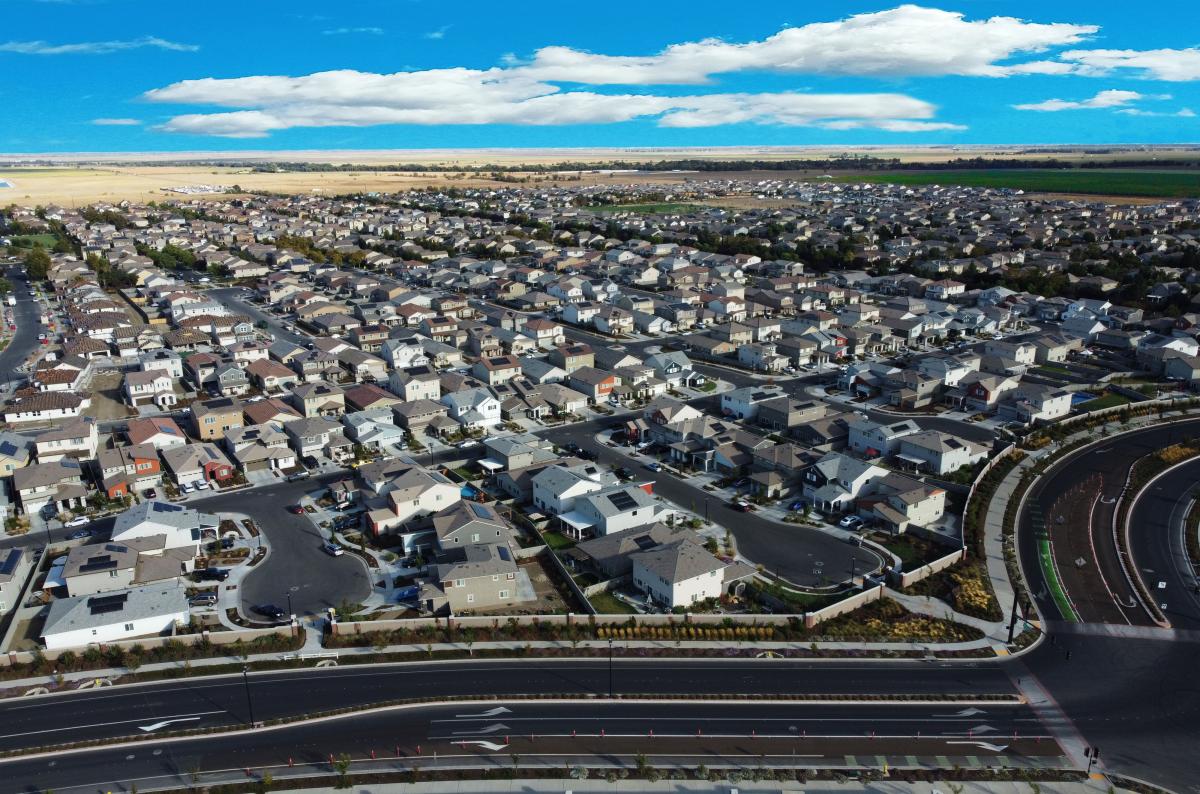
A housing development in Sacramento. (Shutterstock photo)
We started by discussing whether the various elected officials who have been asking builders for help have actually followed through with directing their governmental staff to cut red tape and streamline processes. Our development gurus in the room agreed that, on the whole, public officials are now attempting to quickly usher in new projects. However, they say that major roadblocks remain, most notably in the form of excessive local building fees, the ongoing forces of NIMBYism, and the weaponization of the California Environmental Quality Act.
On that last point, journalists have independently documented that CEQA is sometimes used by labor unions and special interest groups as a negotiation leveler for business contracts, rather than for its original intent of guaranteeing clean air, soil and water. Builders and a number of environmental advocates are now gathering signatures for a potential upcoming ballot measure called the Building an Affordable California Act, which is aimed at spurring home creation and green energy projects in a way that mitigates the misuse of CEQA.
Here is how what was ultimately a solutions-oriented conversation on all these topics transpired.
Comstock’s: I believe the term “housing crisis” has been a part of the Sacramento region’s political conversation for nearly a decade. What’s your view of the crisis level?
Craig Adelman (Mutual Housing California): We have, in my mind, a structurally deficient housing system in California. And so, when I hear your question, I think of it particularly through a lens of housing equity and housing attainability. The region is falling further and further behind on those measures. Market-rate housing is an important component of producing the housing stock we need; and yet, both that and our system, are not going to come anywhere close to meeting the needs of the entire population any time soon. Frankly, not in my lifetime. We have to recognize that.
And so the region is trying to do what it can to address affordability through both policy and subsidy, and it’s an uphill battle. We have seen, over the period you’re asking about, homelessness explode. We’ve seen housing affordability become less and less accessible, and those are failures. … I do think the region is doing what it can, but we are swimming upstream when it comes to meeting the needs of the Sacramento area.
Related: More Affordable Housing Can Happen: Lessons from six cities on getting it built
Justin Walters (Somers West): When it comes down to the brass tacks, there’s still a lot of hurdles to getting projects approved. Every builder in the region is trying to get their projects done quicker, while reducing fees as much as possible, because at the end of the day, those fees go right down to the end user, which is the homebuyer.
Tim Murphy (BIA): It’s been challenging to educate local governments on fees and what effect the fees have on overall housing attainability for families. … For our MSA (metropolitan statistical area), the median home price is $569,000, and someone needs $161,000 in income to qualify. So, for every thousand-dollar increase in that median price of a house, there are 575 families who are priced out.
Comstock’s: What exactly is the role that local building fees are playing in making housing and rent prices so high in this area?
The average fee total in Sacramento County, before you turn a shovel in the dirt, is $109,000 for a single-family home.
Tim Murphy, president and CEO, North State Building Industry Association
Tim Murphy (BIA): In the last five years, fees have gone up 25 percent. The average fee total in Sacramento County, before you turn a shovel in the dirt, is $109,000 for a single-family home. … That $109,000 doesn’t include the costs around what the environmental mitigation might be. It doesn’t include inclusionary zoning or affordable housing mandates. That number is just for the critical infrastructure that goes along with building a single-family home.
Kevin Carson of Risewell Homes.

Kevin Carson (Risewell): The problem is, BIA may get a big win on reducing a fee, but then lumber is up 21 percent since December. And then building codes get updated every three years, adding $8,000 to $12,000 to the price of a house. … We need to look, globally, at what the whole price of a house is.
Anton Garcia (Taylor Builders): We’re building a project right now that took 20 years to get certified. These homes are going to sell for $500,000 to just shy of a million dollars. So, a wide spectrum. It took 20 years to entitle it, and an additional $100 million in costs for public improvements, just to flush the first toilet. … There’s not one fee involved which doesn’t go up every year for the cost of living. And it’s not just a 2 percent or 3 percent escalation; it is a full-blown update to the fee.
Comstock’s: Are there any potential solutions to the situation with fees beyond governments just abandoning them?
Justin Walters (Somers West): What every jurisdiction could do is defer them. Builders should be able to pay their building permit fee at the final inspection, so they’re not carrying those costs. Because we’re not building one house at a time. We might go in for 20 permits at once. That’s more than $2 million just on the fees; and if it’s a five-to-six-month build-out on a single-family house, and we don’t have a buyer and we’re holding that house — maybe it’s nine months — time is money. Loans with interest are money. If we were able to defer that burden until the close of escrow, that would be huge.
Related: Finding Affordable Financing: The flow of money to pay for low-income housing could be slowing just as demand soars
Anton Garcia (Taylor Builders): I agree. These are impact fees. They’re about impacts on schools, traffic, sewer and water. The impact doesn’t occur until someone is living in the house, so I think it’s only reasonable to ask that they are deferred until someone moves in.
Comstock’s: Housing instability has touched so many people in the region. Has that changed the traditional dynamic of instant community pushback whenever a new project is proposed? The so-called NIMBYism phenomenon?
Kevin Carson (Risewell): Over the last 15 years, it has gotten better. When we built The Cannery in Davis and McKinley Village near East Sacramento, there was a lot of pushback during the process for each, even though, today, those are both projects that are well thought of. In fact, some of the biggest opponents of McKinley Village ended up buying houses there.
Ron Brown of Brown Construction.

Ron Brown (Brown Construction): I will say about The Cannery, being a Davis resident myself since 1968, it is a great project. Yet, back when it was proposed, I’d hear endlessly from friends and family, ‘Oh, this is bad.’ It was a cannery before, and you could smell it from August to October. The whole town smelled of tomatoes. But it was still popular to complain because it was one of the only things going on at the time.
Craig Adelman (Mutual Housing): One of the more interesting manifestations that I see now around traditional NIMBYism is this realization of, “Oh, my family had to move away.” It’s this mentality of, “Didn’t have a housing crisis until it hit me, and I can’t see my grandkids anymore.”…
At the end of the day, California has given way too much power to homeowners who don’t really care about something like The Cannery: They just care about change. They don’t want it. That’s because they see it as a threat to the biggest asset in their household, which is their home. And as long as we both empower those folks and have a system where they are feeling economically threatened by the addition of new housing, we are going to continue to shoot ourselves in the foot. …
Related: Residential Renaissance: New affordable apartment complexes offer appealing amenities such rooftop terraces, courtyards and shared community spaces
(Mutual Housing) has a development under construction right now at 16th and T streets in downtown Sacramento. It’s a five-story, appropriate urban-dense multi-family development. There’s a historic old home next door, and the daughter of its owners — who’s a resident there as well — came to the groundbreaking of our project. It ended up being a good example of some of the generational complexity around this issue. The daughter was really excited to see that an old auto repair shop at a prime intersection was now becoming housing. But, she said, “My folks, they’re upset about the shadow on their house.”
Tim Murphy (BIA): I do think the newer Yes-In-My-Backyard movement, or the YIMBY approach, is real, and it’s budding.
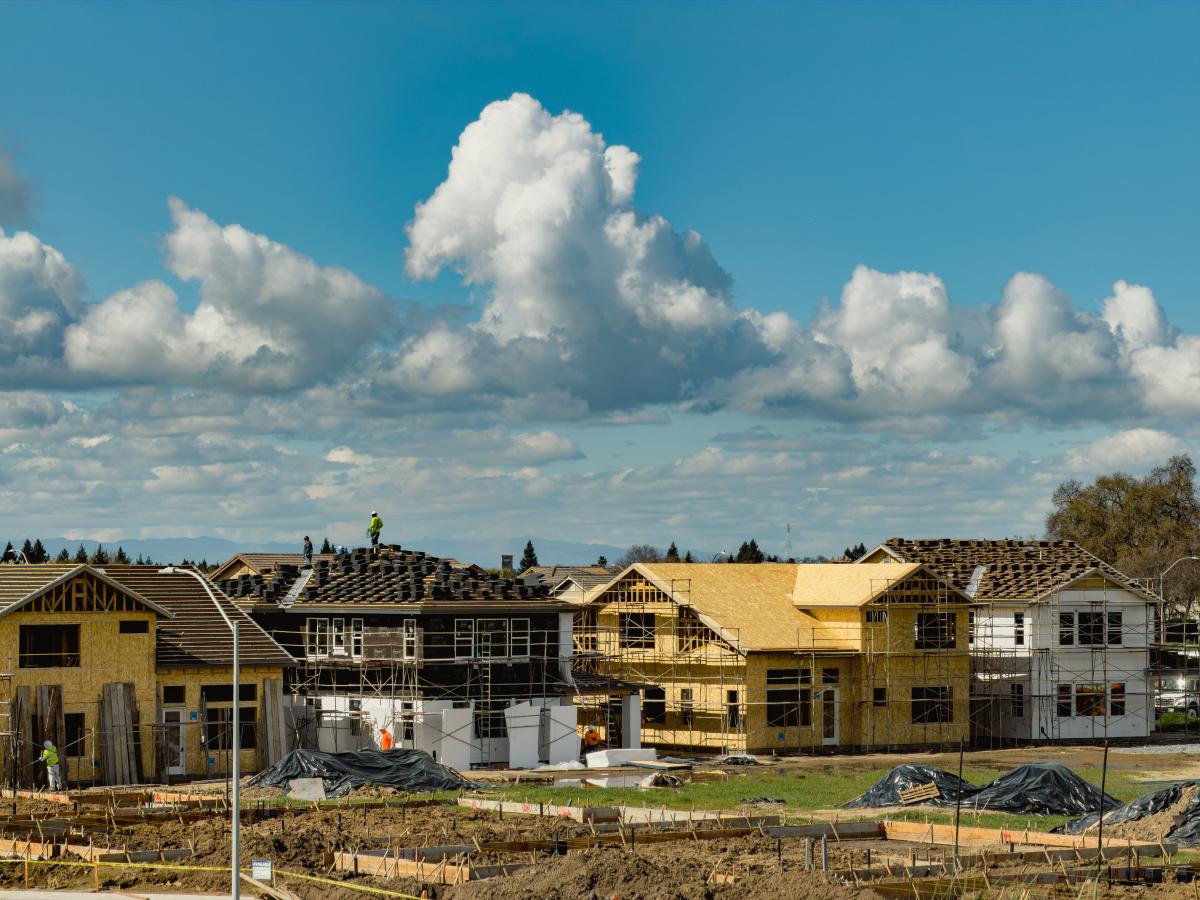
A housing development under construction in West Sacramento in
2026. (Shutterstock photo)
Comstock’s: Let’s talk about the relationship between CEQA reform and solving the housing crisis.
Milo Terzich (USA Properties): NIMBYs wouldn’t even exist if CEQA didn’t give them the power to. We build projects all over the state, and we get more CEQA challenges from labor unions than we do from NIMBYs. We’ve seen CEQA challenges in some communities that we’re building in, and the challenges came from the city next door, just because they didn’t get a transportation agreement. Very few CEQA challenges are environmentally related. Very few. It’s labor — and it’s a lever they get to pull.
NIMBYs wouldn’t even exist if CEQA didn’t give them the power to.
Milo Terzich, vice president for development and entitlements, USA Properties Fund
Anton Garcia (Taylor Builders): CEQA is its own business. That’s the least-kept secret. … There’s a lot of appreciation around the environment when it comes to development, or at least more than I think people would ever really recognize. If you really sit in these meetings, and look at the open space management that we’re looking at — with us buying off-site mitigation pieces of land to be put into perpetuity for conservation, essentially forever — I think people would recognize that we’re trying to do our best to really conserve what we can, while still trying to meet the needs of the public in delivering housing in the most affordable way.
Related: Can a State Office Building Become a Home? To help solve the housing crisis, the State of California has identified excess sites for conversion to affordable housing
Milo Terzich (USA Properties): CEQA has been the No. 1 barrier to housing in California over the last 40 years, bar none. You can say that costs are, but if we didn’t have to run the risk of not getting our CEQA approvals, it wouldn’t cost so much, and that cost wouldn’t ultimately be on the homebuyer.
Ron Brown (Brown Construction): I agree. When it comes to CEQA and the pressure that comes from labor groups through it, that needs to be removed from the law. I personally don’t understand how it’s allowed to be used as a weapon like that. I mean, I know why they use it — I’ve been involved in a lot of those discussions. They’re being allowed to utilize it to hamstring projects, so that they can force the developer’s hand into certain agreements.
Tim Murphy (BIA): CEQA is not going to go away, but I’m very optimistic about the ballot initiative that is going to be coming forward later this year (the Building an Affordable California Act). It was designed with input and negotiations with the environmental community. This is something that I think is going to be broadly appealing to a lot of different voter blocks.
Kevin Carson (Risewell): There’s no question that if builders get the development timeframe down from six years to two years, they’re going to get financing, and they’re going to get people interested in projects. Right now, time delays and costs are still making that affordability a huge issue.
–
Stay up to date on business in the Capital Region: Subscribe to the Comstock’s newsletter today.
Recommended For You

Sacramento’s New Strategy to Fight Loneliness Starts Outdoors
One in three Americans feel lonely. Sacramento is building free community spaces to bring people together
From West Sacramento to Natomas, new parks and community projects are tackling one of today’s most urgent public health challenges: isolation.

Meet the Man Behind Some of Sacramento’s Most Iconic Buildings
Getting to Know: Climbing girders and remaking Sacramento’s waterfront at 65, Steve Ayers says he’s in his prime
Steve Ayers owns or has sold dozens of buildings in Sacramento and says he’s “only just begun.”

Will AI Replace Architects?
As artificial intelligence evolves, architects and designers grapple with how the technology can enhance, but not replace, creativity
Architects are recognizing the advantages of using highly accessible generative AI apps like Midjourney, Claude.ai and Microsoft Copilot to test their design limits for the built environment, but they’re also taking a measured approach on integration and adoption into existing processes.

Sacramento’s Affordable Housing Crisis: Time for Real Solutions, Not Soundbites
OPINION: A sustainable designer weighs in on the true cost of housing in Sacramento
As the mayoral race steps into its next phase, candidates are quick to highlight the city’s urgent need for affordable housing. Yet the rhetoric rarely addresses the real issues.