


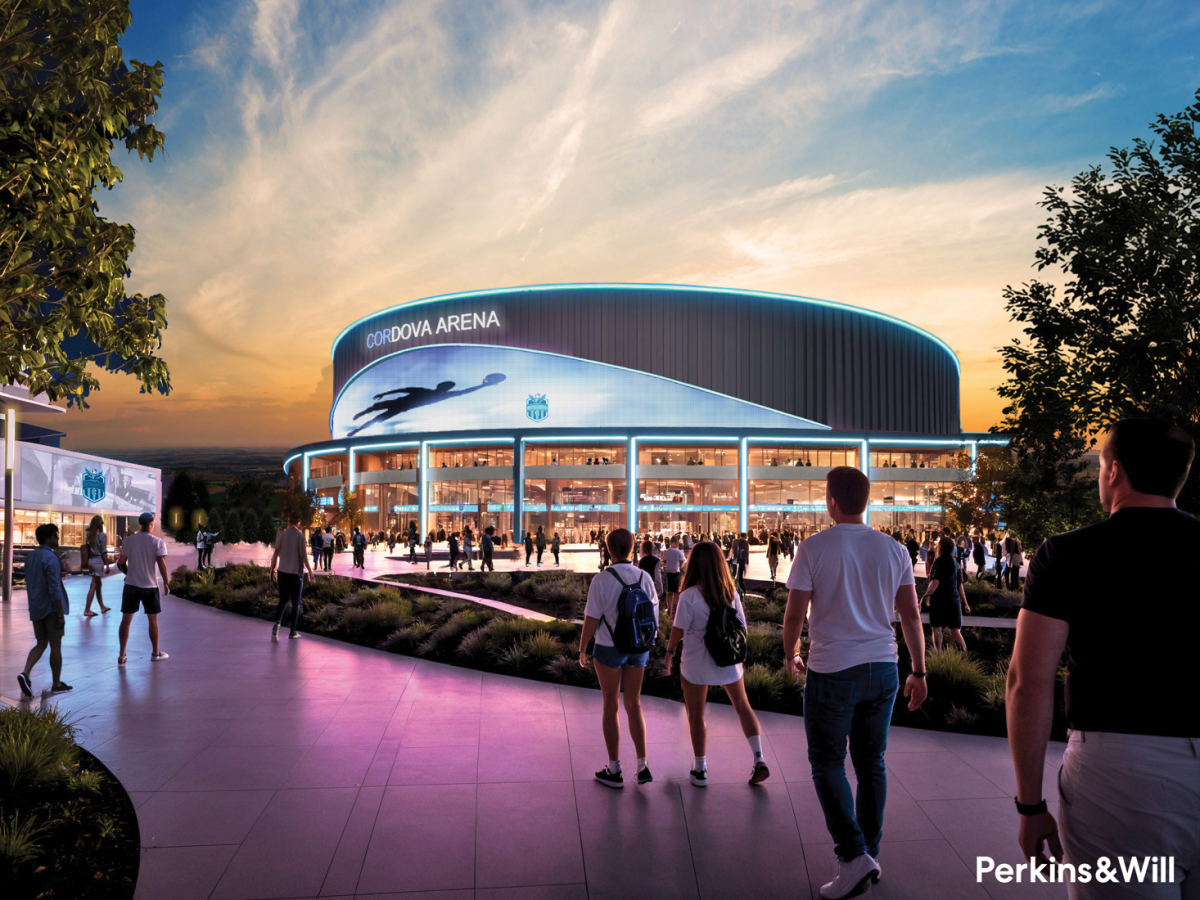
This story is part of our September 2026 issue. To read the print version, click here.
When Gregg Lukenbill bought the NBA Kansas City Kings in 1984 and built ARCO Arena the following year, it kicked off an era of stadium and arena construction in the Capital Region that continues today.
Now, a decade after Golden 1 Center opened to reshape downtown Sacramento, bringing in an estimated $665 million a year in revenue to the region, according to a Sacramento Area Council of Governments report, a growing region is abuzz with proposals for new arenas and stadiums that have the potential to transform Sacramento County’s sports and entertainment landscape.
These plans span various locations, including Rancho Cordova, The Railyards, Citrus Heights’ Sunrise Mall, Cal Expo’s former horse racetrack and the Bridge District in West Sacramento.
But are there enough investors in the region to support all these projects?
Some, like the stadium for Sacramento Republic FC fans, appear on track. Meanwhile, innovative projects like the Cordova Arena and the remaking of Sunrise Mall have passed major hurdles and are moving steadily forward, while other plans, including for a new Sacramento State football stadium and a Major League Baseball expansion franchise, have a ways to go before becoming reality.
“To me, it all represents an opportunity to bring things to Sacramento that we haven’t had here before,” says Mike Testa, president and CEO of Visit Sacramento, who has seen the economic value venues like Golden 1 Center, Sutter Health Park and Discovery Park can have on a region. “The more venues we have in this region, the more entertainment you’re going to see for the people who live here.”
Lukenbill, who bought the Kings at age 28, successfully built both ARCO Arenas, opening the second in 1988. But he has also been behind some highly publicized failed efforts to bring Major League Soccer, professional baseball and the NFL’s Oakland Raiders to Sacramento since forming the Sacramento Sports Association in the late 1970s.
Despite his clashes with local officials, the colorful Lukenbill says he is optimistic the growing Capital Region can support new ventures, pointing to the 2025 Sacramento Area Council of Governments report, which outlines how the six-county region is projected to grow by another 580,000 residents by 2050, putting the total population at around 3.1 million.
“The projections were off the chart; just huge,” says Lukenbill, noting how attitudes among government officials towards building new venues are “warmer” than in his day.
Here’s a look at the major proposals that are making news, their various stages of development and funding mechanisms.
Sacramento Republic FC’s 20,000-seat Railyards stadium
Sacramento Republic FC broke ground in August on a 20,000-seat,
$450 million canopied stadium at the historic Railyards. (Photo
by Steve Martarano)
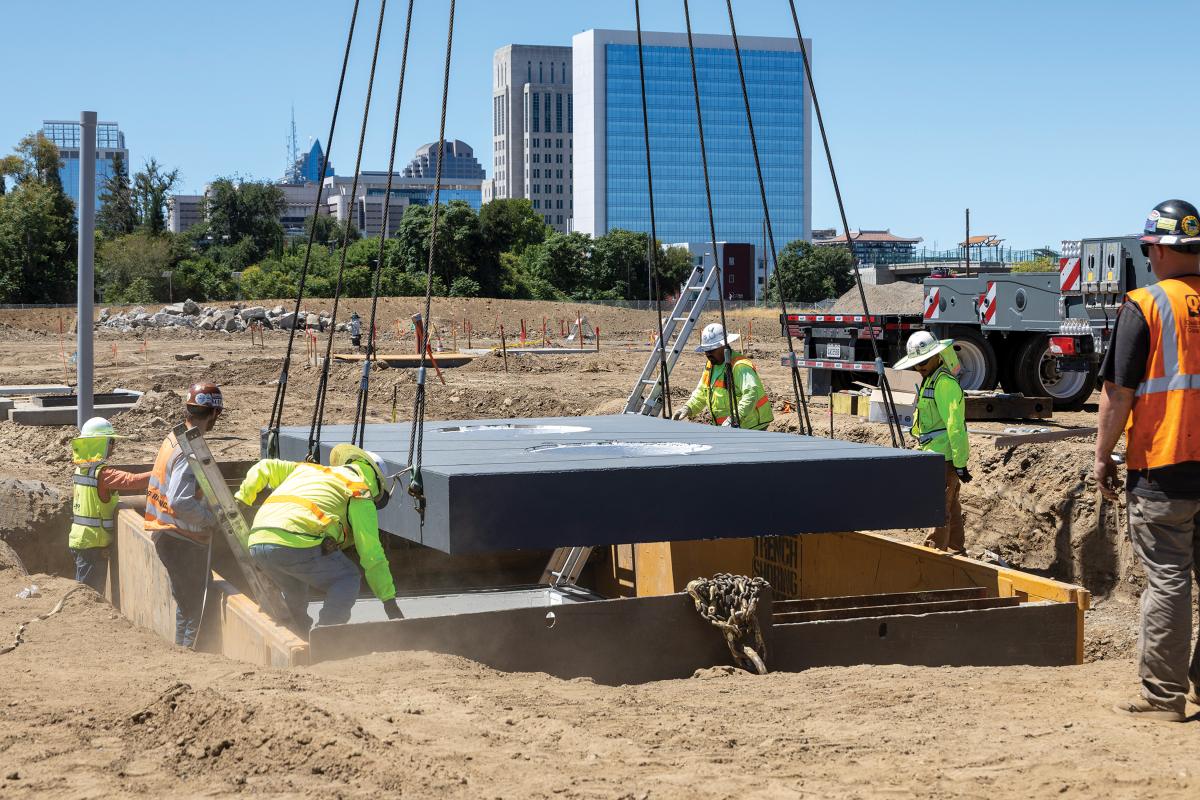
Luxury suites are being sold, and infrastructure work began in July for Sacramento Republic FC’s $450 million canopied 20,000-seat soccer stadium and its surrounding 17-acre mixed-use development that will serve as the cornerstone of a stunning overhaul of the 240-acre historic Railyards district.
The stadium just north of downtown Sacramento, which could expand to 27,000 seats for concerts and other events, is on track to open in 2028, says John Jacobs, vice president of communications for Sacramento Republic FC. Originally announced at a summer 2025 groundbreaking to seat 12,000 with partner Wilton Rancheria, the first tribal nation to own a men’s professional team and stadium, the project was almost doubled in size with more seating earlier this year.
“A 20,000-seat Republic Stadium — with a roof over every seat, safe standing for our supporters and world-class amenities throughout — is not an overreach,” says Republic FC Managing Partner Kevin Nagle in a March 2026 news release announcing the bigger stadium. “It is exactly the venue Sacramento has earned, and we are proud to deliver it.”
On a late July morning, while construction of a new Kaiser Permanente hospital was starting nearby, Sac Republic officials toured the Railyards site with Lund Construction representatives while workers installed a giant SMUD electrical vault as progress began in earnest. That same night, the city held an open house, allowing visitors to see all ongoing developments for the Railyards project, which Jacobs says will essentially double the size of downtown Sacramento once completed.
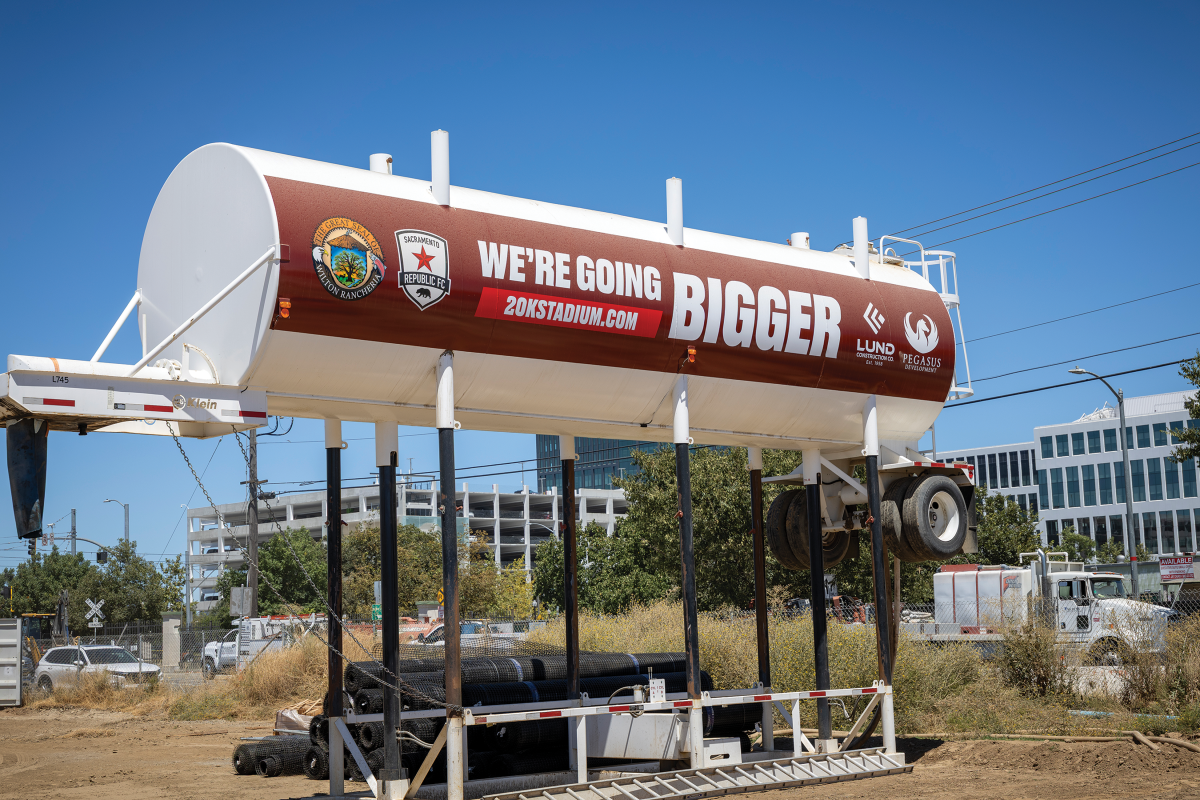
A sign promises the coming Sacramento Republic FC stadium at the
Railyards. (Photo by Steve Martarano)
A new Sacramento Regional Transit station is also expected to open later this year in The Railyards, connecting the area to the rest of the region.
Sac Republic continues its 13th season competing in the 25-team United Soccer League. Sac Republic joined the league in 2014, winning the championship for the only time that season, after constructing the 12,000-seat Heart Health Park (then Bonney Field) at Cal Expo in the middle of the season, where it continues to play.
Sacramento is usually among the leaders in USL attendance, averaging close to 10,000 per game, prompting the years-long buzz of a Major League Soccer bid, which became a short-lived reality in 2019, along with designs for a new stadium and the Railyards development plans. The MLS bid and stadium plans, however, were shelved in early 2021 in the wake of the COVID-19 pandemic and the departure of major investor Ron Burkle.
How it will be funded: The SRFC Railyards stadium funding sources are mainly coming from the team’s ownership group Wilton Rancheria — estimated at $175 million to $325 million — along with public infrastructure support from the city, which will support the surrounding district using future tax revenues, using mechanisms including an Enhanced Infrastructure Financing District.
Rancho Cordova’s 7,500-seat indoor soccer arena and entertainment complex
Construction is expected to start soon on a 7,500-seat indoor
soccer arena and entertainment complex in downtown Rancho
Cordova, referred to as DOVA. (Courtesy rendering)
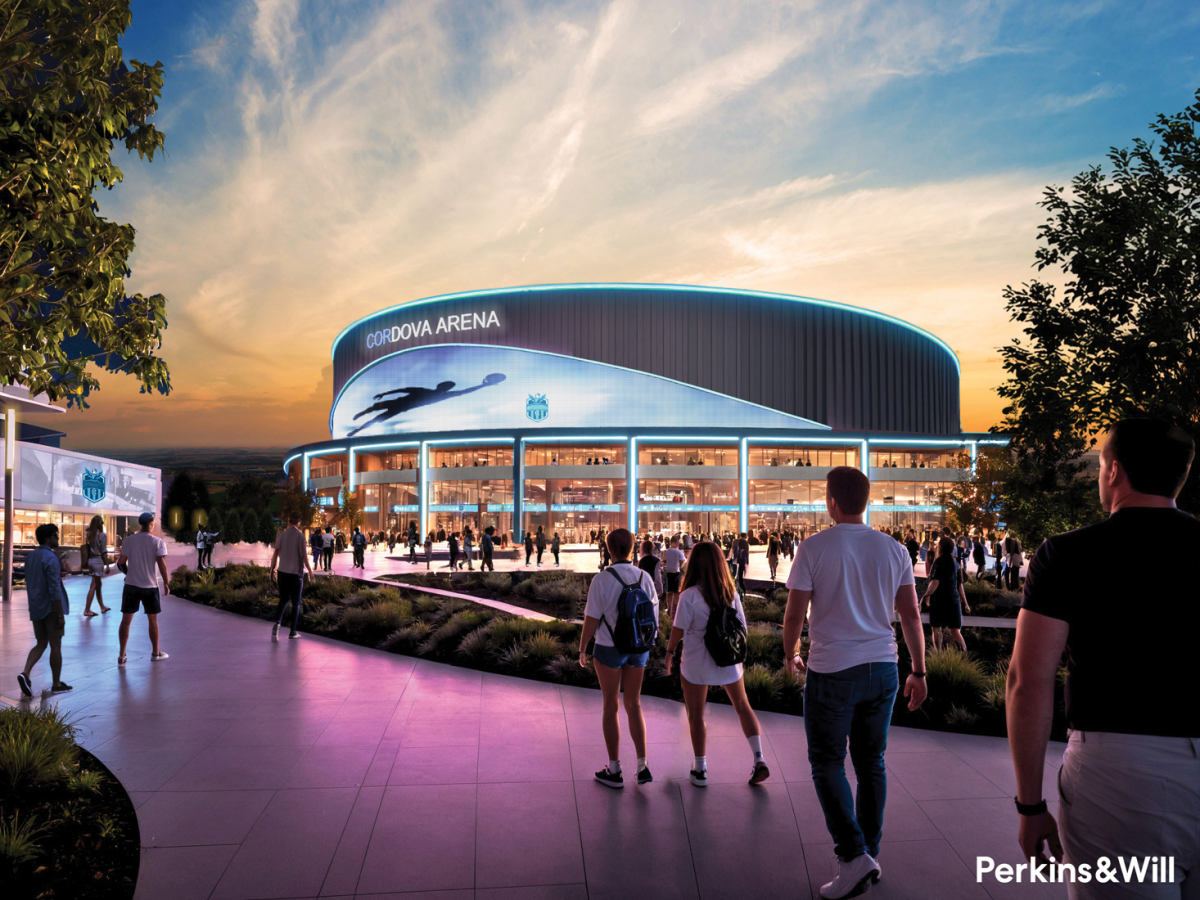
Construction is planned to start in September for a game-changing “anchor” in Rancho Cordova. DOVA, short for downtown Rancho Cordova, is a $175 million sports-anchored entertainment district featuring a 7,500-seat arena that will host men’s and women’s Major Arena Soccer League teams beginning in the fall of 2027.
Located on a 28-acre parcel at Kilgore Road and Trade Center Drive, the venue will also host other entertainment events, including concerts and boxing, and have the ability to increase its capacity to 10,000.
The project is led by local developer Joshua Wood, CEO of KozPure Development, Alpha One Sports and Entertainment Group, and a member of Comstock’s editorial advisory board. The entertainment district would also include at least two hotels totaling at least 800 rooms, approximately 640 residential units, an outdoor plaza and a mix of retail and dining establishments.
Charanjeet “Charlie” Kaur Tiwana-Purewal, co-founder, president and COO of KozPure Development who is also on Comstock’s board, says the arena will be a technologically advanced, immersive digital experience with LED components on both the interior and exterior.
“It essentially creates a downtown — a second downtown — for the region,” Tiwana-Purewal tells Comstock’s. “What it means for the city is it’s going to bring in jobs. It’s going to help with driving the economics. It’s going to help with taxes and being able to fund other types of services and public-type events. The community’s excited about the project, and so it really just helps elevate Rancho Cordova and keep pushing towards the vision that everybody in the city here has.”
Rancho Cordova Mayor Siri Pulipati said in a 2025 news release that the area will spur an estimated $4.5 billion in economic growth over 12 years.
How it will be funded: The arena project will be primarily financed through private investors and lenders secured by developers KozPure and Alpha One Sports and Entertainment Group. Officials say taxpayers won’t pay for construction — the City of Rancho Cordova is supporting the project through targeted public assistance, including fee waivers, land dedication and shared revenue and traffic costs.
Sunrise Mall Sports Center
The Sunrise Sports Center is part of the proposed Sunrise
Tomorrow Plan to redevelop the former Sunrise Mall site for mixed
use. (Courtesy rendering)
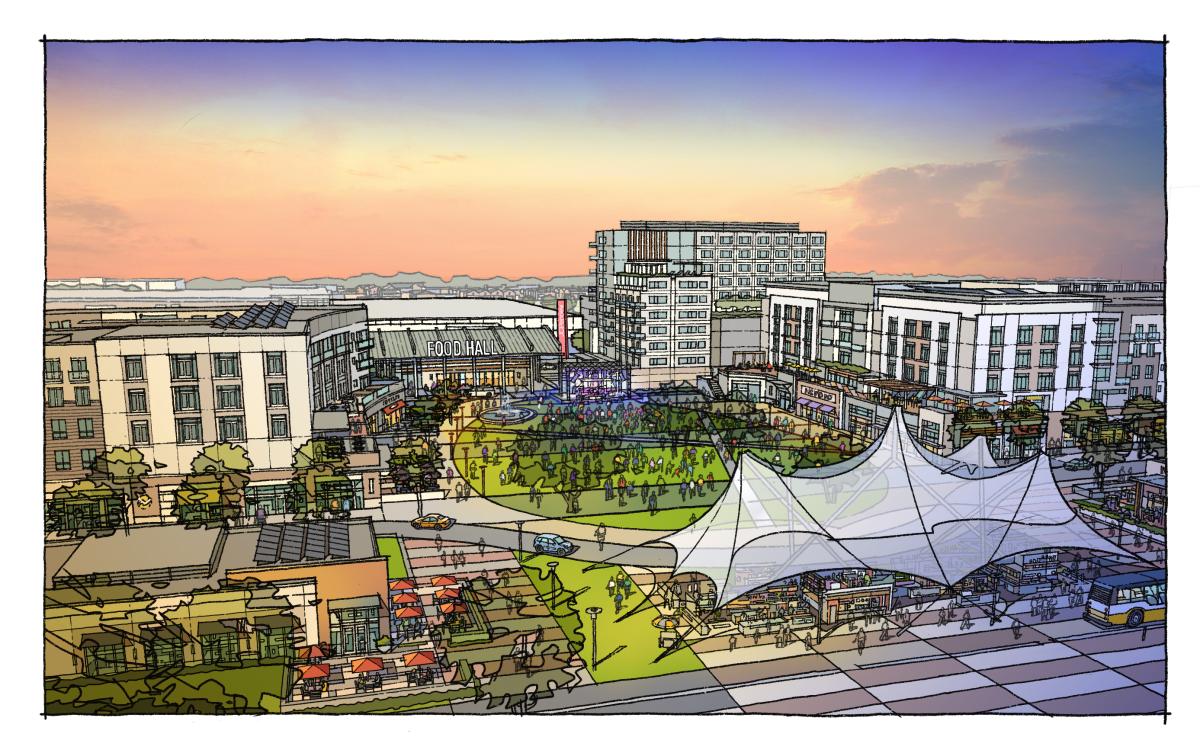
Developers are planning to begin construction in the first quarter of 2027 for a project that will turn the iconic and now mostly vacant 100-acre Sunrise Mall in Citrus Heights into a 160,000-square-foot sports and entertainment complex anchored by a 4,000-seat multi-use ice arena.
Called the first sports facility of its kind, it’s expected to draw approximately 1.3 million visitors a year and was approved by the Citrus Heights City Council in March 2026. The facility is designed to host a wide range of activities, including youth and amateur sports, and will feature two NHL-sized ice sheets and lit multi-use turf fields. It will host regional tournaments, recreation leagues, concerts, performances and community events and will be open for 20 hours each day, 365 days per year.
Meghan Huber, economic development and community engagement director for the City of Citrus Heights, says the proposed sports center’s impact on the city “can’t be understated.”
“It has huge economic development potential,” Huber says. “The arena really serves as a catalyst project to help achieve the goals for the remainder of the site. The arena is about 13 acres of the total 100 acres, which means there are 87 acres left to play with.”
Development partners include Tallen Capital and The Mettle Shop, a sports and entertainment company involved with Sacramento Republic FC and the opening of Raley Field (now Sutter Health Park) and Golden 1 Center. In July, The Mettle Shop signed a purchase and sale agreement with Tallen Capital, giving them site control, announced Mettle Shop CEO Joe Wagoner.
“Sunrise Mall was the destination for commerce and community in the region for so long, and it’s declined in so many ways,” Huber says. “And what this project has the potential to do is bring it back full circle in all of its majesty and create a new regional destination.”
How it will be funded: The Sunrise Sports Center project includes more than $60 million in private investment from The Mettle Shop and Tallen Capital Partners, while the City of Citrus Heights has also committed to seeking revenue bonds that will leverage its credit rating to help secure more favorable financing, the city stated in a news release. While most municipal bonds are typically repaid with tax revenues or other public funding sources, these bonds are designed to be repaid with revenue generated by the facility itself and will not require a new tax or assessment on residents or businesses.
Sacramento State’s football stadium proposals
Sac State football, shown here playing at Hornet Stadium, has
proposed a new sports venue to be built at Cal Expo at the former
harness horse racing site. (Photo by Steve Martarano)
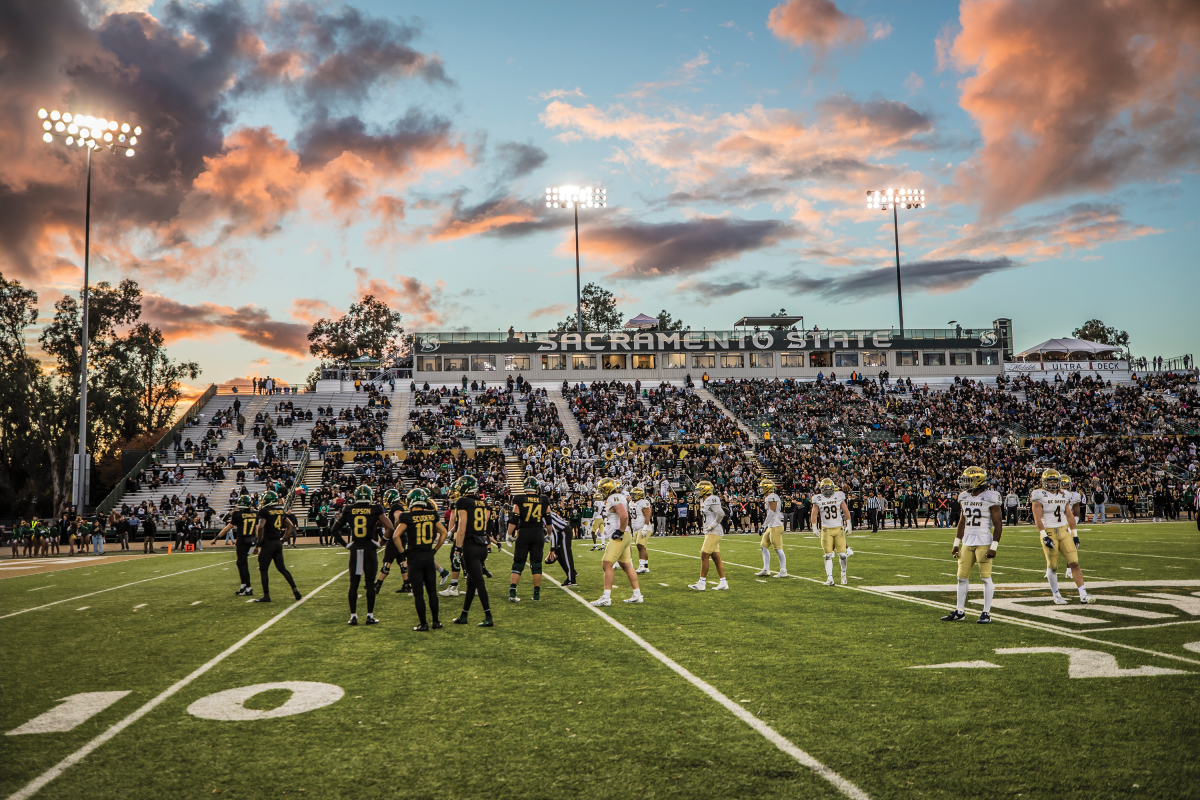
As Sacramento State’s football team prepares for its historic first season in the higher-level Football Bowl Subdivision’s (FBS) 13-member Mid-American Conference, the program is moving on two fronts — upgrading Hornet Stadium while continuing to explore other stadium options.
In 2024, Sacramento State announced plans to construct a new football and multi-use stadium at the site of the current 22,000-capacity Hornet Stadium. That plan changed in 2025, however, when Sacramento State and Cal Expo entered into a formal agreement allowing the two agencies to explore building a new football stadium on land previously used for horse racing, in time for the fall 2026 season — a timeline that was not met.
The proposed 25,000-capacity football stadium at Cal Expo, located less than three miles from Sac State’s campus, would replace Hornet Stadium as the school moves into the new, higher-profile conference.
Talks with Cal Expo haven’t progressed much since the 2025 announcement and Sac State officials haven’t returned calls asking for an update. Sacramento State Athletic Director Mark Orr said earlier this year on Sactown Sports 1140 AM that while the school continues to look into feasibility studies for the Cal Expo facility, it will be investing over $3 million in short-term enhancements to the existing Hornet Stadium for this season by adding more padded stadium seats, expanding the end-zone grandstands, adding suites, restrooms and concessions, as well as upgrading scoreboards and the visiting team locker room.
The first home game of the 2026 season under new head coach Alonzo Carter is set for Sept. 6 against non-league opponent Mississippi Valley State.
How it will be funded: A feasibility study estimated the renovation at Cal Expo would cost about $171 million, significantly cheaper than building an entirely new stadium on campus, which would likely cost between $250 million and $300 million. Not many details, however, have been released regarding the Cal Expo plan other than Sacramento State plans to fund the proposed stadium through a California State University system 30-year revenue bond, repaid using increased revenues generated by the stadium and the move into the higher conference.
Sacramento’s proposal for landing an MLB expansion team
“The Sacramento Pitch” campaign included renderings for a
possible MLB stadium and surrounding development in West
Sacramento. (Courtesy rendering)
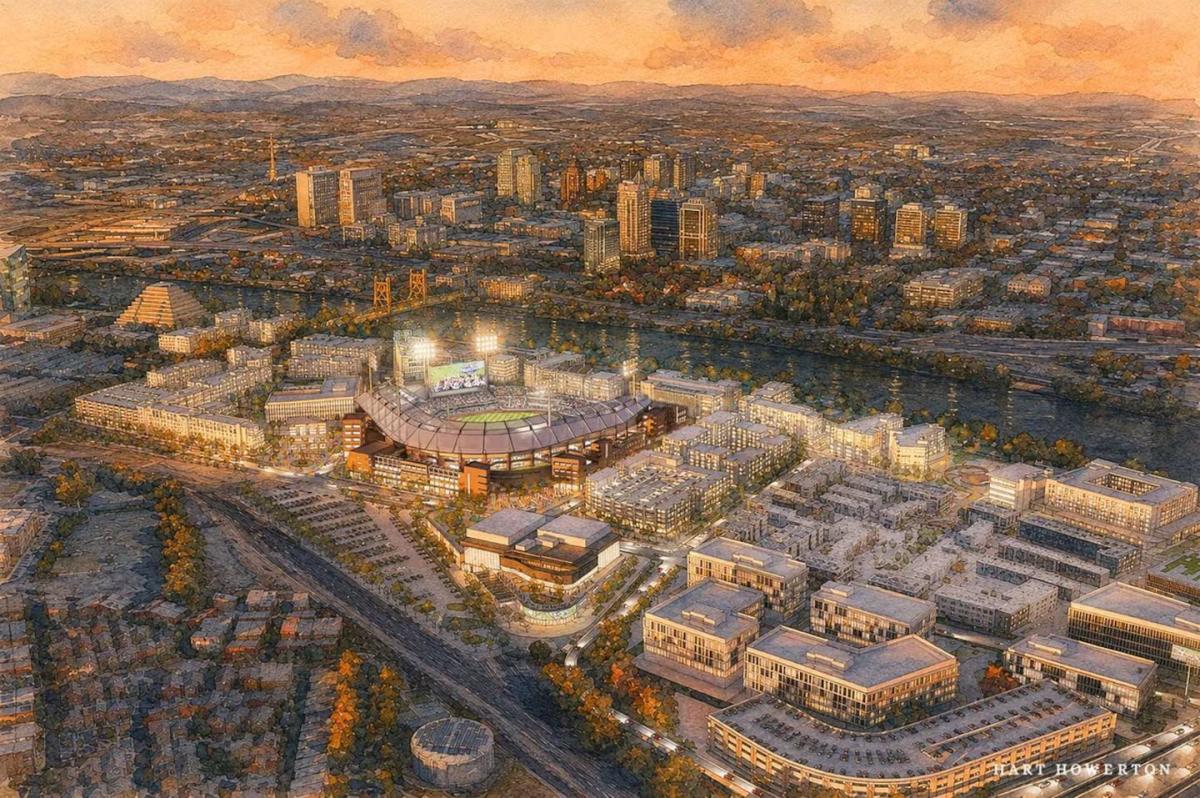
There’s not much new since “The Sacramento Pitch” campaign announced in late May that local officials will be pursuing a franchise when Major League Baseball reportedly expands by two teams before the 2029 season.
The announced, admittedly long-shot bid came with splashy renderings of a 50-acre site in West Sacramento’s Bridge District near 26-year-old Sutter Health Park that would house the team and entertainment district should the Capital Region land a team.
Sutter Health Park is currently home to both the minor-league Sacramento River Cats and the Athletics, formerly of Oakland, through the 2028 season while A’s owner John Fisher completes the A’s new home on the Las Vegas Strip.
The Sacramento Pitch campaign is supported by local baseball legends like Dusty Baker and Derrek Lee and a host of local government and public officials.
How it will be funded: The campaign has secured nearly $2 billion in public-private funding — $800 million in land and private investment from developer Mark Friedman, the Shingle Springs Band of Miwok Indians and United Auburn Indian Community, and $1 billion from the City of West Sacramento. That amount isn’t going to be enough, however. Contending with the other favorites like Salt Lake City and Nashville to land a team means a controlling investor and ownership group will have to emerge to cover the estimated $4 billion to $5 billion needed to obtain and maintain a franchise.
–
Stay up to date on business in the Capital Region: Subscribe to the Comstock’s newsletter today.
Recommended For You
Why Sacramento Thinks It Can Land Major League Baseball’s Next Expansion Team
Region’s pitch for Major League Baseball leans on Sacramento area’s long baseball history and current A’s residency
Capital Region officials recently launched a “Sacramento Pitch”
campaign aimed at bringing a Major League Baseball expansion
franchise to West Sacramento.
Thousands Flocked to Cal Expo as X Games Made Its Sacramento Debut
The three-day event brought elite skateboarders, BMX riders and motocross athletes to Sacramento, drawing roughly 20,000 fans per day
Visit Sacramento’s Mike Testa jokes that the postcard-perfect
weather the weekend of June 26-28 for the MoonPay X Games at Cal
Expo was planned all along.
Ohtani Mania Arrived in Sacramento. Here’s What Happened When the Dodgers Came to Town
Dodgers and global superstar Shohei Ohtani help pack West Sacramento’s Sutter Health Park for memorable three-game series
The three-game series against the Los Angeles Dodgers will
be long remembered as a major touchstone in the A’s’ stay at
Sutter Health Park.
Sacramento Fans Pack Sutter Health Park as A’s Lean Into Local Identity in 2026
A’s open second season at Sutter Health Park with walk-off win and new ‘Sacramento’ jerseys
They’re still not officially the Sacramento A’s, but one thing is
for sure — fans will be seeing a whole lot more “Sacramento” at
Sutter Health Park in 2026.