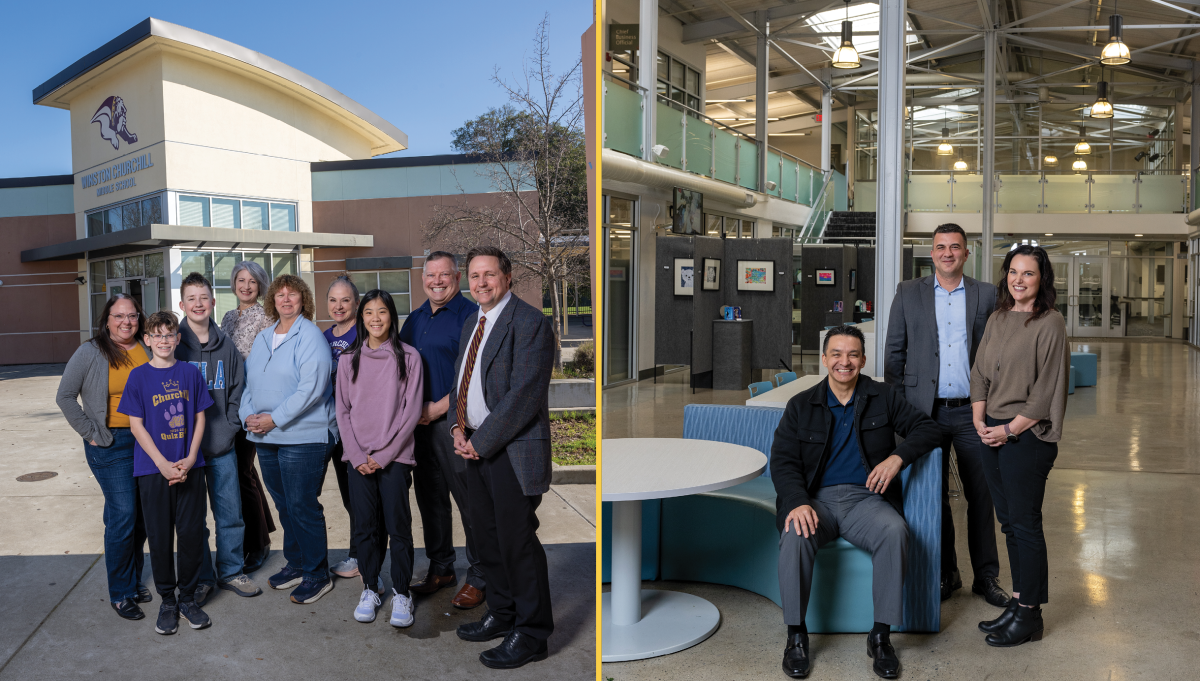
Pictured [L-R]: Faculty, Staff, and Students from San Juan
Unified School District: Nicole Kukral,Robert Sullens, Benjamin
Wyatt, Nicole Naditz, LaDonna Ray, Jenifer Cox, Elizabeth Paik,
F.J. “Harvey” Oaxaca, Timothy “Chip” Dale; Staff from Twin Rivers
Unified School District: Dr. Steve Martinez, Ryan DiGiulio and
Kelly Bettencourt
Launching AI to Empower Students, Teachers and Administrators
As school districts across Sacramento County advance thoughtful
artificial intelligence use, the Sacramento County Office of Education
(SCOE) convenes, listens, and learns alongside them.
“We’ve learned that the most effective AI work
happens when we bring everyone into the conversation early. By
listening to concerns, testing ideas together and building
systems that support good teaching, we can move forward
responsibly and confidently.”— David W. Gordon, Superintendent
of Schools, Sacramento County Office of Education
Twin Rivers Unified School District and San Juan Unified School
District have emerged as leaders in this endeavor, lighting the
path to the most advantageous and ethical uses of both
staff-facing and student-facing AI tools, including MagicSchool,
Brisk, Snorkl and Google Gemini.
“AI can help educators personalize learning, provide timely
feedback and streamline tasks so they can focus more on
students,” says Kelly Bettencourt, coordinator of instructional
technology for Twin Rivers Unified. “When used intentionally, it
enhances rather than replaces high-quality teaching.”
Sacramento County school districts are building a foundation for
AI use through closed AI environments, single sign-on systems and
district-approved platforms. Responsible implementation is not
only possible, it’s essential.
“We use board policy, data privacy standards, district-approved
tools and ongoing professional learning to ensure AI use remains
ethical, transparent and student-centered,” notes Bettencourt.
There is legitimate concern for ethical AI use in education.
Nicole Naditz, program specialist for instructional technology
for San Juan Unified, says, “Our student-facing AI license is set
up so there’s nowhere for students to go astray with AI. It is
intentionally teacher-driven and teachers make the decisions
about which tools to share with students and when and how to
provide those tools. Our student-facing AI tool gives control,
guardrails, visibility and data.”
The benefits of AI are myriad, giving educators more time and
tools to support students through better feedback,
differentiation and engagement. When implemented well, it
strengthens teaching and learning rather than distracting from
it.
“We’re positioning our students to understand their role in
human-centered AI work,” says Naditz. “They learn to lead this
human-AI partnership through their uniquely human skills, such as
critical thinking and evaluation. Upon entering the job market,
they will be better positioned to work in companies and
industries that already have AI tools and to understand how to do
that in an ethical, responsible and productive way.”
Please disable your ad blocker.
We use paid advertising to support the delivery of free content on our website. Please support our small business and independent publishing by disabling your ad blocker in order to view this page. Thank you!