


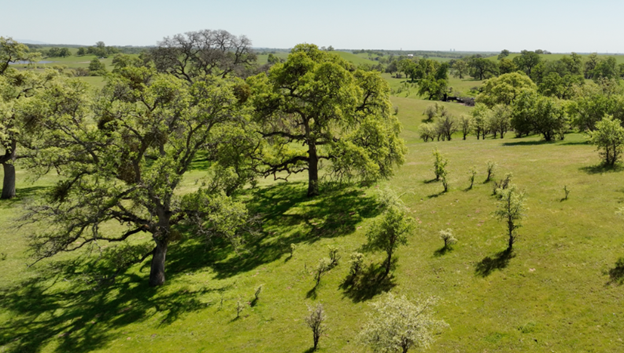
Though SMUD announced Jan. 5 that it would be canceling its power purchase agreement with the Coyote Creek Agrivoltaic Ranch, the future of the project — and whether or not it would have a net benefit on greenhouse gas emissions — remains unclear.
The project, a solar energy facility to be developed by D.E. Shaw Renewable Investments, drew criticism from the public and various interest groups regarding the potential environmental impact related to its location on undeveloped land near the Prairie City State Vehicular Recreation Area. After the project was approved by the Sacramento County Board of Supervisors in November, three separate lawsuits were filed in December contesting the decision.
“The Sacramento County Board of Supervisors approved the Coyote Creek Agrivoltaic Ranch Project despite warnings from California Native Plant Society and partners that the Environmental Impact Report was so deeply flawed it cannot support informed decision-making,” says Brendan Wilce, a conservation program coordinator with CNPS.
The lawsuits were filed by a coalition of off-highway vehicle advocacy groups Dec. 16, a joint filing from CNPS and the Environmental Council of Sacramento Dec. 18, and by Wilton Rancheria Dec. 19. Each lawsuit notes that the final environmental impact report certified by the board of supervisors failed to meet requirements set by the California Environmental Quality Act.
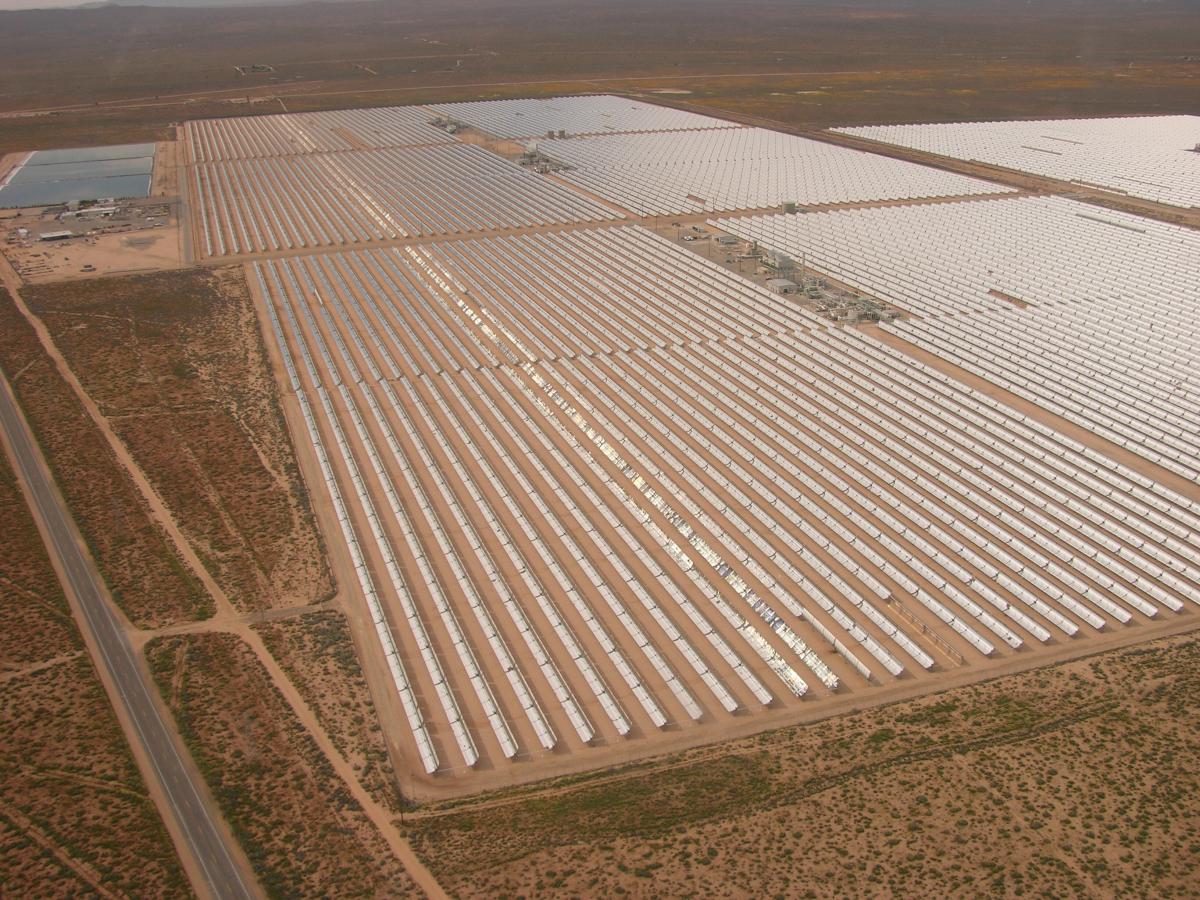
Solar Energy Generating Systems solar power plants III-VII in the
Mojave Desert. (Photo by Alan Radecki via Wikimedia Commons,
licensed under CC BY-SA 3.0)
A particular point of contention for many are the oak trees on the land to be developed and what opponents say are unsatisfactory mitigation efforts by the developer to address their removal. Kate Kelly, a consultant with Defenders of Wildlife, another conservation group who opposed the development, says the mitigation efforts laid out by the developers would almost certainly fail.
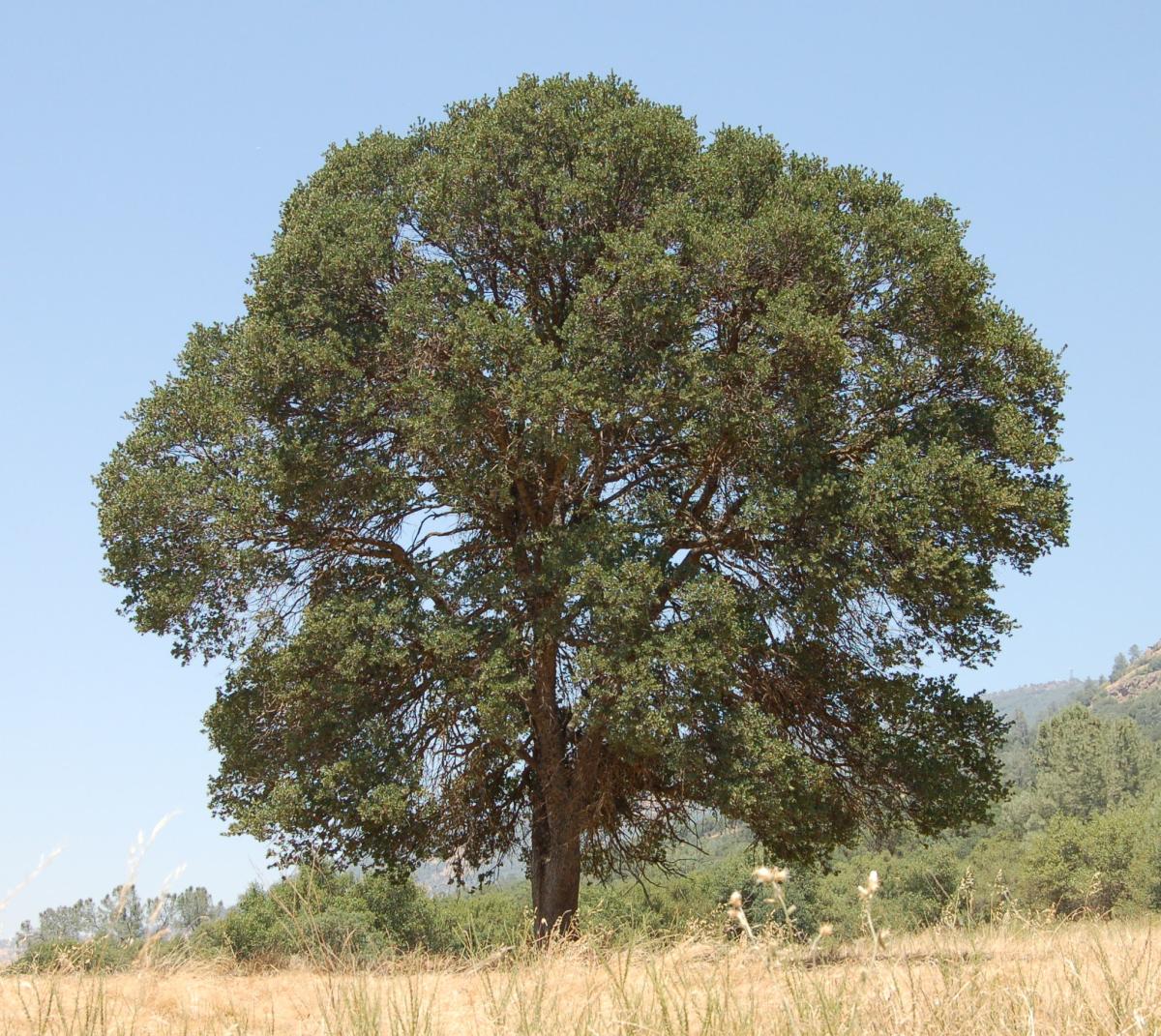
“Blue oak trees in particular are very slow to grow,” Kelly says. “Their mitigation plan is to go collect a bunch of acorns, grow them into seedlings and some Dixie cups by school kids, and then go out and plant them and keep them watered for seven years, at which point they will be less than a foot tall.”
A blue oak tree in Mariposa. (Photo by Yath via Wikimedia
Commons, licensed under CC BY-SA 3.0)
Kelly says that to grow enough to replace the habitat the oak trees currently located on the site provide would likely take hundreds of years, calling the decision to try and develop a solar project on this piece of property “unconscionable.”
“I’ve been evaluating and looking at projects statewide for the last 15 years,” Kelly says. “Along with my colleagues at Defenders of Wildlife, between all of us, this is one of the three very worst projects that we have seen anywhere in California, period.”
Wilce of CNPS also noted the importance of the oak trees to the local ecosystem, supporting over 300 types of wildlife in the area.
“Destroying oaks in the name of clean energy is especially ironic, because trees, especially oaks, are one of nature’s most powerful means of carbon sequestration,” Wilce says. “Some ecologists also use the term ‘keystone species’ to describe oaks, because of their outsized importance to ecosystems.”
Are trees better for the environment than solar?
Figuring out whether the trees have a greater climate benefit than the solar project would provide requires complex carbon accounting that no one appears to have done, or at least published, yet.
Dennis Baldocchi, a professor emeritus of biometeorology in UC Berkeley’s department of environmental science, policy and management, has researched the oak savanna near Ione, a similar landscape to that near Prairie City, for the last 25 years. He says oak savannas like those at Coyote Creek are carbon sequesters, though they are average compared to other ecosystems.
“They take up on a landscape basis about 150 grams of carbon per meter squared per year,” Baldocchi says. “The thing about savannas is that they are a savanna. The trees are widely spaced, so they may take up less carbon than these wetlands that I’m working with in the Delta.” In comparison to the oak savannas, Baldocchi says wetlands can take up to 800 grams of carbon per square meter.
The solar project is estimated to produce enough power to power 44,000 homes, generating 200 MW of power and building 100 MW battery storage, according to the project’s website. While Baldocchi could not say whether the project would have a bigger impact on carbon emissions than simply leaving the environment as is, he says he believes such solar projects are an important part of lowering emissions overall.
“I’ve always said one of the best things to solve the problem is don’t burn fossil fuels, so if you’re not putting stuff into the atmosphere that’s important,” Baldocchi says. “Having a solar farm to transition as an energy source is a way to do that in terms of the whole atmosphere itself, essentially.”
Baldocchi says when it comes to wattage being produced, someone needs to consider how much fossil fuel is being burned to produce an equivalent amount of energy. He says the natural climate solutions provided by ecosystems like those at Coyote Creek also need to be factored in, as they act as an important climate sink.
Prairie City State Vehicular Recreation Area in 2015. (Photo by
Ray Bouknight via Wikimedia Commons, licensed under CC BY 2.0)
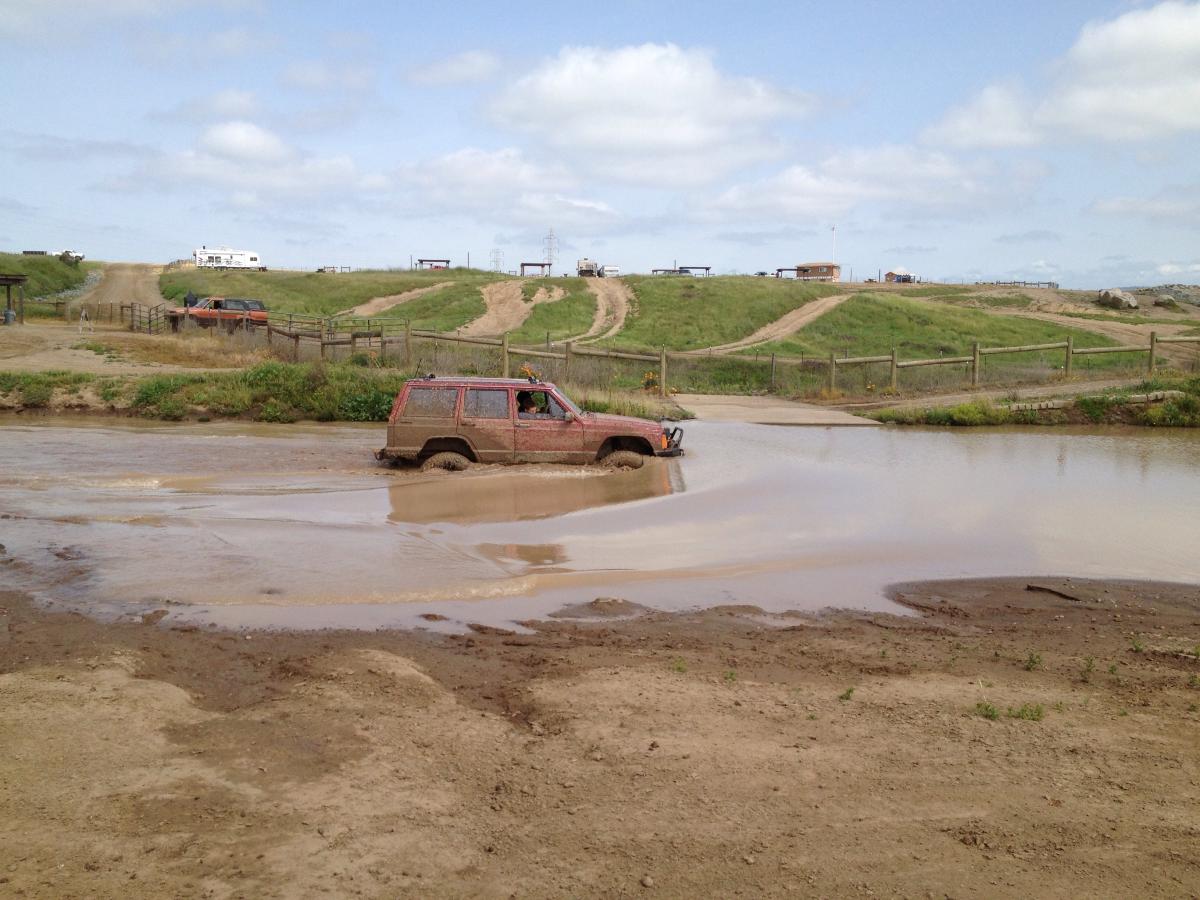
In addition to the environmental concern, the potential intrusion of the project into the Prairie City State Vehicular Recreational Areas raised concerns from various OHV advocacy groups, including the California Four Wheel Drive Association, American Sand Association, and Blue Ribbon Coalition, who formed a coalition to file their own lawsuit. Rose Winn, a consultant for the California Four Wheel Drive Association, says that in spite of the project being in the works for years she only became aware of it in late April 2025, a few days before public comments for the draft of the environmental impact report.
“What was alarming to us is that even though this project is not only next door to but encroaching into Prairie City SVRA, the whole OHV community was very deliberately excluded from outreach and involvement within the scoping and planning process,” Winn says. “When I actually was able to read through the DEIR, I was immediately alarmed by the significant impacts not only to environmental resources, but also to the function of Prairie City SVRA itself, the framework of how this assumption of approval of an easement was presented and the fact that we were excluded from the scoping and planning conversations in full.”
Some of the tracks at the Prairie City State Vehicular Recreation
Area, which sit next to the site for the Coyote Creek project.
The area is one of nine SVRAs in the state, Rose Winn says.
(Image courtesy of the California Four Wheel Drive Association)
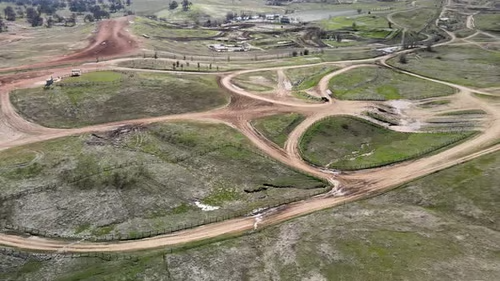
Winn says that in addition to this exclusion, the coalition also noted various issues with the CEQA process, saying there were elements of cross-agency cooperation that were either bypassed or completely ignored.
What’s next for Coyote Creek?
When asked about the specific reasons behind SMUD’s cancellation, Gamaliel Ortiz, a public information specialist with SMUD, echoes some of the reasons given in its Jan. 5 statement, including supply chain issues, ongoing litigation and environmental concerns.
“SMUD evaluates the benefits of all proposed renewable energy projects,” Ortiz says. “The collective uncertainties led SMUD to cancel the PPA pursuant to contract terms.”
Ortiz also provided a copy of the termination notice sent by SMUD to the developer, which goes into some more detail on the issues, including multiple delays and price increases.
“Seller (Sacramento Valley Energy Center, LLC) represented to Buyer (SMUD) that the Project had the “buy-in” from key stakeholders, including but not limited to the Wilton Rancheria,” the letter reads. “Given that Wilton filed one of multiple different lawsuits that Buyer is aware of challenging the project, that certainly does not appear to be the case.”
Both Wilton Rancheria and the board of supervisors declined to comment, citing the ongoing litigation, though the board did give the following prepared statement:
“The County is aware that SMUD announced that it has canceled its power purchase agreement to serve as an off-taker for solar power generated by the Coyote Creek Agrivoltaic Ranch project. The project applicant may continue to explore additional off-take agreements consistent with existing approvals, so the County is still assessing the impact of SMUD’s decision.”
DESRI confirmed it would continue to pursue the project and also gave its own statement, attributed to Chief Development Officer Hy Martin.
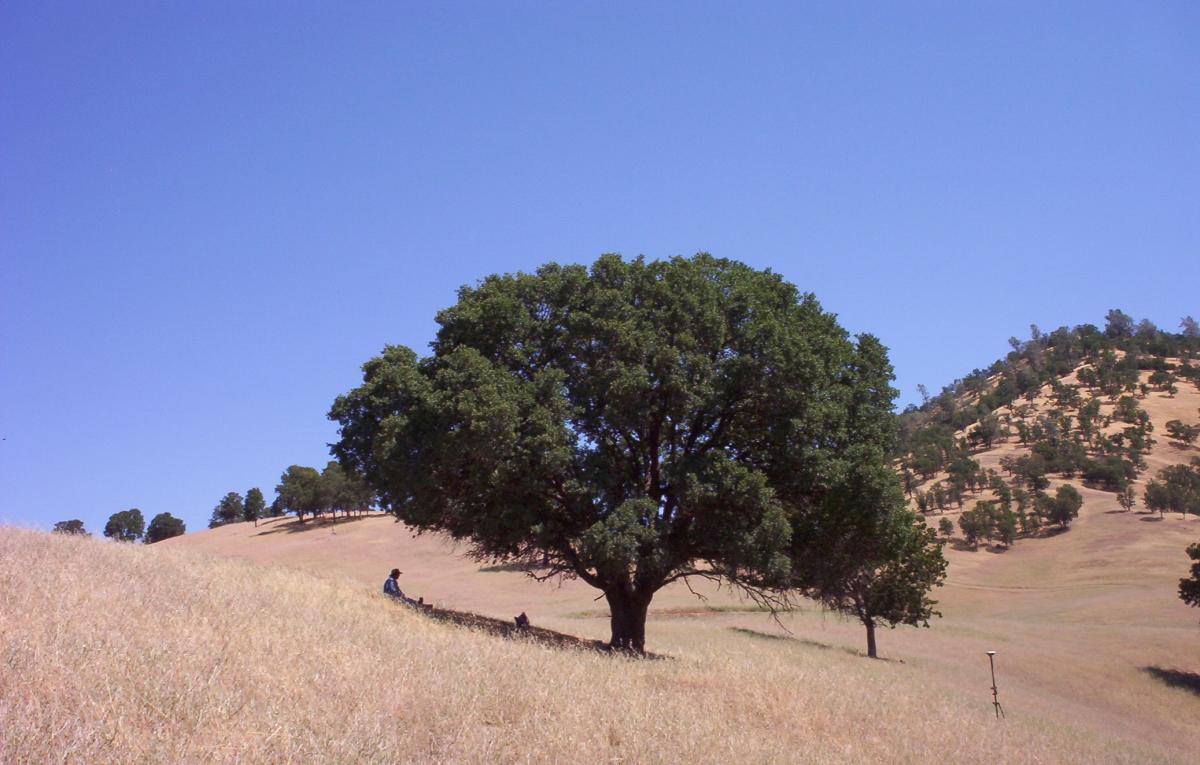
Oak savanna on Cortina Rancheria land. (Public domain photo by
the Bureau of Land Management)
“We commend the Sacramento County Board of Supervisors for their bold leadership in unanimously approving the Coyote Creek Agrivoltaic Ranch last November. The project is well positioned to permanently preserve extensive oak woodlands and wetland resources at Barton Ranch, generate meaningful property tax revenue, support local economic development, and advance the goals of the County’s Climate Action Plan. Coyote Creek has been in development for many years and during that time, our team has engaged meaningfully with the community to build lasting partnerships.
“DESRI values the long-standing partnership we have built with SMUD and our proven track record of successfully developing, constructing, owning, and operating projects throughout the region. We remain committed to delivering high-quality projects that support Sacramento County and California’s renewable energy goals and mandates.”
What will happen to the project going forward looks to rely heavily on what happens with the ongoing litigation. Kelly says court cases like this can often take years, while Winn says the litigation could affect the developers ability to acquire proper permits.
“They have to receive all their permits, and I believe that the permitting process may be complicated now by litigation,” Winn says. “And even if they did secure all the permits, they still may not, I believe, be able to move forward.”
Wilce says he was hoping for a ruling in favor of the groups against the county, noting it would give them the opportunity to revisit.
“We expect our local decision-makers to work with landowners and others to achieve win-win solutions for our communities,” Wilce says. “Decision-makers owe it to their constituents to ensure they have full and accurate information. That was not the case in this decision, and the community deserves better.”
–
Stay up to date on art and culture in the Capital Region: Follow @comstocksmag on Instagram!
Recommended For You
This Collaboration Between Farmers, Water Officials and Environmentalists Is Saving Wildlife
The Floodplain Forward Coalition helps farmers help salmon while protecting water supplies
Water policy in California is defined by fighting. Plans to fix the system languish for decades, and if they’re implemented, they end up in court for many more years. The Floodplain Forward Coalition has broken out of that paradigm.

Startup of the Month: Off The Wall Energy
Energy device puts power usage in consumers’ hands
With a family of six, Bob Guimarin had three “power problems”: 1) too many cords, 2) too many outages and 3) not enough ports in the van during road trips. Being a serial entrepreneur, Guimarin came up with a way to simplify power management and reduce reliance on external sources.

The Power and Potential of Seaweed
From keeping oceans healthy to being used as an alternative to plastics, researchers believe seaweed has a multitude of uses
Nearly 2,000 miles northwest of Sacramento, Matthew Perkins rode a boat out into the Gulf of Alaska and saw nothing but endless potential for growth. “It’s kind of overwhelming how much opportunity there is,” he says. “You’re on the water, snow-capped mountains in the backdrop, you look down and see this incredible biomass growing. It’s literally the bounty of nature.”
Folsom Powerhouse State Park Celebrates 130 Years
The Back Story: This American River treasure used to light up the Capital Region
The former utility is a celebration of an earlier time’s creative engineering and is now a verdant state park and learning center just above Lake Natoma.