



From Leonardo DiCaprio speeding down Tower Bridge in 2025’s “One Battle After Another” to Kristen Stewart getting a scoop at Gunther’s Ice Cream in 2024’s “Sacramento,” the capital city has been a backdrop for a number of big-name film productions in the past few years. But, as the latter film points out, Sacramento often feels further from the glitz and glam of Hollywood than the six hours on I-5 would suggest.
Is it possible for an actor to break into that world while living in Sacramento? We spoke to Sacramento-based actors at all stages of their careers, from students starting out to professionals with dozens of roles on their IMDb pages, to get a sense of what it’s like to launch or land a film or television career in the Capital Region.
The good and the bad of working out of Sacramento
Sacramento has produced many star actors, from Betty Inada to Brie Larson, but not many have returned home after their big break. One exception is Andrew Gray, who played Troy Burrows, the Red Ranger in “Power Rangers Megaforce.” Gray grew up in the Sacramento area and says he used acting both as a way to make use of his athleticism and to deal with issues at home.
“I grew up in a broken home, so it was an escape for me,” Gray says. “I think that’s also what Power Rangers was. It was something where there was athletics, there was teamwork, there was heroism. It was an escape, and it’s something that I felt was really noble.”
Andrew Gray, who played Troy Burrows in Super Megaforce Red
Ranger, at Power Morphicon 2014. (Photo by Dennis A. Amith,
J!-ENT, licensed under CC BY-NC 2.0)
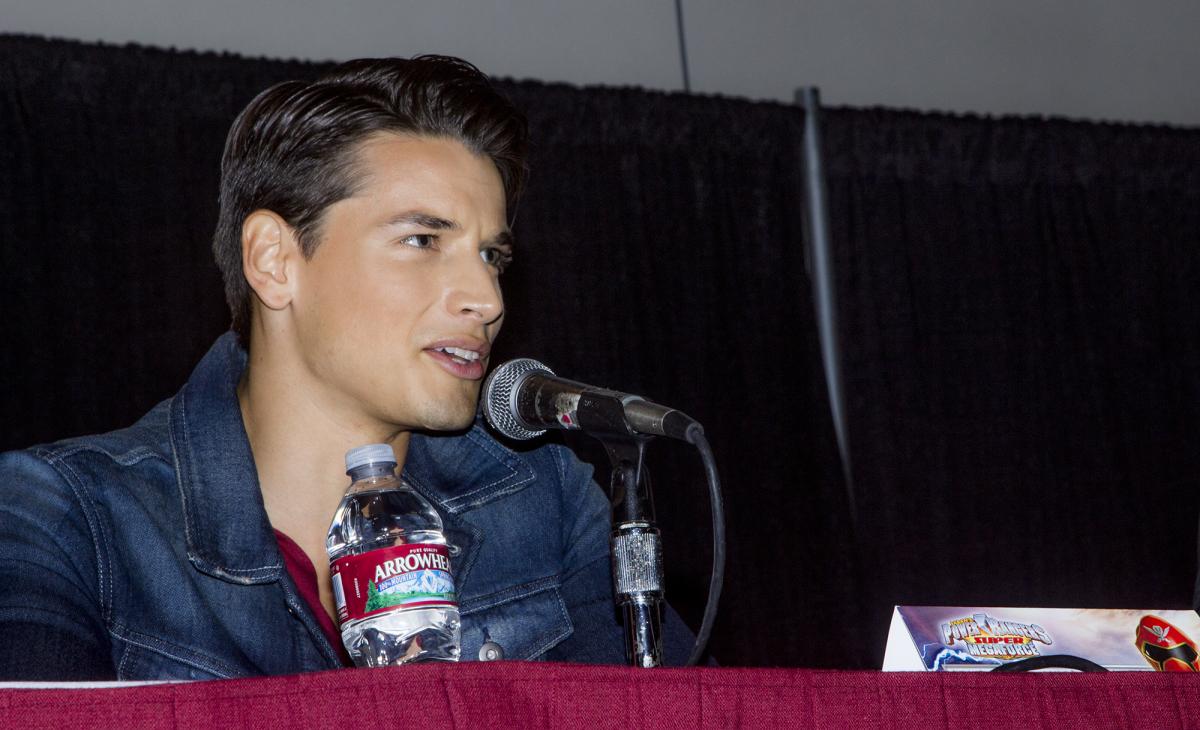
Gray’s career took him all over the world before he returned to Sacramento in 2021. In that time, he says he’s made an effort to get to know the acting community here a bit more.
Related: Ready, Set, Action! Filmmakers big and small are finding the region a congenial place to make movies
“I’ve gone to a couple of mixers here where I’m meeting people that are creators, creatives that are drone operators, DPs, producers, directors, writers, photographers, those kinds of things.” Gray says. “They’re hungry, and that’s good.”
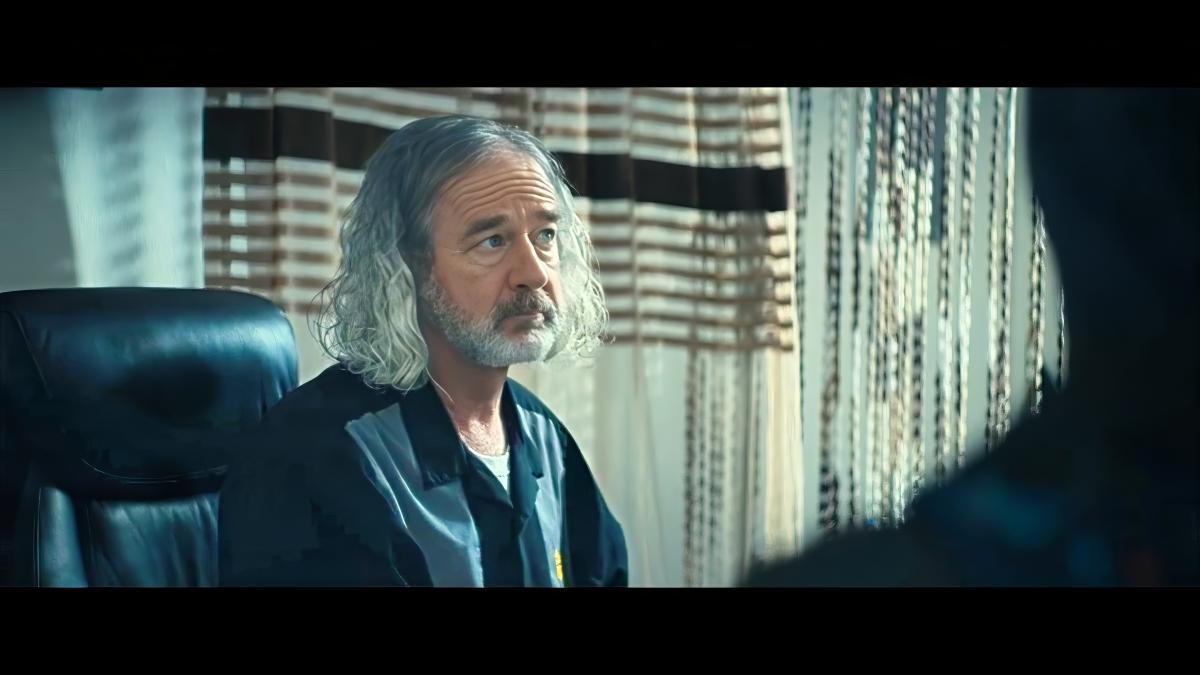
Jeffrey Weissman, who played George McFly in “Back to the Future II” and “Back to the Future III,” echoes this sentiment. After decades playing dozens of roles in Hollywood productions, he moved from the Bay Area to the Sierra Nevada foothills during the tail end of the COVID-19 pandemic.
A promotional shot of Jeffrey Weissman for the film “No Address,”
released in February 2025. Weissman is best known for playing
George McFly. (Image courtesy of Jeffrey Weissman)
“The beauty of the community up here is that, once again, there’s a lot of people who want to be a part of your film project for their own need to make art and storytelling,” Weissman says. “It’s not viewed, as I would feel in Los Angeles, like it’s a competition when you go on an audition and everyone’s eyeing each other.”
Weissman, who has worked as an acting coach and teacher for over 30 years, says that in his experience, the Sacramento acting community has overall been “fantastic.” He is working to create connections with local filmmakers here in addition to those he already has from the Bay Area.
Gavin Alton-James Bailey took part in the J Street Film Festival
hosted by the Sacramento State University film program at Crest
Theater. (Courtesy photo)

One of the biggest factors for many actors choosing to stay in the area is the difference in cost of living compared to a major film hub like Los Angeles. Gavin Alton-James Bailey, of Shingle Springs, a 20-year-old acting student at Studio 24 in Folsom, noted that this lower cost allowed him to pursue acting while still being able to pay bills.
“The cost of living is definitely one thing that I am taking advantage of right now, and that this is a good place for artists who don’t necessarily make a livable salary on acting,” Bailey says. “It allows them to survive while creating and training and taking risks, and they can do so while having a roof over their head.”
Bailey also says he felt the acting community in Sacramento was another major positive, noting it felt far less competitive than in Los Angeles.
Related: Film Festivals Take Center Stage in Sacramento
While many actors based in Sacramento say they love living in the area, they also concede that there aren’t necessarily as many opportunities within the borders of the Capital Region as there are further south, with many finding a bulk of their work in the Bay Area or making the much longer trip to L.A. or out of California altogether.
Francois Battiste, who’s starred in a variety of theater productions and guest-starred in a four-episode arc of “Law & Order: Organized Crime,” made his way to Sacramento in 2014, having spent the previous 12 years in New York. Battiste says that while the Sacramento area is great for raising a family, the majority of his work is outside of it.
“I laid tracks down in New York City and worked elsewhere. It allows me to continue to work both in New York, on Broadway, off-Broadway, in L.A., and various places in between,” Battiste says. “To be completely honest with you, when I’m in Sacramento, I generally am just a dad.”
Battiste says he had been living in the area for almost nine years before he first became involved with the local theater scene. He believes there is a lot of opportunity for growth in the region.
“I’m often asked by a lot of my friends that live elsewhere, ‘What’s it like living in Sacramento?’” Battiste says. “I love it for raising a family, but in terms of artistic endeavor, there doesn’t seem to be as many opportunities.”
Ups and downs of guild membership
Something else that can significantly affect the opportunities for an actor in the area is whether they have SAG-AFTRA membership. The Screen Actors Guild–American Federation of Television and Radio Artists is the labor union for film and television actors in the United States. Bailey of Studio 24, who recently became SAG-eligible through his work in the film “Dream,” notes that there are some obvious benefits to joining the union.
Bunny Stewart sits in the upper area of the Sacramento Natural
Foods Co-op off R Street. Stewart initially became involved with
the local film scene as a makeup artist before starting to take
onscreen roles as well. (Photo by Jacob Peterson)

“They limit the time you can be on set, and they make sure you get a lunch break like any normal job would have,” Bailey says. “They make sure you get fed and there’s water and there’s food on set, as well as they regulate your salary.”
In spite of these benefits, including much better pay, Bailey has yet to apply for full membership due to the simple fact that SAG-AFTRA actors are generally blocked from working on non-union projects, something he says would severely limit his ability to work in the area.
Related: Lights, Camera, Sacto: Warner Bros. movie starring Leonardo DiCaprio highlights Sacramento as filming location
“It’s so much harder to get union projects than non-union projects, that with someone with a limited resume you can almost become stuck,” Bailey says. “You’re seen as inexperienced, but you can’t gain experience outside of the larger projects because you’re blocked from the smaller projects now.”
Bunny Stewart, a local actress and makeup artist who cohosts the YouTube channel “SacTown Movie Buffs,” cites this loss of access to non-union work as the main reason she herself has not pursued SAG membership, saying she is far more interested in the artistic element of filmmaking than money.
“I’ve seen it where a lot of my friends who are SAG, they have to sit on the sidelines while I’m doing all of these really great independent films for, like, a lot less money,” Stewart says. When I moved out here from Chicago, I got advice from another professional actor to not go SAG.”
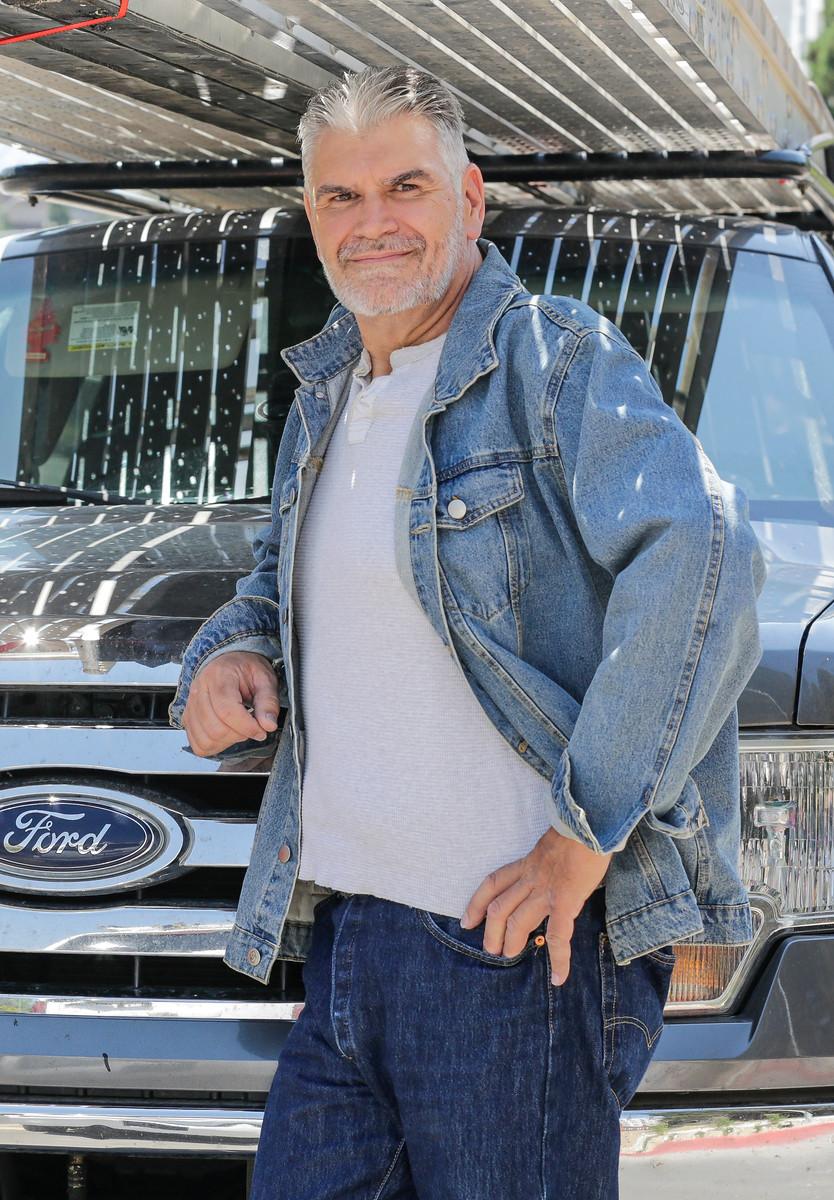
John Demakas, a Sacramento-based actor who joined the union in 2017, notes that there has been a slight decline in SAG-eligible roles in Northern California in recent years.
John Demakas says that actors needed to do the work to find the
different opportunities out there for them, noting that in
addition to film and television he has done work for radio,
audiobook narration and theater. (Image courtesy of John Demakas)
However, Demakas says there have been more non-union projects available, not just in NorCal but in Los Angeles as well.
Both union and non-union actors were quick to point out that the benefits of union membership are still worth considering, with Stewart specifically saying that union sets often had better safety standards.
Gray, the Red Ranger, has been a SAG-AFTRA member for decades and says he initially moved away from the Sacramento area because of a lack of union work. He says SAG-AFTRA membership provided a lot of its own opportunities.
“When you’re in the union, you’re loyal to the union, and they give you benefits, they give you perks with that,” Gray says. “If it’s screening opportunities, if it’s meeting writers, directors and casting events, if it’s auditioning for union projects, if it’s using their healthcare, et cetera.”
Weissman of “Back to the Future” also says that while the choice between union and non-union work can present an obstacle for actors in the area, in his experience, some directors will go through the process of making a project union-eligible.
“I’d say 85 percent of those projects that come to me, they do jump through the hoop,” Weissman says. “I’m very fortunate that I have some credibility with some of my major credits that help attract some financing.”
What’s on the marquee next in Sacramento?
There’s been a lot of buzz about filming in Sacramento after “One Battle After Another” and “Sacramento” shot scenes here — and, of course, 2017’s “Lady Bird” — but whether these projects translate into more opportunities for the area is something that remains to be seen.
Demakas says there have been efforts by SAG to reach out to local creators to educate them in an attempt to create more union-eligible productions. He says California as a whole has a lot to offer for film and television, and Sacramento is no exception.
“I tell people all the time, if you want Northern California to get out of L.A., that’s great, come to Sacramento,” Demakas says. “Because Sacramento has far more assets than people think.”
Follow @comstocksmag on Instagram!