


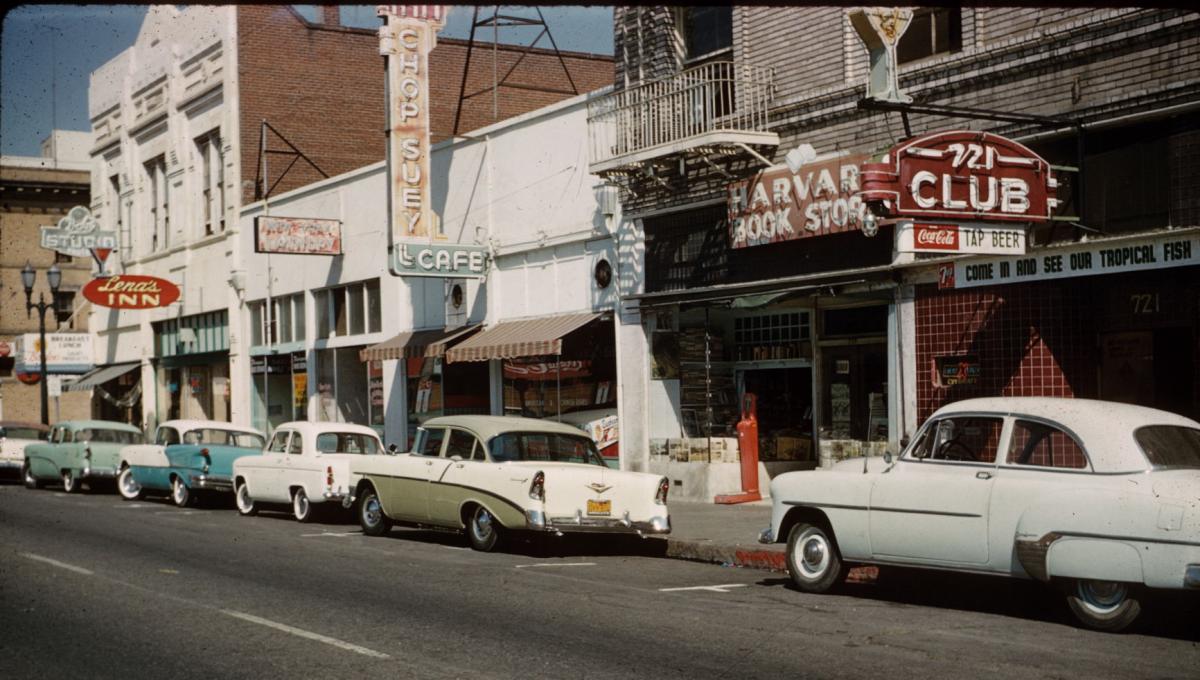
William Maxwell’s “Booklegger: Anecdotal Recollections of a Skid Row Bookseller” presents itself as a picaresque memoir. In fact, it is more than that. Not only does this collection of vignettes demonstrate the maturation of the author, but it also captures the cultural vibrancy of Stockton and adds to the literature of Stockton’s history. It demonstrates how larger demographic, cultural and technological changes forced local independent booksellers like Maxwell to be nimble and, in most cases, ultimately leave the business.
Maxwell, scion of a long line of merchants, started in the book business in 1975 as the sole employee, at minimum wage, of the Harvard Book Store on Stockton’s skid row and eventually rose to own three bookstores in the city. He became a leader in the arts and historical preservation, bringing famous authors to his hometown and serving on various bodies, including the Stockton Arts Commission and the Stockton Cultural Heritage Board. The skills he developed as a rare book dealer led him to become manager of the Bank of Stockton’s historical photograph collection and archives.
The picaresque element makes “Booklegger” fun. Maxwell chooses as a young man to go into a business with notoriously thin margins. Yet he manages to find treasures at estate sales or even in other used bookstores and then sell them to collectors for many times his cost. Maxwell sometimes went on “scouting” trips for salable rare books with seasoned bookdealer Barry Cassidy of Sacramento. Cassidy tells him, “Never wise up a chump,” meaning not to reveal to a seller that their offering is worth much more than the asking price. Then Maxwell buys a $20 item from Cassidy and moves it on to a collector for $1,000.
Maxwell’s memoir is filled with many similar adventures, as well as encounters with famous authors who came at Maxwell’s invitation to sign books and give talks in Stockton. Big names here include Maya Angelou, Maxine Hong Kingston, Leonard Gardner and Ken Kesey. Kesey, author of “One Flew Over the Cuckoo’s Nest,” is perhaps as known for his novels as for the LSD-fueled road trip he and his friends took across America in a “magic bus,” as described in Tom Wolfe’s “The Electric Kool-Aid Acid Test.”
Ken Kesey’s magic bus, “Further,” on display in Seattle after a
restoration in 2010. (Photo by Joe Mabel via Wikimedia Commons,
CC-BY-SA-3.0 granted by photographer)

The Kesey episode is particularly memorable as his sometimes profane talk at University of the Pacific’s Long Theatre turned out to be the last act in an elaborate prank in which he and his co-conspirators had schemed to pass a replica of the magic bus as the original and donate it to the Smithsonian after a cross-nation tour. Instead, the pranksters drove the ersatz magic bus home to Oregon before Kesey had even finished his talk.
The memoir is also a look inside the rare book business. Maxwell finds several specialty areas — the Sacramento-San Joaquin River Delta, Northern California history and golf, among others — builds an inventory and finds collectors and dealers to buy his wares. Heeding his friend’s advice, his negotiating style evolves to be more taciturn as the years pass.
One of the best reasons to read this book, however, is if you lived in Stockton any time between 1975 and 2002, the years Maxwell was in the book business. If so, you will recognize many people and places, as well as the bittersweet flavor of life in a fading former industrial city filled with both joy and despair. Gardner’s best-known novel, “Fat City,” also captures this.
I can testify to this because I arrived in 1988, when Maxwell owned Harvard Book Store, then still on Market Street downtown, a few doors from the Stockton Record, my employer. At that time, he also owned Maxwell’s Bookmark on the Miracle Mile just south of University of the Pacific.
Maxwell’s book tells his own story, yet also reflects the larger historical forces shaping Stockton, including redevelopment efforts that seemed to stagnate rather than revive downtown, suburbanization, the hollowing out of locally owned businesses as large chain stores moved in, and the struggle to make Stockton a place where all kinds of artists and voices could be heard.
Ultimately, he had to “pull the plug” on Maxwell’s Bookmark, his remaining store, thanks to the Gulf War economic downturn, a looming rent increase and competition from the national chains. Maxwell landed on his feet. He has worked for the past few decades as archivist for the Bank of Stockton’s large collection of photographs and other historical documents. He also sells a few rare books online.
As for “Booklegger,” it is now in its second printing by publisher Tuleburg Press. It too may well become a rare book someday. So do yourself a favor and get one if you have any kind of heart connection to Stockton of the 1970s, ‘80s and ‘90s. Don’t hope to find one later at a yard sale or on Craigslist. I’m planning to keep mine, and I bet most other buyers will, too.
Read an excerpt of "Booklegger."
–
Stay up to date on art and culture in the Capital Region: Follow @comstocksmag on Instagram!
Recommended For You

Stockton Mom Breathes New Life Into Literary Landmark
Mr. Otto's Bookstore is one of the last remaining children's bookstores in the San Joaquin Valley
Mr. Otto’s Bookstore is Stockton is one of the last independent children’s bookstores in San Joaquin County. Its new owner, Alex Long, wants the store to be a resource to children, parents and writers throughout the region.

Still Foxy: Historic Fox Theaters in the Capital Region Find New Life
Remnants of the ‘movie palace’ era can be found around the region
There were once dozens of theaters across the United States affiliated with Fox Film Corporation (also known as Fox Studios), in an era when moviemakers set up their own chains of theaters and sometimes commissioned grand film palaces. Some have long since been demolished, but others have shown what can happen after a successful push for preservation.
Making a Play in Stockton
Stockton boasts multiple professional sports teams, long history of pro sports
Stockton has a proud and storied history as an agricultural manufacturing hub, helping bring innovations like the tractor to market. There’s a proud sports history, too; the minor league baseball Stockton Ports have won 11 California League titles in their history.
Right People, Write Place
Publishing press preserves lost art form and promotes local writers
Tuleburg Press, founded in 2013, is a Stockton nonprofit publishing company with a focus on developing creative literary community programs, showcasing local writers and building an appreciation of the book arts.