


Sacramento’s current baseball moment can feel new.
The River Cats have long made the capital region a serious minor-league market. The A’s temporary residency at Sutter Health Park has placed Major League Baseball inside Sacramento’s daily life. Civic leaders are again asking whether the region can support something larger — whether Sacramento belongs in the conversation for a permanent big-league future.
But the desire to see Sacramento recognized as a serious baseball city is far older than the current expansion conversation.
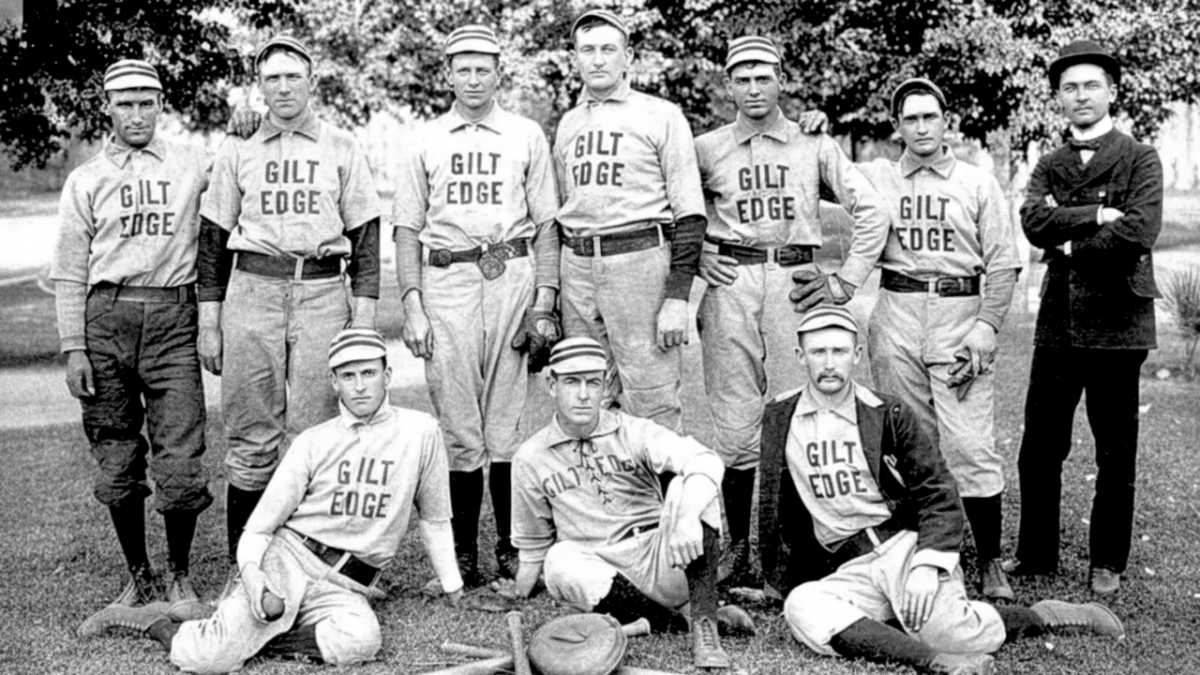
Long before the River Cats, and before Major League Baseball came west, Sacramento already had a baseball empire of its own. In the late 1890s, the California League represented the highest level of professional baseball in the state, and the Sacramento Gilt Edge club stood at the top.
Managed and owned by Ed Kripp (my great-great-grandfather), the club won four consecutive California League pennants from 1897 to 1900 — the first such run in California baseball history. The team drew thousands, traveled across the state and, on Thanksgiving Day in 1897, defeated the famed Baltimore Orioles during their California barnstorming tour. The final score was 4-3. For Sacramento, it was more than a baseball game. It was proof that the capital city could stand on the same field as the best clubs in the country and win.
Captain Frank Ruhstaller was the Swiss-born brewer and
businessman associated with Buffalo Brewing.
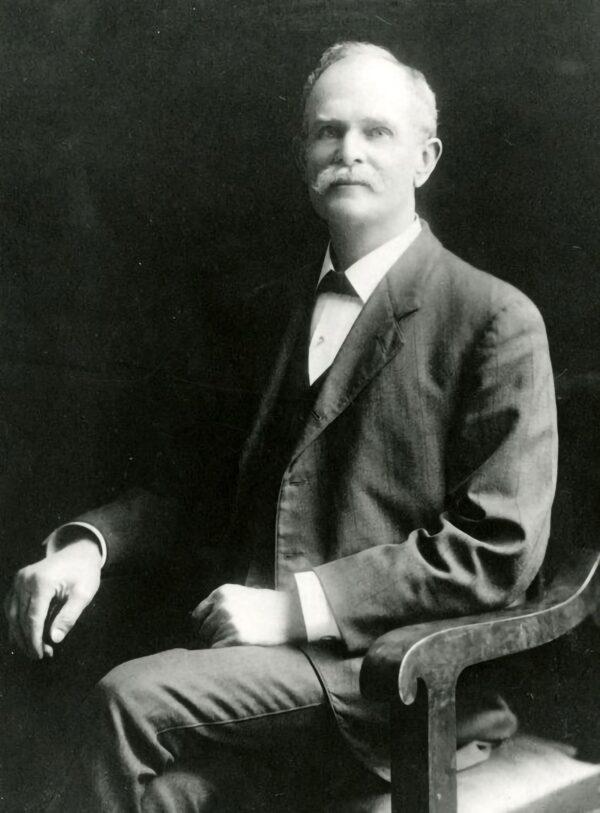
At the center of that world stood Ed Kripp, a man who helped build Sacramento baseball even as he moved through parts of city life that respectable civic boosters preferred not to advertise. Kripp was a baseball manager and promoter, but he was also a gambler, landholder and operator of poolrooms — betting establishments where men wagered on horse races and sporting events. In Sacramento, such places occupied a shifting political gray zone, tolerated at times, targeted at others, and repeatedly pulled into public fights over morality, enforcement and city power.
He was not the sort of person a modern chamber of commerce would invent as the face of a regional campaign. Yet he helped make Sacramento baseball matter.
Kripp had not entered baseball as a distant investor. Before the Gilt Edges became Sacramento’s dominant professional club, he owned and managed a non-league team called the X-Rays, played for them himself and used the club as a proving ground for the larger operation he was building.
He understood that baseball required more than players. It required grounds, gates, money, schedules, transportation and control. The game may have looked like recreation from the bleachers, but behind it stood leases, streetcar lines, sponsorships, gate receipts and informal networks of influence.
In that sense, early Sacramento baseball was never separate from the city’s business life. It was one of the places where business life became visible.
By 1897, Kripp had invested heavily in Snowflake Park, located between 28th and 30th streets and R and S streets. The city’s steamroller helped level the grounds. A refurbished grandstand rose. Fences and gates turned enthusiasm into counted admissions. The park made baseball legible as business: spectators could be charged, receipts divided, expenses deducted and success measured in more than cheers.
But Sacramento’s geography was changing quickly. By 1898, the Gilt Edges increasingly belonged to Oak Park, where the city’s expanding electric streetcar lines delivered crowds from downtown to the edge of the grounds.
California baseball, meanwhile, was still unstable. Clubs formed and vanished. Leagues reorganized. Contracts shifted. Rival teams argued over gate receipts. In that world, Kripp’s genius was not simply that he assembled good players. It was that he tried to make baseball durable.
He tied the team to a sponsor with money and name recognition. He fought for control of the grounds. He helped incorporate the league, turning loose arrangements into rules for schedules, gate receipts and revenue divisions. And he built rosters strong enough to dominate the state.
The Gilt Edges became a dynasty because they were more than a collection of athletes. They were a system.
The players gave Sacramento its heroes. Jay Hughes, born in Sacramento, became one of the finest pitchers of the era and later went east to pitch in the National League, first for the Orioles and then for Brooklyn’s Superbas. Charles “Demon” Doyle brought force and intimidation to the mound. Ervin “Silent” Harvey provided steadiness. Tim Shanahan connected the club to the city itself, one of the local boys whose absence from a lineup could be felt by the crowd.
The Gilt Edge team poses with manager Ed Kripp.
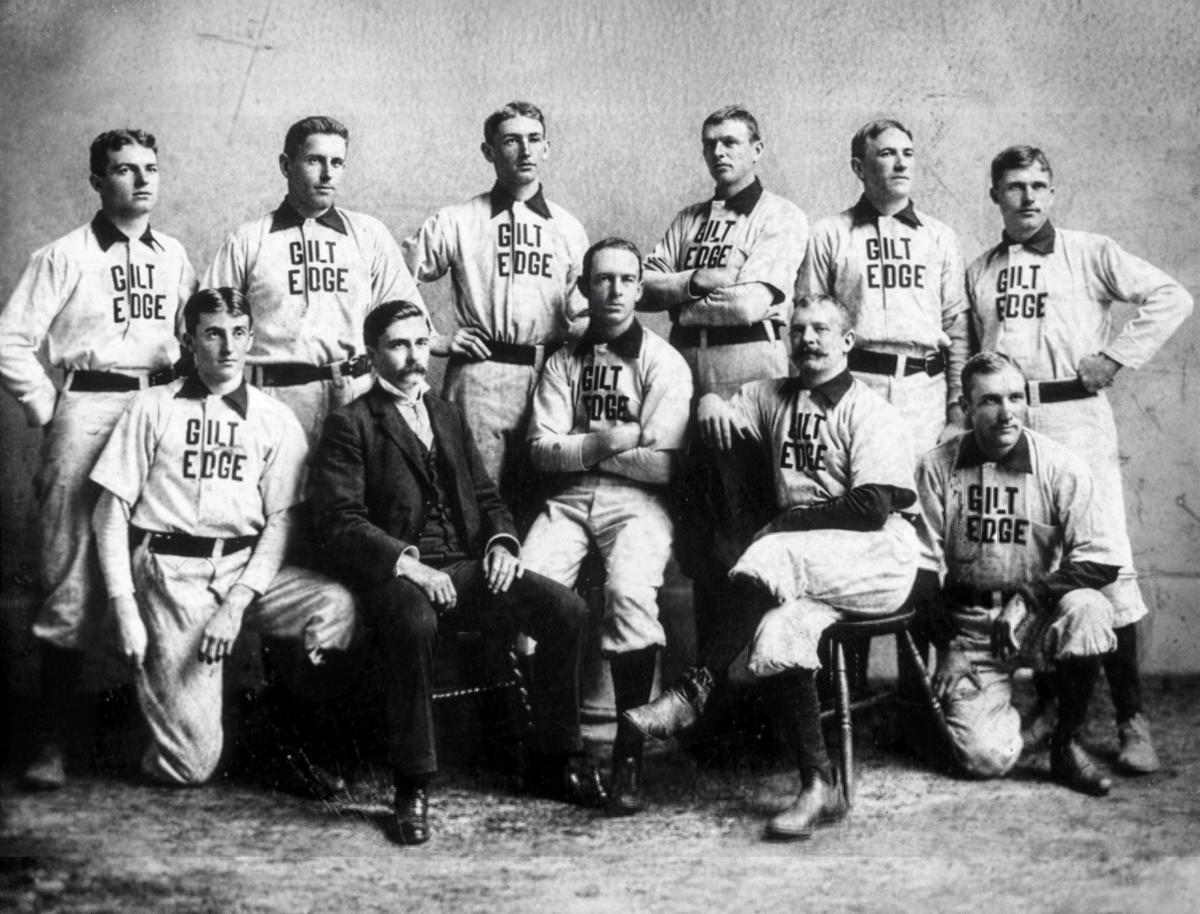
Together, they made Sacramento the team to beat. From 1897 through 1900, the Gilt Edges stood at the top of California baseball. Their success showed that the capital city could produce crowds, talent and professional ambition before the West had a major-league franchise of its own.
But success also exposed Sacramento’s limits.
The better the Gilt Edges became, the more visible their players were to Eastern clubs with deeper pockets and stronger contracts. Hughes went to Baltimore. Others drew attention from Chicago, Louisville, Pittsburgh and emerging national circuits. Sacramento could develop stars. It could not always keep them.
That tension — proving the city belonged while watching larger baseball powers pull talent away — feels familiar in a region still trying to define its place on the sport’s national map.
The parallel became even sharper in the next decade.
By 1903, Sacramento had entered the new Pacific Coast League, which was emerging as the West’s top professional circuit. This time, the club operated under Mike Fisher, a former Gilt Edge umpire, rather than Kripp. But Sacramento’s first stay was brief. After one season, the club left for Tacoma, and the capital spent years outside the league. When Sacramento tried to return in 1908, Kripp again appeared at the center of the effort.
For a time, it looked as if he would get the franchise himself. Pacific Coast League president J. Cal Ewing had virtually granted Sacramento a club to be run by Kripp, who promised his own money, a three-season bond and a downtown ballpark site.
Then league politics intervened.
Portland mattered then, too. Judge W.W. McCredie, the powerful Portland baseball man, held enormous influence in Pacific Coast League affairs. The league wanted a stable circuit, balanced between northern and southern clubs, and Portland’s cooperation was essential. Sacramento’s return depended on more than local enthusiasm. It depended on who controlled the league.
Sacramento did return to the Pacific Coast League in 1909 as the league expanded and stabilized its western map. Sacramento was in — but not under Kripp. The franchise went instead to Charley Graham and Bill Curtin, men the league considered safer partners. The city had regained its place in the West’s top professional circuit. The man who had prepared the ground for it was left outside.
His answer was characteristically practical. If he could not control the franchise, he could still control the ground beneath the game.
By the 1910 season, Kripp had secured land at Eleventh and Y streets and built Buffalo Park, transforming a garbage dump into Sacramento’s new baseball grounds. He did not simply choose a site near transportation; he helped make transportation serve the site, pushing for the streetcar line to reach the park and carry fans to its gates. After years of playing on aging and inadequate grounds at Oak Park, Sacramento finally had a ballpark praised as one of the finest in the state. Before the grounds later became part of the lineage that led to Edmonds Field and Solons memory, Buffalo Park marked a new standard for the city’s baseball ambitions.
That is what makes Kripp’s story feel strangely modern. Sacramento’s present baseball ambitions are part of a much older pattern. For more than a century, the game has reflected the city’s larger hopes for growth, recognition and a place on the West Coast’s biggest stages.
In the 1890s, that ambition came through a beer-backed club with a gambler-manager, packed wooden parks and a team that could beat the best California had to offer. In 1908 and 1909, it came through the fight to return to the Pacific Coast League. In 1910, it came through Buffalo Park, built on land others had overlooked and praised as one of the finest baseball grounds in the state.
Today, the names have changed. The conversations involve expansion bids, temporary major-league residency, stadium districts and regional financing. But the underlying question is familiar: How big can Sacramento baseball become?
More than a century ago, Ed Kripp and the Gilt Edge club gave the city one answer.
For four straight seasons, before the major leagues came west, Sacramento was already a baseball town with championship ambition. The empire looked different then: smaller, rougher and built from beer money, wooden parks, streetcar lines, unstable leagues and the will of a complicated man. But it was real.
And it began long before anyone thought to call Sacramento a future major-league city.
Lisa Jonsson is an independent researcher and author of “The Gilt Edge of Ambition: A Sportsman’s Gamble for Power and Baseball,” which explores Ed Kripp, the Sacramento Gilt Edge team, Buffalo Park and the business of early California baseball. She is Kripp’s great-great-granddaughter.
–
Never miss a story: Get Comstock’s weekly newsletter delivered to your inbox.
Recommended For You
Ohtani Mania Arrived in Sacramento. Here’s What Happened When the Dodgers Came to Town
Dodgers and global superstar Shohei Ohtani help pack West Sacramento’s Sutter Health Park for memorable three-game series
The three-game series against the Los Angeles Dodgers will
be long remembered as a major touchstone in the A’s’ stay at
Sutter Health Park.
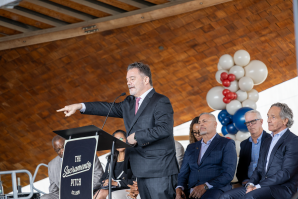
Why Sacramento Thinks It Can Land Major League Baseball’s Next Expansion Team
Region’s pitch for Major League Baseball leans on Sacramento area’s long baseball history and current A’s residency
Capital Region officials recently launched a “Sacramento Pitch”
campaign aimed at bringing a Major League Baseball expansion
franchise to West Sacramento.
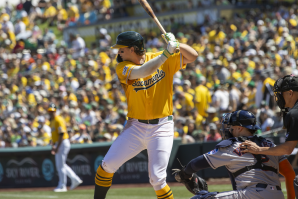
Sacramento Fans Pack Sutter Health Park as A’s Lean Into Local Identity in 2026
A’s open second season at Sutter Health Park with walk-off win and new ‘Sacramento’ jerseys
They’re still not officially the Sacramento A’s, but one thing is
for sure — fans will be seeing a whole lot more “Sacramento” at
Sutter Health Park in 2026.
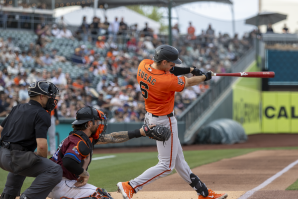
Sacramento’s Daniel Susac Makes San Francisco Giants Roster Ahead of MLB Debut
The Roseville native and former first-round pick caps a whirlwind offseason with a spot on the Giants’ opening roster
On Wednesday morning in advance
of their season opener at Oracle Park it became official — Daniel
Susac made San Francisco’s final roster after making a huge
impression during spring training.