


During a difficult labor, pushing alone sometimes isn’t enough to deliver the baby. In that case, doctors may use forceps or a vacuum to help guide the baby out. These tools can work well in skilled hands, but they’re difficult to master, and the concentrated pressure they apply can injure the mother or baby.
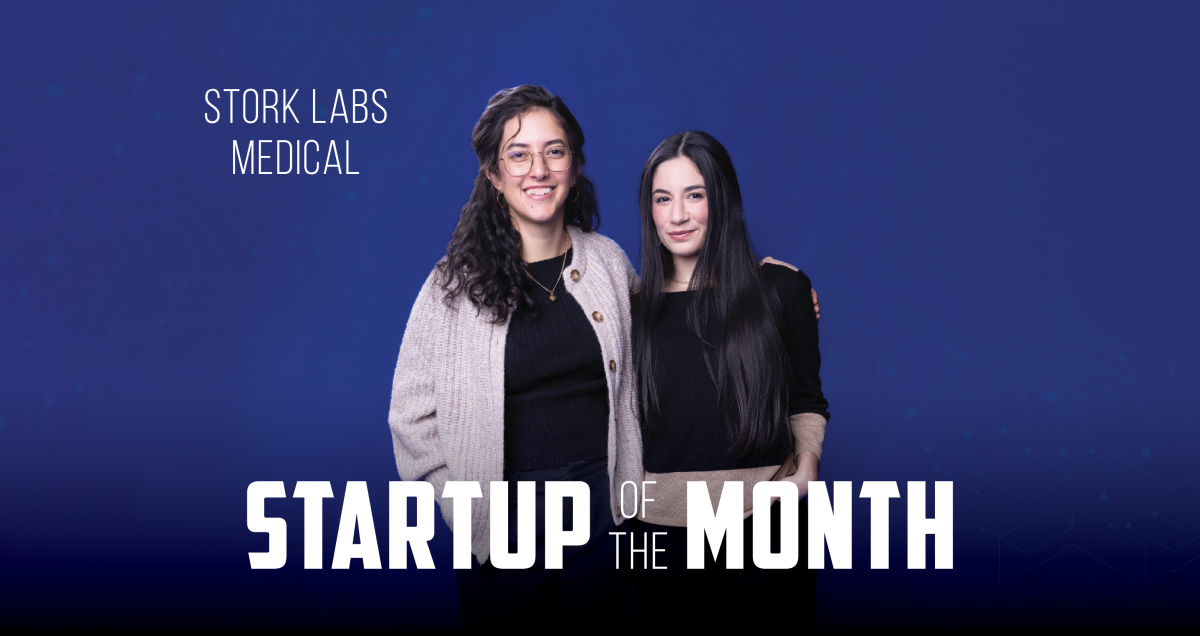
Stork Labs Medical, based in Sacramento and Santa Cruz, is an emerging biomedical startup developing the Pelican device: a flexible, sensor-guided soft robotics tool created to make assisted vaginal deliveries safer and reduce emergency C-sections. The device is designed to spread force more evenly across the baby’s head to help prevent injury and give doctors real-time guidance with integrated sensors, says Maryam Tebyani, the company’s co-founder and CEO.
“I’ve always wanted a career where I can use the skill set I have to actually help people, not just build technology for technology’s sake,” she says. “And being able to help people who really need help and who have maybe gone underserved by advancements that have been made—that is really important to me.”
Tebyani started down the robotics path more than a decade ago as an undergraduate at UC Santa Cruz. She wanted an engineering degree that was hands-on. Mechanical engineering didn’t feel right. Neither did electrical. Then she found robotics and it clicked.
In a soft robotics lab, where researchers create robots from flexible material, she met Breanna “Bre” Baltaxe-Admony, the company’s co-founder and COO, who specializes in human-centered design. In the past few years, they have spoken with hundreds of obstetricians, midwives, doulas, new moms and other stakeholders in emergency childbirth for input, “seeking out others when we don’t have the answers,” Baltaxe-Admony says.
“Births, especially difficult births, are not often talked about openly,” she says. “So that also means that, as we speak with investors, we have to lay the groundwork before we can start describing how we’re changing treatment, because folks don’t know what treatment looks like right now.”
It’s not an easy path forward. The tool must be gentle enough for sensitive anatomy but still strong enough to apply the force a delivery requires. The team also has regulatory hurdles to deal with. And because women’s health is underfunded, the founders usually have to explain to investors why their solution is necessary, Tebyani says.
(Stork Labs isn’t the only startup duo working on obstetric emergencies. Co-founders Jenna Eissmann and Madeleine Mumford of Everest Medical Solutions designed a device for shoulder dystocia, when the baby’s head emerges, but the shoulders get stuck behind the mother’s pubic bone.)
Tebyani and Baltaxe-Admony point out that difficult labor isn’t just a woman’s issue. Men go through emergency birth experiences alongside their partners and families. “A lot of folks have personal experiences to share like, ‘I was a forceps baby’ or ‘I was a C-section baby,’” Baltaxe-Admony says. “We’ve gotten support across the board.”
Jim Swick, a medical technology consultant, mentored Tebyani and Baltaxe-Admony in 2022, when they were PhD candidates at UC Santa Cruz. Meeting them through the NSF I-Corps customer discovery program, he says, he was “immediately taken by their passion and work ethic.”
“I was impressed by their ability to grasp new concepts quickly and run with them,” he says. “Their interest in improving upon the much-neglected area of women’s health should not only be lauded but celebrated.”
With the support of investor training programs and accelerators, including FourthWave, the Stork Labs team is receiving mentorship in business strategy, fundraising and leadership as they move toward preclinical testing.
Another key advisor, Jessie Becker Alexander, founded and exited Alydia Health, which developed the Jada System, a device that treats heavy bleeding after childbirth.
“The Stork Labs technology has the potential to dramatically change the way stalled labor is approached in a clinical setting, potentially leading to fewer emergency C-sections, and better outcomes for moms and babies,” Alexander says. “Although the road ahead of the company is a long one, I am personally very excited to see how they are able to bring their proprietary technology to market, and what impact it can have.”
–
Never miss a story: Get Comstock’s weekly newsletter delivered to your inbox.