


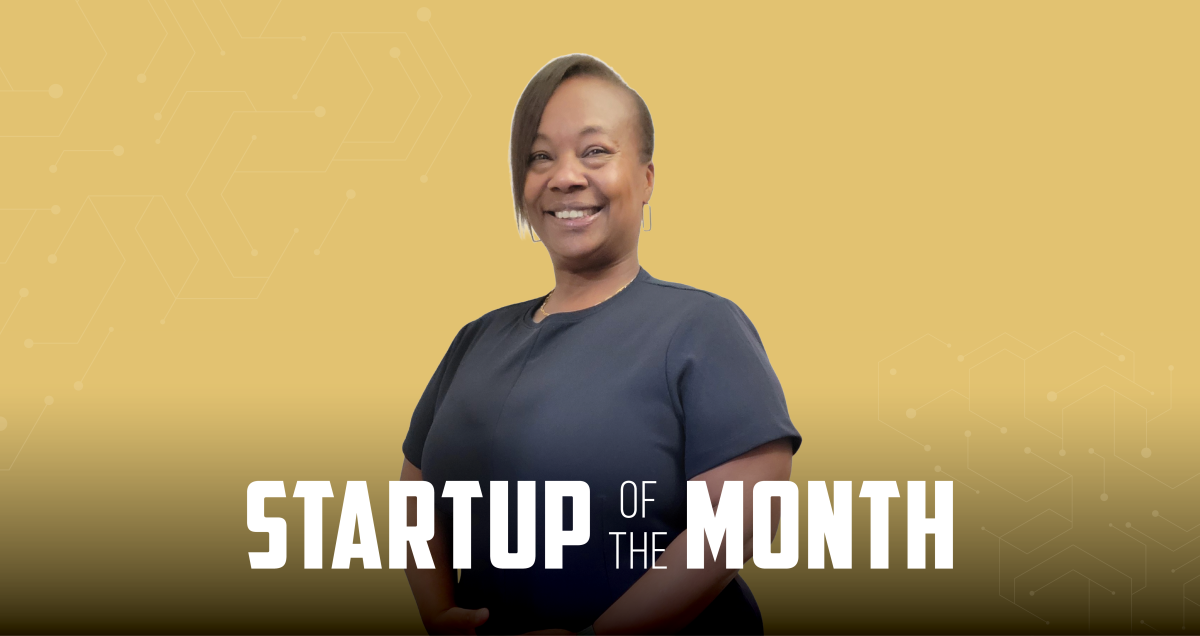
For many, plant-based proteins leave a bad taste in the mouth: bitter and “beany,” according to Vanessa Small. At her food tech startup Alcheme Bio, she strips that tart taste at the cellular level to enhance flavoring.
The startup was chosen as part of the 2025 cohort at FourthWave, a Sacramento-based accelerator for women-led tech businesses.
“This is a company positioned not just to disrupt what’s possible in food ingredients, but to do so with a path to real commercial success,” says Cheryl Beninga, co-founder of FourthWave. “Their technology has the potential to redefine ingredient supply chains while improving public health.”
A biochemist by training, Small began in the pharma space, doing drug discovery and screening. After shifting to health care diagnostics, she made and commercialized enzymes and proteins for various applications, from pregnancy tests to COVID diagnostics. As an entrepreneur, Small saw the opportunity to use these same skills to help solve the problem of sustainable food production.
Alcheme Bio’s initial flagship product, Nutralase, is an enzyme blend that removes bitterness and “beaniness” notes to create a neutral flavor profile. She then sells this enzyme blend to companies to make tastier and better-performing drinks, patties and other products.
“Most companies target any flavor issues with masking ingredients or additives to address any off-notes or flavors that they don’t want,” Small says.
A lot of vegans, vegetarians and flexitarians (which Small considers herself) just had to put up with it. Alcheme Bio aims to change that.
“We developed an approach called cellular flavoring,” Small says. “Instead of masking, the team is using biochemistry to remove any off-notes at the source.”
The startup, which has labs in San Diego and a team of five throughout the country, is currently raising a $2 million seed round to support a commercial launch over the next 24 months. How Women Invest, which has three venture funds, chose to back Alcheme Bio for two key reasons.
First, Small has the education and experience levels that make her stand out, says Carmen Palafox, a venture partner at How Women Invest.
“From a technical standpoint, Vanessa is a founder you want to back,” Palafox says. “She’s also worked at a company that has had an exit, so she knows the drill.”
Second, her startup is tackling a major problem, and current market conditions make it especially appealing. Over the past decade, a lot of capital has flowed into companies developing the next generation of the food system, driven by the fact that “traditional agriculture simply cannot sustain our population,” Palafox says.
“We need to branch out,” she adds. “The problem in this segment is that, in many cases, the taste and texture aren’t there yet. We see Alcheme Bio as enablement technology for the industry to really blossom.”
Through innovation, the startup alters off-notes at the source, and Small believes Alcheme Bio has the potential to alter food production on a larger scale.
“I personally believe that our food system is ripe for disruption, and sustainable foods are the future, from alternative proteins to plant-based proteins to cultivated meat,” Small says. “I do think we’ll improve our food supply, and we’ll be able to provide for generations to come. And I wanted to be a part of that.”
–
Stay up to date on business in the Capital Region: Subscribe to the Comstock’s newsletter today.
Recommended For You
Startup of the Month: Nereid Biomaterials
Can biodegradable materials tackle the ocean’s plastic problem?
Nearly a decade ago, researchers issued a grim prediction: By 2050, plastic in the ocean would outweigh all the fish. Now, just 25 years away from that deadline, a tech startup named after sea nymphs in Greek mythology is turning the tide on the ocean’s plastic waste.
Startup of the Month: The Make Box
Robotic kits made to click with STEM learners
From crafting with popsicle sticks in elementary school to working with small electronic devices in middle school, Kavya Khare clearly had DIY in her DNA. She is now the founder of The Make Box, a UC Davis and Bay Area-based startup that creates modular robotic kits, SnapBots, for young students to engage in STEM.
Startup of the Month: InnerPlant
Detecting crop diseases before symptoms show
InnerPlant develops seed technology that turns crops into living sensors that detect stress (such as fungus, pathogens and nitrogen deficiency) at the molecular level before visible symptoms appear. The startup’s initial focus is a soybean engineered to emit a fluorescent optical signal within 48 hours of fungal infection.
Startup of the Month: NuCicer
Davis startup seeks to raise chickpea from fringe ingredient to mainstream hero
By applying machine learning and data analytics to plant breeding, this Davis-based company aims to elevate the chickpea as a key crop to address growing food demands while also improving crop resilience, yield and nutritional value.