



By the end of the 20th century, the Three Rs were everywhere: Reduce, Reuse, Recycle. But waste management is more complicated than a catchy slogan, according to Sambhav Agarwal, a third-year computer science student at UC Davis.
There are nuances to sorting trash that most people were never taught, he says. For example, in many U.S. cities, paper coffee cups go to landfill because they’re lined with plastic. But some lids labeled “compostable” can go into compost. And Nutella jars are technically recyclable, but they can’t be recycled if they’re coated with food. Non-recyclable products in the recycling stream cost U.S. material recovery facilities at least $300 million per year in additional labor, according to UC Berkeley’s California Management Review.
Related: Is CA Organic Waste Recycling a Failure?
Sortify is a tech business emerging out of UC Davis, co-founded by Agarwal and fellow students Yash Nadge and Yahya Habibi. The idea is simple: attach a small camera to disposal bins that alert individuals where a piece of trash is supposed to go. Powered by AI, these cameras will either use voice, a screen or lights to signal proper disposal.
The idea for the business came in a UC Davis class called Innovation for Impact: Climate Entrepreneurship, led by Prof. Nathan Sedlander, a university alum and climate entrepreneur. He divides the class into teams of five, each tasked with addressing a major environmental challenge and interviewing customers and stakeholders to develop a business model.
In winter 2025, Agarwal and his co-founders were assigned the challenge of valorizing waste. After speaking with some 100 researchers and stakeholders in waste management and recycling, the team learned how costly it was for waste management to sort misplaced products.
Around the country, many waste management facilities rely on large, capital-intensive systems that aren’t so easy to upgrade. Introducing new technology can require major investment and customization, Sedlander says, especially for facilities that have been operating for decades. Smart bins can help, but they’re expensive, and most industrial and institutional settings (schools, office buildings, hospitals, for example) would need to spend a lot to adopt them.
Related: Recycling and Resilience: Vietnamese refugee’s side job turned into a major recycling business
The Sortify team saw an opportunity earlier in the waste chain, a device that attaches to existing bins rather than replacing them. The idea earned the team a top-10 finalist spot in the Big Bang competition.
The co-founders are now working to make the device more durable while addressing potential privacy issues. Privacy is a priority, especially in school settings. One option under consideration is a downward-facing camera that allows users to hold items beneath it and receive sorting guidance without being identified.
As the system collects more data, it will learn to assess waste more accurately. Manufacturing the cameras at scale requires a lot of resources, Agarwal says, so Sortify is open to exploring funding opportunities with investors. The team also has a working prototype with plans to collaborate with an elementary school in Davis.
“Our goal is to teach the younger audiences and different customer segments how to throw away trash properly,” Agarwal says. “Schools and commercial spaces can adopt this solution for a cheap price, implement it on their trash can, and we can collect data on what type of trash is being thrown away and assist the customer to throw away the trash correctly.”
–
Stay up to date on business in the Capital Region: Subscribe to the Comstock’s newsletter today.
Recommended For You
Startup of the Month: Alcheme Bio
Taking the bitterness out of plant-based proteins
For many, plant-based proteins leave a bad taste in the mouth: bitter and “beany,” according to Vanessa Small. At her food tech startup Alcheme Bio, she strips that tart taste at the cellular level to enhance flavoring.
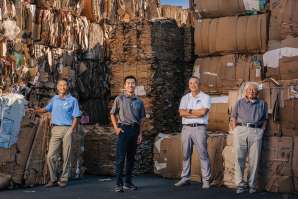
Recycling and Resilience
Family business spotlight: Vietnamese refugee’s side job turned into a major recycling business
Ming Luong started Ming’s Recycling in 1987, less than a decade after the Luong family arrived in the U.S. They were among the millions of people who fled Vietnam following the fall of Saigon, riding a fishing boat to a refugee camp in Malaysia before a church group sponsored their relocation to Laramie, Wyoming.
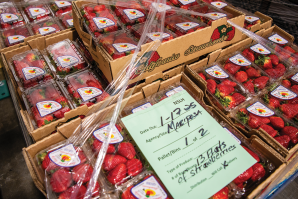
Recycling Unused Food: On the Frontlines With the Agencies and Food Banks Making SB 1383 Work to Feed the Hungry
The food recovery process for SB 1383 is divided into separate tiers. Tier 1, which involves large grocery chains and food distribution centers, went into effect in 2022. The following year, Rancho Cordova’s locker alone recovered 800,000 pounds of food. In that same period, Sacramento Food Bank & Family Services oversaw the redistribution of 14.6 million pounds of edible food that came directly from Capital Area grocery stores.
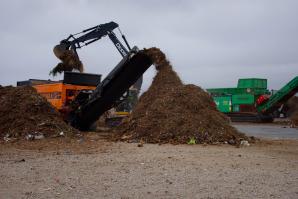
Is CA Organic Waste Recycling a Failure?
According to one watchdog agency, California is “falling short” in its ambitious organic waste recycling efforts and may need to hit the pause button until state agencies and local governments can sort themselves out.