


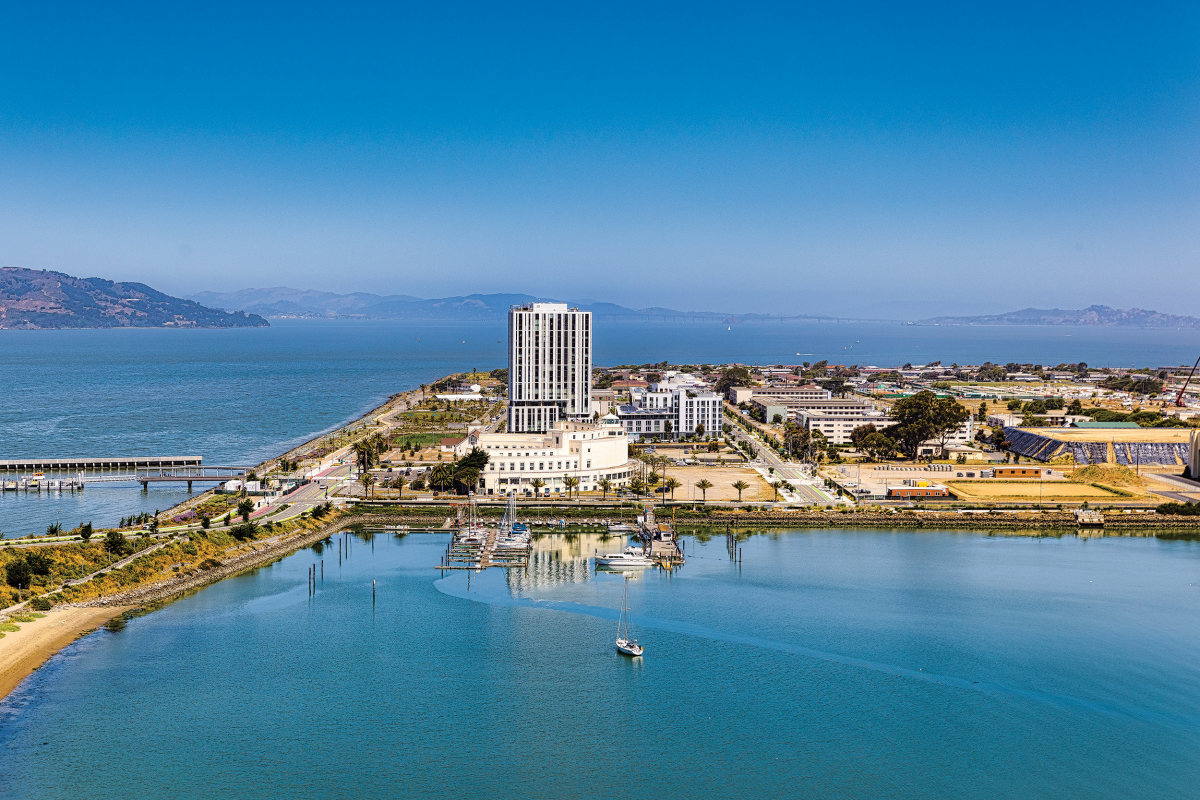
Though I think about taking the Treasure Island exit every time I cross the Bay Bridge, I hadn’t explored the unique San Francisco suburb since a photography class trip 11 years ago. I finally visited earlier this spring, and it’s really changed.
Despite the ongoing makeover, I was happy to see that it has kept its classic feel and breathtaking views of the San Francisco Bay and skyline, accessible at almost every turn on this mile-long artificial island.
Treasure Island and adjoining Yerba Buena Island are easily reached by vehicle off the Bay Bridge, about three miles from San Francisco, or via a scenic 10-minute ferry ride or bus from the city. The 393-acre Treasure Island, which is less than half the size of San Francisco’s Golden Gate Park, has always been an attractive day getaway for those looking to escape Bay Area crowds. But while it offered world-class views and room to explore, the island used to lack key amenities such as restaurants, keeping many visitors away unless there was an event.
That has changed, as Treasure Island is in the middle of a massive housing and retail redevelopment boom that has already seen over 1,200 waterfront residential high-rises and townhomes built in the past decade — with another approximately 7,000 planned. The site of the 1939 Golden Gate International Exposition is scheduled to accommodate more than 20,000 new residents by 2042.
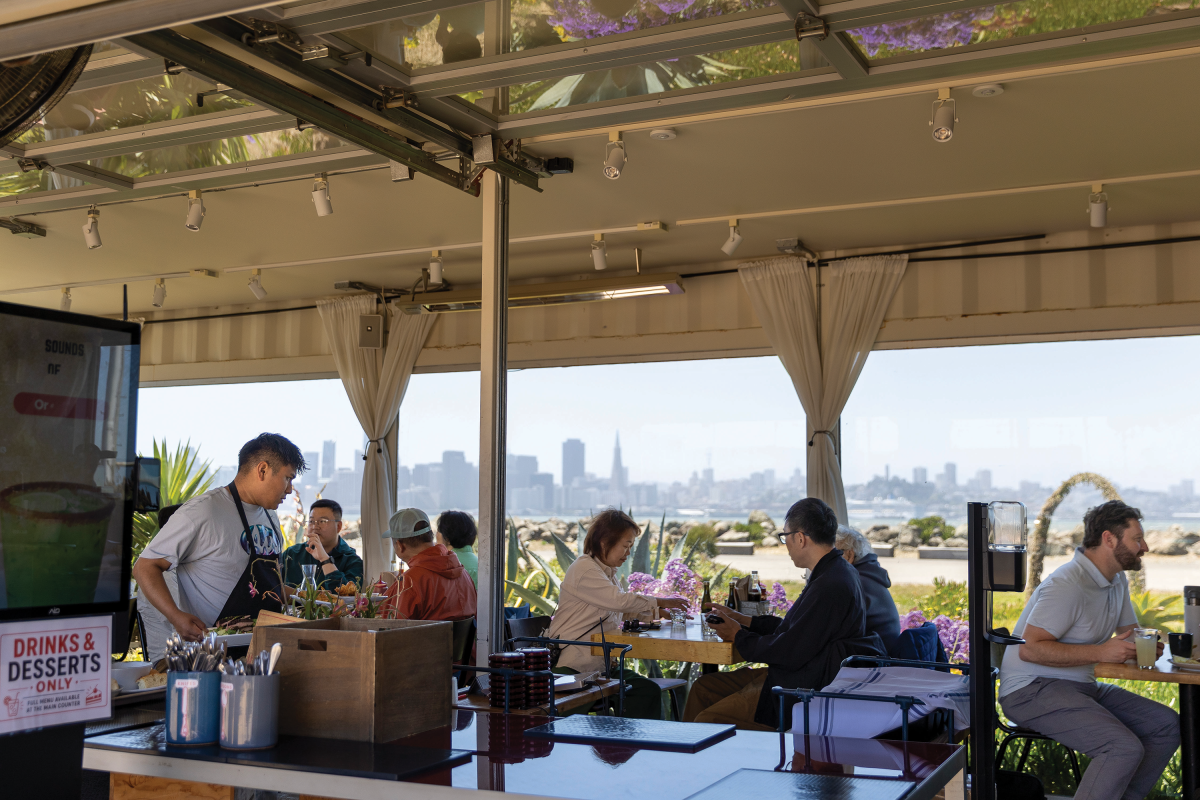
Diners grab lunch at Mersea Restaurant and Bar, Treasure Island’s
first restaurant, which opened in 2018. (Photo by Steve
Martarano)
Built by the U.S. Corps of Engineers over a 22-month period in 1936, the first homes on Treasure Island appeared in the early 1940s as the U.S. Navy developed it into a military base. Public relations specialist Clyde Milner Vandeburg, who was on the promotional team for the 1939 Exposition, is credited with naming the island after the famed Robert Louis Stevenson novel. After it was decommissioned by the Navy in 1997, the City of San Francisco eventually took control in 2009 for a reported $105 million, and the changes began at a rapid pace.
On a recent midweek visit on a clear but hazy day, I found Treasure Island still quirky, a mix of abandoned buildings and art installations on back streets in need of repair that might offer unexpected detours due to construction, coupled with wide-open bay views that kept San Francisco’s skyline in constant view.
In 2025, Treasure Island celebrated the opening of the new waterfront Cityside Park and the groundbreaking of a new training center for Bay FC, the Bay Area’s National Women’s Soccer League team. Construction is scheduled to begin on an affordable 100-unit senior housing building, as well as two new beachfront parks — Clipper Cove and Chapel Grove — which will surround the historic Navy chapel. Once completed, officials estimate that 75 percent of the island will consist of open green spaces and parks.
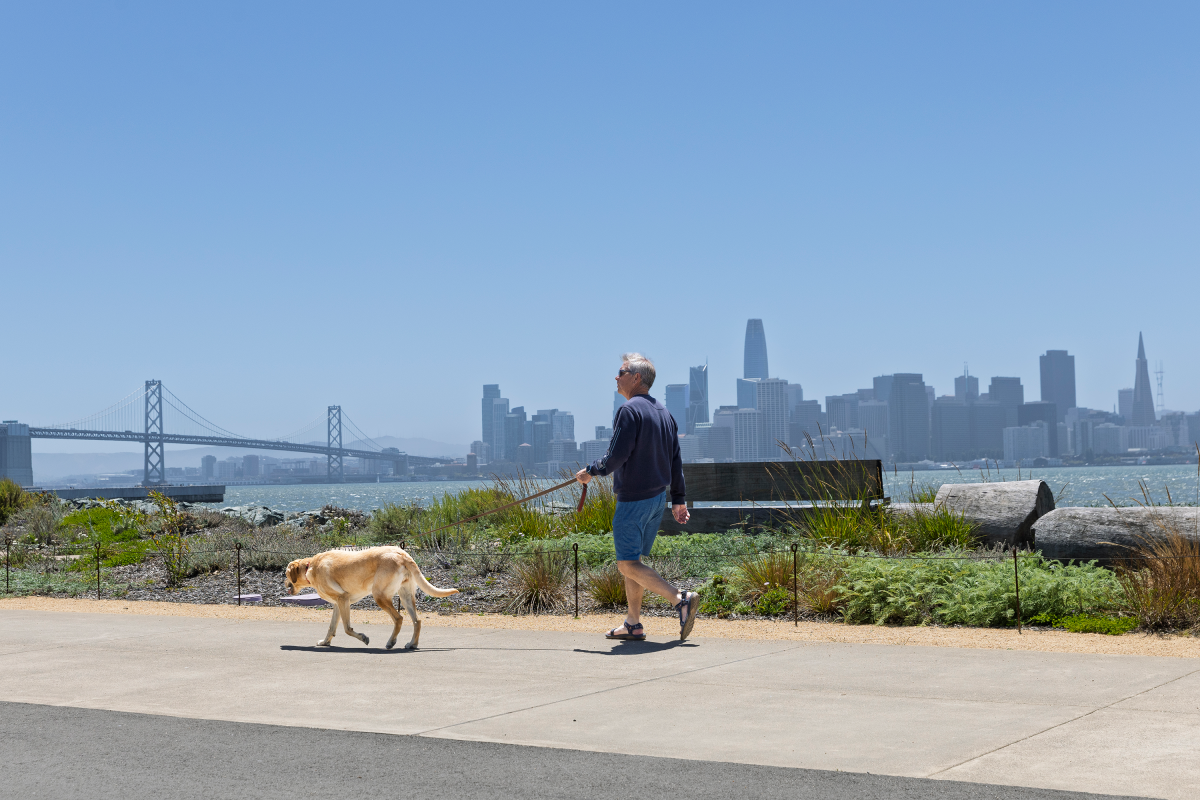
The island offers panoramic views of nearby San Francisco. (Photo
by Steve Martarano)
Eddie Henkel tells me while having lunch at the Cityside Park waterfront restaurant Mersea with coworker Carlos White that he’s seen firsthand the transformation of the island. Both are instructors in the pre-apprenticeship program for the United Brotherhood of Carpenters at the Treasure Island Job Corps Center. They enthusiastically describe the island’s amenities, including the Isle House, a 22-story, 250-unit residential building that opened in September 2024 and is the island’s first high-rise.
“In my three years here, I’ve seen them take piles of dirt five stories high and move them around and relocate them for new construction, because they can pack the earth down so they can build on top of it,” Henkel says.
In addition to Isle House, other new multi-story buildings that are part of the city’s redevelopment plan approved in 2011 are Hawkins, a mid-rise, 178-unit residential complex; the six-story affordable housing complex Maceo May, with 105 units geared toward veterans and their families; and the multi-story 490 Avenue of the Palms, with 148 rental units.
Gold Bar Distillery occupies the ground floor of the island’s
original Pan-Am airport. (Photo by Steve Martarano)
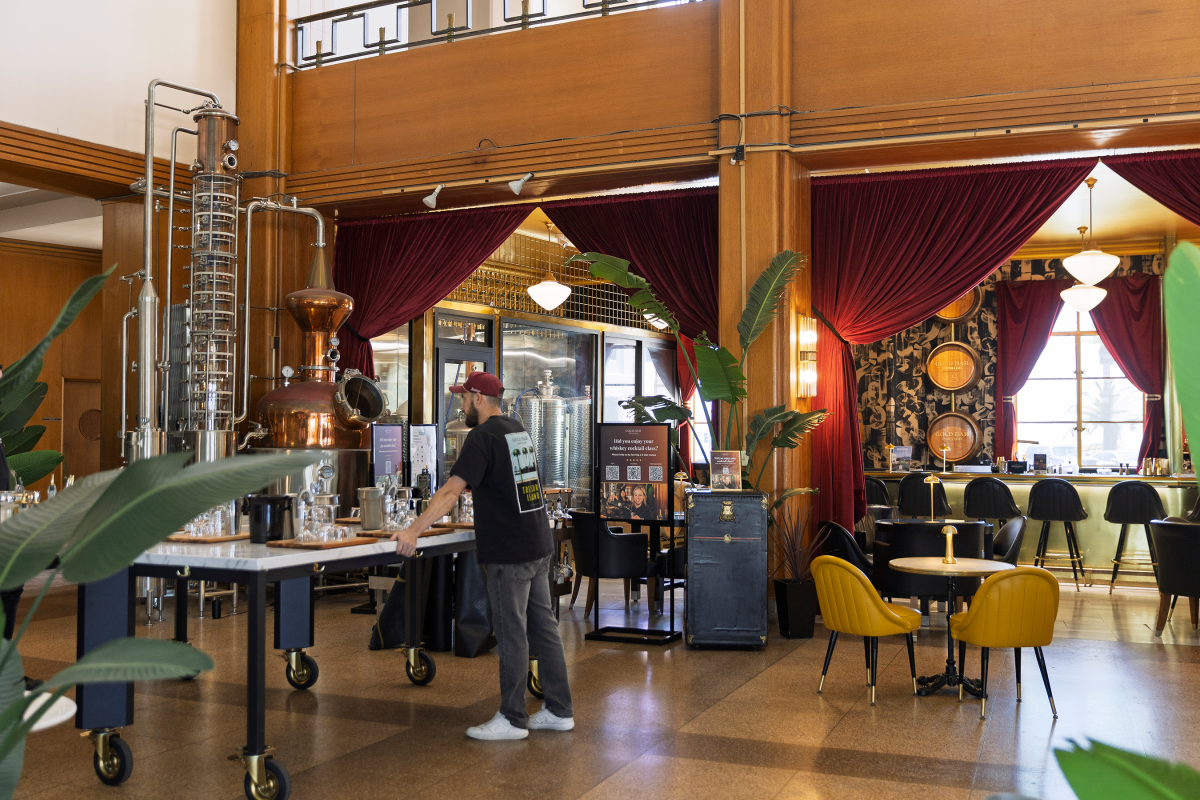
While visitors aren’t currently able to stay overnight on the island (and short-term rentals like Airbnb aren’t allowed), a 500-room waterfront hotel near Cityside Park is part of the master plan. Several places to get a meal have appeared since 2018, when Mersea first opened, including the Aracely Café, Island Cove Market, Mateo’s Hot Dogs and Churros, and the Goldbar Distillery, which is located next to the Treasure Island Museum inside the former exposition airport terminal known as the Administration Building, or Building One.
The island is a paradise for cyclists and hikers, featuring the Treasure Island Perimeter Trail, which starts at the Administration Building across from the ferry stop and is a 1.7-mile loop with bayfront views along the aptly named Avenue of the Palms.
Visitors can also come into Treasure Island via the San Francisco Bay Trail by taking the 26.8-mile Oakland to Treasure Island touring loop off the Bay Bridge.
While Treasure Island is changing, it still retains the charms of a one-of-a-kind slice of one of California’s most popular cities.
–
Stay up to date on business in the Capital Region: Subscribe to the Comstock’s newsletter today.
Recommended For You
It’s the Best Season to See Elk by the Seashore
This trail along the Point Reyes coast is one of the most dramatic places to view wildlife in California
On the Tomales Point Trail, you can see tule elk on a peninsula with views of the Pacific Ocean, Tomales Bay and Bodega Bay.
The Forgotten Mount Rainier Rescue That Changed America
An 1898 rescue linked a photographer to two men who would help define conservation in the United States
Most visitors come for the wildflowers and mountain views. Few know the story of the lost Marines, the famous photographer and the chance encounter that changed history.
From Trail Runs to Pubside Picnics, This Marin Coast Destination Has Something for Every Mom
Find a perfect weekend getaway where the redwoods meet the sea
Something about the sleepy town of Stinson Beach still feels undiscovered.
There’s a Cool Cathedral of Trees Just a 2-Hour Drive From Sacramento
Sonoma County’s redwoods have survived over 1,000 years thanks to natural armor and other adaptations
There are some large, beautiful redwoods at parks closer to Sacramento, including Henry Cowell Redwoods State Park, near Santa Cruz, and Armstrong Redwoods.