



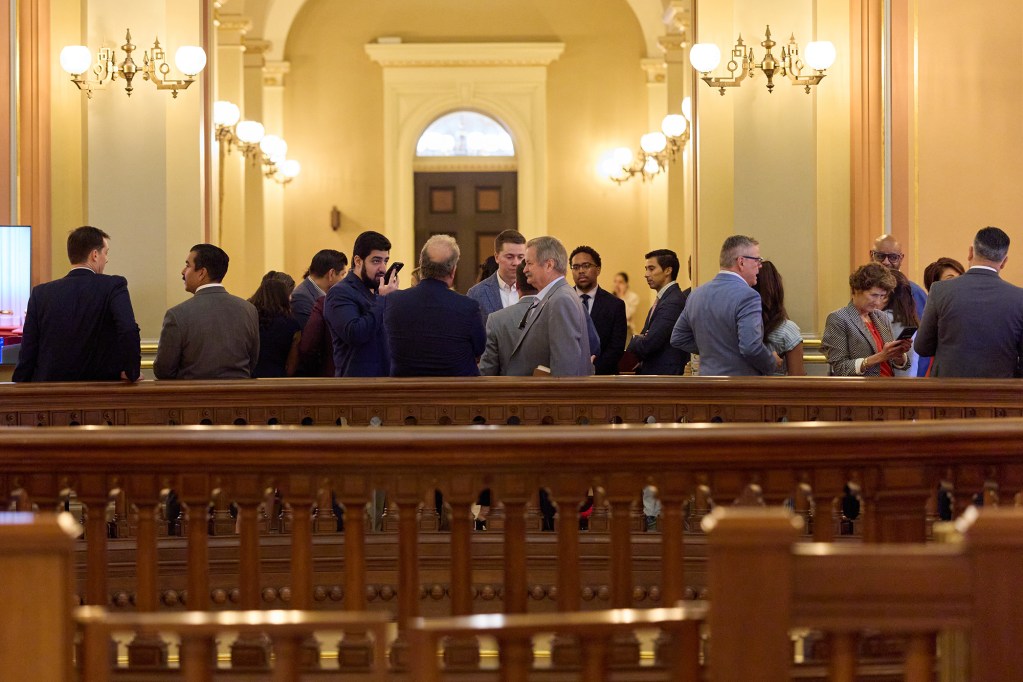
This story was originally published by CalMatters. Sign up for their newsletters. Companies backing data center construction are flooding Sacramento with cash, hoping to stop or defang seven bills that would regulate the facilities as they head toward approval in the California Legislature this week. The pro-data-center spenders include Big Tech companies like Amazon and AI titan Anthropic. But they are led, dollar-wise, by old school utility giant Pacific Gas & Electric, which earlier this year clocked its second biggest lobbying quarter since 1999. The financial push comes a year after four bills that attempted to regulate data centers died or were diluted after lobbying from the industry. But as artificial intelligence fuels an unprecedented facility buildout, public backlash is transforming data center construction into a major issue for candidates in upcoming elections. A May Gallup poll found seven in 10 Americans oppose data center construction in their communities, while a Public Policy Institute of California poll in July found similar opposition statewide. Rising public anxiety over utility costs, water use, and grid strain has driven California lawmakers to propose strict new data center rules — igniting a high-stakes lobbying push by the industry. Hundreds of cities have considered or passed project bans this year, including in Monterey Park, where voters passed a ballot measure to permanently ban data centers, and Bay Area cities like Pittsburg, which backtracked on approvals following public outcry. “The level of concern and sensitivity is through the roof.” State law requires businesses and groups that engage in lobbying to report their overall quarterly spending, but does not require a breakdown of exactly how much is being spent on each bill. An analysis by CalMatters of lobbying activity for the first six months of 2026 found that utilities, tech companies and their proxies have spent millions of dollars lobbying state lawmakers, with data center bills emerging as a primary focus. By Monday, it will be clear which bills made it out of the Legislature and onto Gov. Gavin Newsom’s desk for signature or veto by the end of September. The fate of the measures could have far-reaching consequences, affecting not only data center development but environmental regulation, utility rates, and how freely California’s tech giants can operate in the state. Nationally, advocates and lawmakers agree that California’s regulation around data centers could be an important bellwether for how similar fights will play out elsewhere. “The level of awareness is through the roof, and the level of concern and sensitivity is through the roof — it's bipartisan, it's national, and it's across the board,” California Sen. Steve Padilla, a Democrat from Chula Vista who is author of two pending data center bills, told CalMatters. During the first half of 2026, Amazon paid more than $500,000 to lobby lawmakers on 33 pieces of legislation, including several data center bills and matters related to antitrust and artificial intelligence. Amazon spent more than $1.7 million lobbying in California last year. Meanwhile, AI company Anthropic, which sent its first lobbyists to Sacramento last year, has spent nearly $90,000 to influence decisions made by the California Legislature so far this year and, according to the Financial Times, nearly tripled its federal lobbying spend in the same time period. Last year, Anthropic spent over $200,000 lobbying in the state. Although Anthropic paid a lobbyist to influence lawmakers decisionmaking on data centers, a spokesperson said the company does not support or oppose any specific bills in California. The company, the spokesperson said, is also interested in working with lawmakers “on AI safety and other relevant issues." Representatives for Amazon did not respond to a request for comment from CalMatters. Utility giant PG&E’s latest filing shows that it spent $2.86 million lobbying in California between April and June — its second highest quarter since 1999 (only surpassed since then by 2018, the year of the deadliest wildfire in state history, later linked to its equipment). A spokesperson for PG&E said the company has engaged on a “broad scope” of issues facing the industry during this legislative session, adding that “less than 5% of our spending was on data-center related issues,” amounting to approximately $143,000. Other utilities, like Southern California Edison, and unions representing utility workers, like the International Brotherhood of Electrical Workers, have also invested in lobbying efforts on the bills. Utilities providers are particularly motivated to influence bills because the development of new data centers represents a historic opportunity for expansion and grid upgrades, according to Matthew Freedman, senior staff attorney for The Utility Reform Network. Under the current regulatory framework, he said, the cost of expanding transmission lines is spread across all grid users, which means everyday consumers foot the bill. But several of this year’s data center bills would change that, shifting costs back toward data center operators. “The groups that have been the strongest opponents of the bills this year include the proxies for the data centers and the tech companies,” Freedman said, referring to industry groups such as the Data Center Coalition, Silicon Valley Leadership Group and the California Chamber of Commerce. “They serve as a mouthpiece for the tech industry.” Filings do not show that tech giants like Google, OpenAI, Meta, and Microsoft are lobbying lawmakers directly on data centers this session. Instead, the business groups Freedman referenced, which represent the Big Tech firms, carry the weight. Silicon Valley Leadership Group, which represents companies including Apple and Amazon, has so far spent over $100,000 lobbying on bills including the various data center measures this year and is on track for its highest annual lobbying spend since tracking began in 2005. The Data Center Coalition, which counts companies like Google, Microsoft, and OpenAI among its members, has logged its second and third highest-ever spending quarters so far this year. It has spent roughly $60,000 lobbying state lawmakers and the governor’s office to voice opposition to nearly every bill that would regulate data centers. The measures before the Legislature this session include: Business interests opposed to the bills argue they would stifle tech companies’ ability to innovate and compete, tie up critical infrastructure in red tape and unfairly burden the construction of data centers versus the construction of other types of projects. Silicon Valley Leadership Group CEO Ahmad Thomas told CalMatters that he sees public debate over data centers as fueled by “strong anti-AI sentiment,” and that industry groups like his aim to “ground the conversation in reality” about the ways consumers rely on data center infrastructure for everyday services. Advocacy groups counter that transparency is vital to protect the environment and public resources, and that everyday consumers should not be affected by increased infrastructure and utilities costs. Britt Smith, who is part of a community group organizing against a controversial $2 billion Amazon data center project in Gilroy south of San Jose, said corporate opponents of the bills are “spending so much because there’s so much at stake,” adding, “Our future, our safety, is not for sale.” This robust fight stands in stark contrast to last year, when the only bill signed into law was stripped down to just a requirement for state energy regulators to publish an environmental impact study on data centers’ electricity demand. Newsom also vetoed a water usage disclosure bill, citing concerns that regulation could stifle AI growth. Whether this year's intensified lobbying will yield similar results remains uncertain, but lawmakers say shifting voter sentiment heading into the midterms has altered the political landscape. “When you're looking down the barrel of public outcry that says we don't want [data centers] at all, and you've got localities that are saying they’re going to ban them, then you know the atmosphere has changed,” Assemblymember Diane Papan, a San Mateo Democrat who authored two of the bills, told CalMatters. “We are in a totally different environment this year.” This article was originally published on CalMatters and was republished under the Creative Commons Attribution-NonCommercial-NoDerivatives license.Who is lobbying on data centers
The bills and the backlash
–
Stay up to date on business in the Capital Region: Subscribe to the Comstock’s newsletter today.
Recommended For You

Companies Are Racing to Fuel and Cool AI
Data centers that power AI use massive amounts of water and electricity. Here’s how companies are working to reduce their strain on resources
In a region like Sacramento, where the grid strains under demand and droughts loom, some critics see data centers as hulking, water-hogging threats to local communities.

The Future Of Electric Vehicles Is Taking Shape in Sacramento
From quiet motorcycles to vertical takeoff airplanes, the Capital Region is becoming a hotspot for EV innovation
Companies in the Capital Region are vying to become the replacement for internal combustion in markets far beyond consumer vehicles.

AI Is Making Cyber Scams Harder to Spot. Is Your Business Ready?
Hackers are getting more personal while AI poses new challenges
Cybercriminals are using AI to create more convincing phishing attacks, impersonate executives and find vulnerabilities faster — forcing businesses to rethink how they protect themselves.
Can AI Solve Cold Cases? California Investigators Think It Could Help
District attorneys and detectives say artificial intelligence is becoming a powerful new tool in cases where traditional evidence runs dry
A handful of law enforcement teams in California are working with an AI-powered investigative analysis platform called Closure, which can generate leads from terabytes of potential video, audio and digital evidence.
A Day in the Life of a California Lobbyist
From glad-handing to floor fights, we shadowed these full-time advocates on a frenzied afternoon at the state Capitol
“Your parents think you’re testifying in front of Congress, and your friends think you’re just out splashing the cash around and going to nice dinners, and the opposition thinks you’re beating up a baby seal,” says lobbyist Rob Grossglauser. Here’s what he really does all day.

What Does a California Lobbyist Do?
Often referred to as the third house of the state legislature, lobbyists spend long days advocating for their clients
California is one of only 10 states that has a full-time professional legislature, and last year, companies and industries spent a record high $480 million on lobbying efforts in the state.