



This story is part of our December 2025 issue. To read the print version, click here.
Deep in national forest land, dozens of miles from the nearest paved road and further still from the nearest power outlet, may not be where you would expect to run into an electric vehicle enthusiast. But whenever Dan Quick, global media director for Stark Future, gets the chance, he rides his electric motorcycle into the forests that surround California’s Capital Region.
Frequent visitors to California’s expansive public lands will be familiar with the sound of motorcycles and ATVs — and the disruption it can cause. Quick’s Stark Varg is virtually silent, so much so that the high-performance electric motorcycles have become popular with local hunters wishing to quietly access the backcountry. The silent drivetrain, impressive torque and absence of sparks that can start fires are just some of many reasons that he and other Californians are choosing electric vehicles in greater numbers despite the removal of a federal tax credit for electric cars. “Peak gas is not a fiction,” Quick says.
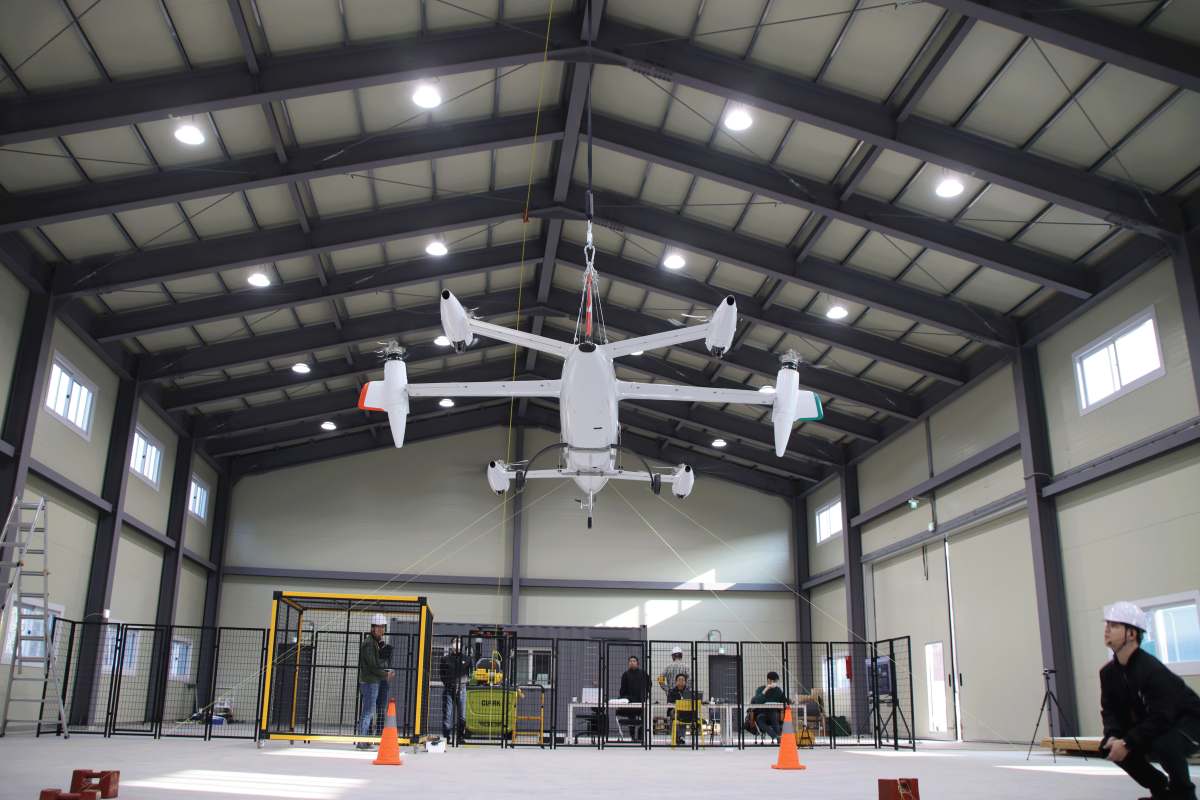
Companies in the Capital Region are vying to become the replacement for internal combustion in markets far beyond consumer vehicles. By 2026, FlyTahoe’s electric ferry will silently carry passengers across Lake Tahoe without pollution, noise or fossil fuels that could damage the very lake that its passengers have come to enjoy. PLANA, a Sacramento-based company originally founded in South Korea, is working on hybrid vertical takeoff and landing aircraft which will one day slash Sacramento-to-San Francisco commute times, and trails around the Capital Region are seeing more electric motorcycle users like Quick.
The Sacramento-based company PLANA is developing a hybrid
vertical takeoff and landing aircraft. (Photo courtesy of PLANA)
These electric vehicle companies and enthusiasts are not just looking for a lower gas bill, access to the HOV lane or a tax credit. They are choosing electric vehicles because they are the best way to get from A to B. Quick says most riders of Stark’s Varg motocross bike are motivated not just by the ecological benefit of their electric bikes, but by the performance benefits they offer over internal combustion vehicles.
There might be some pullback from EV purchases in the fourth quarter of this year, Quick says. “But some companies — Stark is one of them — have not seen any pullback.”
‘A natural landing spot’
Electric vehicles, or EVs, have become a fixture on roads in the Capital Region and around the state. Tesla’s EVs are the most popular new cars in the state, according to market share data compiled by the California New Car Dealers Association. But there’s much more to the EV industry than cars, and much of that industry is in Sacramento and the surrounding region. Ali Mackani, chief strategy officer at PLANA, says the region has lots to offer EV entrepreneurs.
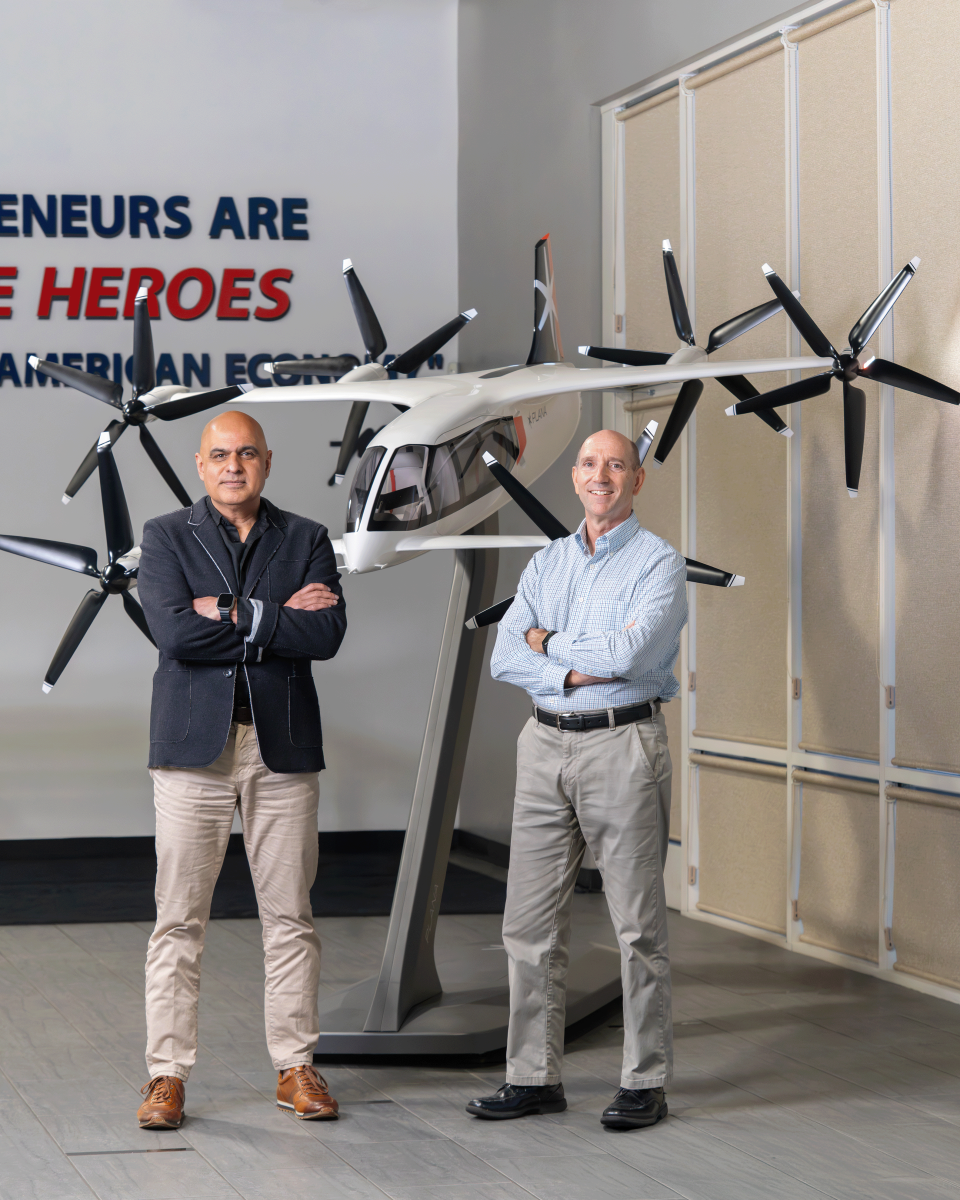
Ali Mackani, left, and Rick Spencer pose with a PLANA model
plane. (Photo by Kial James)
Like internal combustion engine vehicles, EVs are made of component parts. In PLANA’s CP-01 hybrid vertical take off and landing aircraft, the propulsion system combines electric motors with a turbo generator that runs on jet fuel to charge the batteries, whereas Stark’s EVs and FlyTahoe’s ferry do not use any fossil fuels at all.
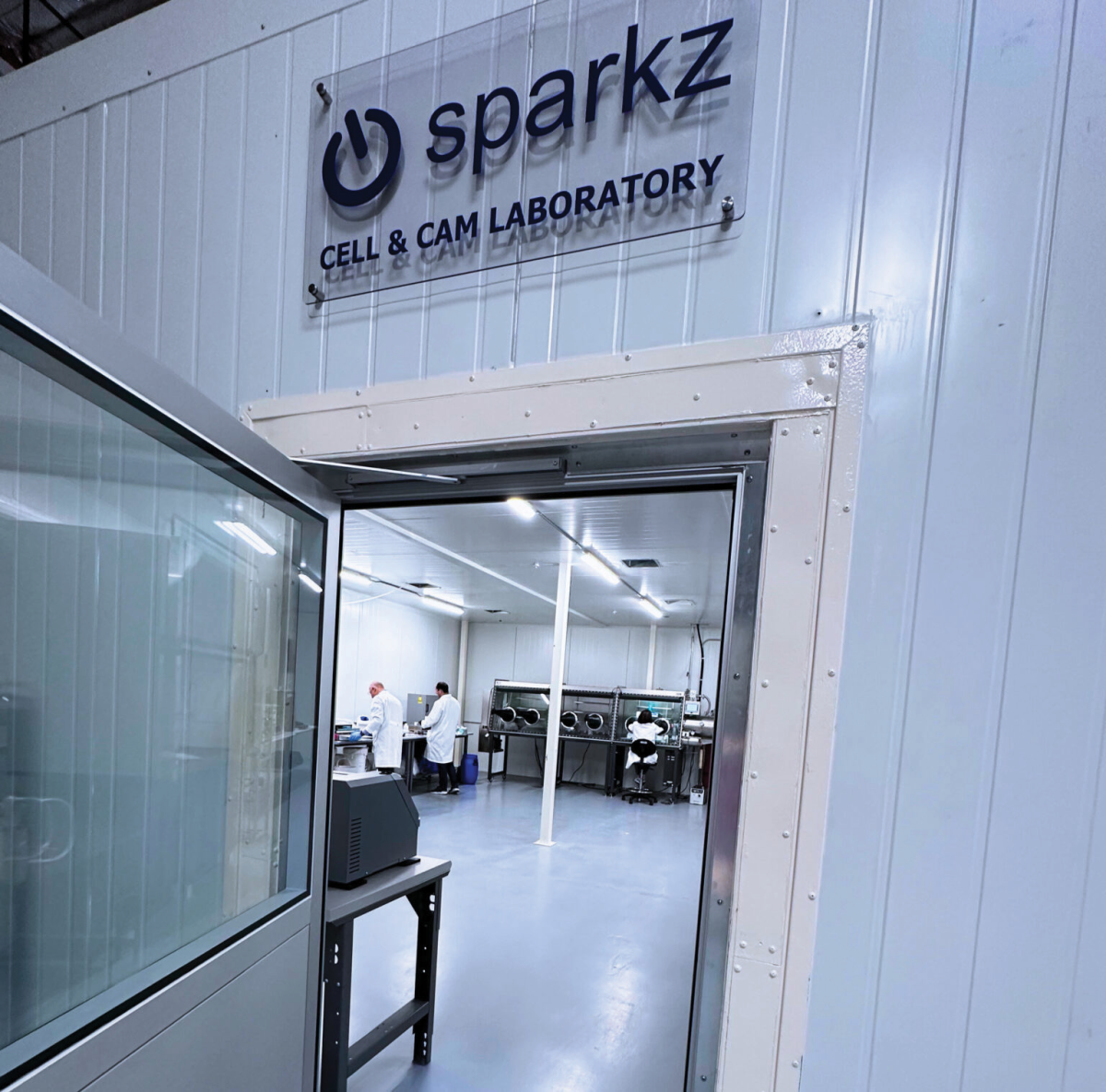
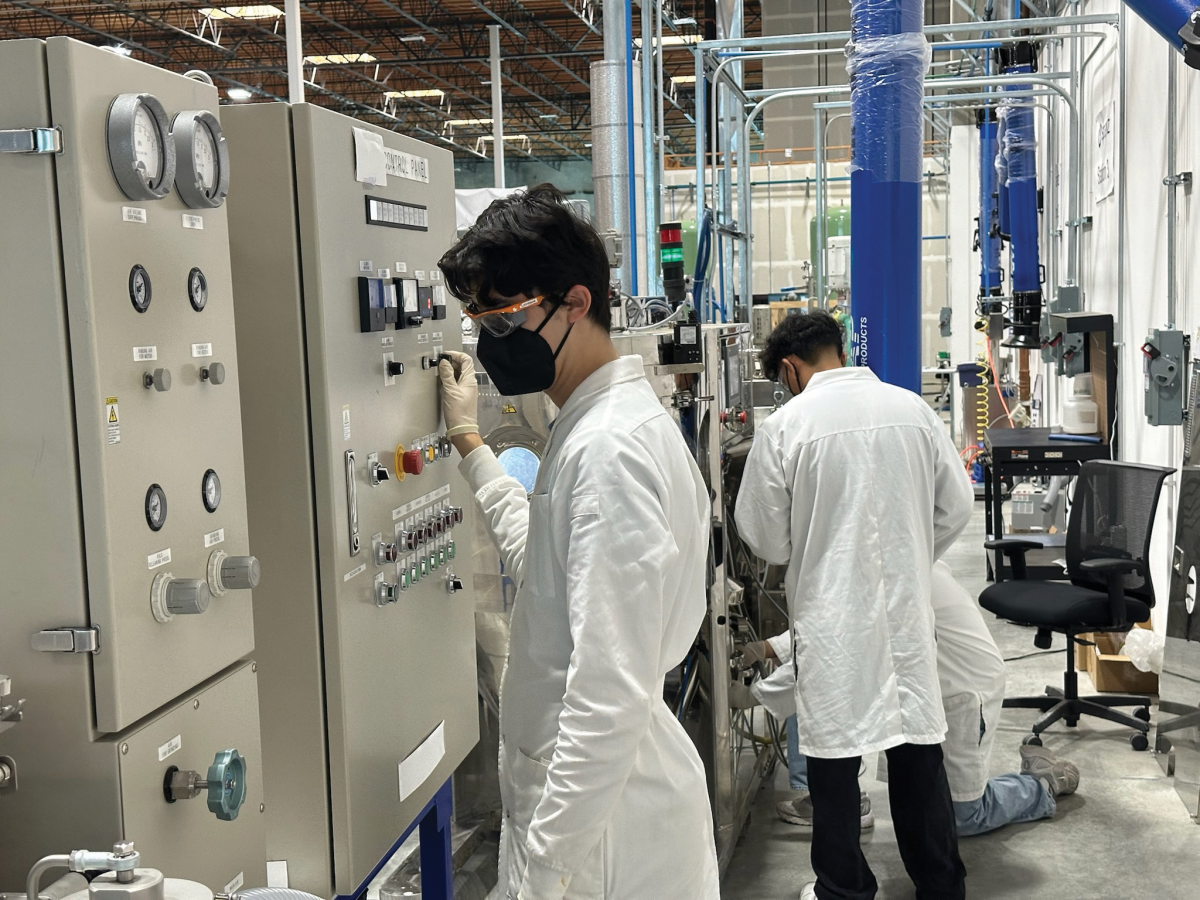
Regardless of whether EVs use a hybrid or all-electric drivetrain, at their core are motors and batteries. Sacramento companies are competing in both markets. Volektra manufactures motors in Sacramento, and Sparkz, whose Sacramento facility opened in 2024, is the only company making lithium iron phosphate cathode active material for batteries in the U.S. The Sparkz Sacramento facility produces a battery that can store more energy and endure more charge cycles than the common nickel and cobalt batteries made in China, according to CEO Sanjiv Malhotra.
The Sparkz Sacramento facility produces a battery that can store
more energy and endure more charge cycles than the common nickel
and cobalt batteries made in China. (Photo courtesy of Sparkz)
With tariffs making imported materials and batteries more expensive, Malhotra is optimistic about the potential for growth and the benefits that will bring to the region. “Our customer traction is literally increasing exponentially,” he says. “We will be hiring in Sacramento.” Not only is EV demand continuing to grow, but the stationary energy storage market for data centers and even residential homes is growing at a rate of 20 percent a year. “That’s the low-hanging fruit,” Malhotra adds.
Malhotra says he chose Sacramento for the facility due to the local and regional governments making the move and ongoing operations easy and affordable for his company. Alongside the low cost of utilities, especially power, Malhotra says local government was also a big factor in his decision to set up shop in California’s capital. “I’ll tell you,” Malhotra says, “SMUD (Sacramento Municipal Utilities District) has made it easy for me. The county of Sacramento, the city of Sacramento, they made it easy for me, and that’s the reason I’m there.”
While Sparkz may be opening more factories elsewhere, the company is committed to Sacramento as a long-term base, and the Sacramento region seems equally committed to supporting Sparkz and the sustainable jobs it brings to the region.
Challenges and opportunities
Not all of the EV industry is benefitting from such a business-friendly legislative atmosphere. In September of 2025, the federal electric vehicle tax credit expired. The $7,500 new vehicle credit, which has existed in some form since the Obama administration, had been scheduled to end in 2032. However, the One Big Beautiful Bill Act ended these credits in September of this year, along with a $4,000 credit for used EVs and a credit for commercial EVs. The bill will also end the tax credit for charging stations in June of 2026.
The Inflation Reduction Act also provided significant incentives to lease EVs, which became very popular after the act was passed in August 2022. These incentives are now gone. This will likely cause a dip in sales of electric cars and a rise in prices for consumers just a month after sales of EVs hit their highest-ever numbers in August 2025.
The Department of Justice has also sued the California Air Resources Board to prevent it from enforcing emissions rules which heavily favored EVs, placing the state and federal government at loggerheads over the issue. Previously, the state of California had suggested it might replace the EV tax credit, but Gov. Gavin Newsom told a late September press conference that “We can’t make up for federal vandalism of those tax credits.” Instead, the state will focus its resources on infrastructure.
Sparkz, which opened its Sacramento facility in 2024, is the only
company making lithium iron phosphate cathode active material for
batteries in the U.S. (Photo courtesy of Sparkz)
However, where many see headwinds for the EV industry, Malhotra of Sparkz sees opportunity. Because the company uses a U.S.-based supply chain, they are insulated from tariffs and the delays which have plagued many markets in the last five years. “Our supply chain is our strength,” he says. “By using U.S.-based supply chain that’s not fragmented or challenged by any such geopolitical tensions or choke points, we’re actually making it very easy for our customers, and I think that is the reason that Sparkz is growing at the pace at which we are.”
Ryan Meinzer is the CEO of FlyTahoe. (Courtesy photo)

FlyTahoe, which hopes to bring electric hydrofoil ferries to Lake Tahoe by the end of 2026, is unlikely to be impacted by the change in tax law. The company’s CEO, Ryan Meinzer, remains bullish about transforming how people travel around the lake and his company. The goal of the hydrofoil ferry is to replace single passenger vehicle traffic around Lake Tahoe.
As Meinzer found out on his frequent snowboarding vacations to Tahoe, it can take 90 minutes to travel by road from the north side of the lake to South Lake Tahoe. FlyTahoe’s electric ferry would make that journey in 30 minutes. Road sediment from cars, Meinzer says, is one of the leading causes of reduced clarity in the lake, so by reducing vehicle traffic the ferry would also play a role in keeping Tahoe blue.
PLANA also offers opportunities for destinations that are difficult to reach by road. With 35,000 locations where the CP-01 could land — and the ability to use existing jet fuel infrastructure to power the on-board turbo generator — the company’s six-passenger, tilt-rotor aircraft can travel to destinations over 300 miles away on schedule and without the stress and delays that have become common at large commercial airports.
The best tool for the job
Quick of Stark Future says he is convinced that EVs must, and can, compete on more than just lowering the overall cost of driving. Electric motorcycles, for example, not only offer users and everyone else enjoying the outdoors the benefit of a silent propulsion system, they also substantially reduce fire risk. “There is no thermal opportunity here; there is no combustion,” Quick says. California also regulates off-highway vehicles based on emissions, with pre-2021 off-road motorcycles only permitted to ride at certain times of year due to their higher emissions. Many California riders have made the switch to zero-emission bikes and can now ride them year-round without issue.
Despite producing much lower emissions at the tailpipe, not all electric vehicles are entirely without negative externalities. As PLANA President Philippe Bouissou explains, electric aircraft draw a lot of power and current at takeoff, and this can burn through batteries at such a high rate that they need to be replaced every six months. PLANA uses a jet fuel generator to power electric motors, and Bouissou says this means the CP-01’s batteries can last five years.
FlyTahoe is working on bringing an electric ferry with origins in
Sweden to Lake Tahoe. (Photo Courtesy of FlyTahoe)

FlyTahoe’s hydrofoil ferry ensures efficient use of the electric motor and therefore less draw on batteries by “flying” above the water. Flying on the hydrofoil is 10 times more efficient than pushing a boat through the water, according to Meinzer. Not only does the hydrofoil preserve batteries and therefore reduce life cycle emissions, but it also creates next to no wake and isolates the craft from the movement of the surface of the water. “I personally get very seasick,” Meinzer says, “but I do not on the hydrofoils. I was very skeptical, but I have never gotten seasick on these.”
FlyTahoe is not yet running their electric ferries for passengers, in part due to the Jones Act, which requires boats that travel between ports in the U.S. to be built in the U.S. The hydrofoil ferry supplier, Candela, is based in Sweden with a factory near Stockholm. Meinzer is working with Candela to find a local manufacturing solution and hopes to be compliant and operational by late 2026.
It can be easy to look at the sleek, futuristic websites of companies like PLANA and FlyTahoe, which are currently in the testing and development stages, and think that Americans are still far from accessing fully electric transit. But companies like Stark Future and Sparkz are already here.
Quick of Stark Future made a recent trip to the California-Oregon border with three electric bikes and this writer in tow. During a stop at a sporting goods store to pick up some wet weather clothing, someone approached and asked if the bikes were his. “It’s cool to see more Stark riders out here,” the shopper said, presumably not knowing he was speaking to the company’s global media director. “It’s an amazing bike.”
While federal legislation might still be centering electric vehicles as a terrain for the culture war, for many hunters, commuters, travelers and entrepreneurs across California, they are simply the best tool for the job.
–
Stay up to date on business in the Capital Region: Subscribe to the Comstock’s newsletter today.
Recommended For You
Sacramento Manufacturers and Distributors Weigh the Effects of Tariffs
Local businesses say there are winners and losers in the tariff game
Changes in prices and supplies have been creating uncertainty in the marketplace for regional businesses. We asked Capital Region businesses how they are adapting — and whether they see any benefits.
Are We Ready for the Electric Revolution?
The Capital Region is leading the charge to make California EV compliant in the next decade
These days, there is a sense of possibility in Sacramento when it comes to zero emissions technology. Sacramento may not have the population numbers of New York or Los Angeles, but when it comes to EV infrastructure the California capital plays second fiddle to no city in America.
Going Electric Gets More Complicated
The Inflation Reduction Act transforms the electric vehicle tax credit incentive
As electric vehicle prices rise, EV tax credits and rebates have become critical to the market. Here’s what you need to know about regional EV incentives and the changing rules of the EV tax credit.
Fleet of the Future
The City of Sacramento moves its municipal vehicles toward sustainability
Sacramento is working to turn its fleet into a model of municipal sustainability with electric vehicles, a software-and-hardware suite to monitor efficiency, and more.