


This story is part of our May 2026 issue. To read the print version, click here.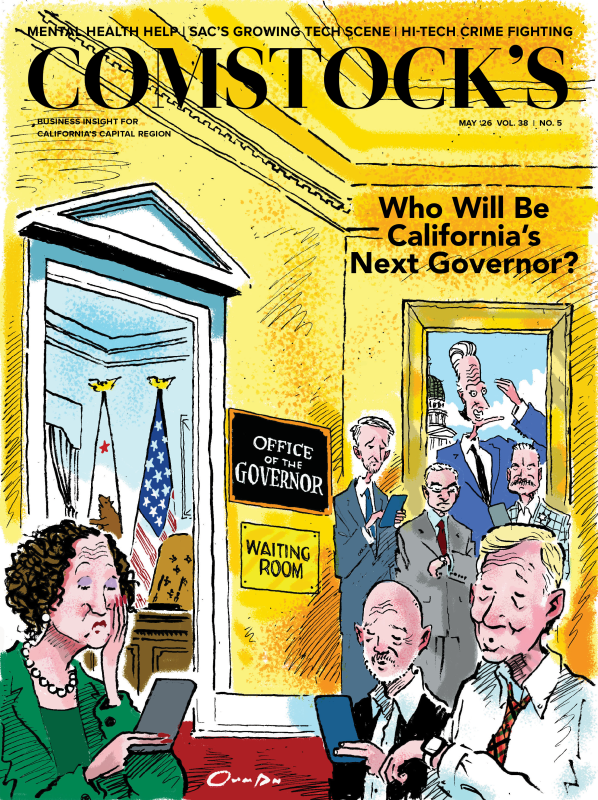
When you start a company, you wear a lot of hats just to get it off the ground. Early on, the founder is usually doing a little bit of everything — sales, marketing, finance, operations and often product, too. But as the business grows, the mindset has to change. You can no longer scale by continuing to do everything yourself. Growth requires hiring people who can truly take pieces of the business off your plate. If you hire right and train people appropriately, you free yourself up to operate at a higher level. That shift is essential, but many founders struggle to make it.
In my work as an executive recruiter, I’ve observed that every company eventually reaches a stage where the founder can no longer be the primary driver of the business. To test that idea, I spoke with four entrepreneurs who have been through that transition themselves.
Steve Marks, founding CEO of PayForward, describes this shift as moving from “digging to dancing.” In the beginning, you are doing the work yourself. Then you hire other people to help, which lets you dig a wider hole faster. The real change happens when more of your time shifts to “dancing.” By that, he means becoming a teacher, a motivator and someone who makes sure the team has what it needs to succeed. Those are very different skills, and they do not come naturally to most founders. To scale, you need people who can take on more of the load; delegation and training are essential parts of growth.
Anthony Romano, CEO of CREtelligent, reinforces that at a certain stage, the CEO has to step back from the day-to-day and focus more on capital allocation, leadership structure and building an organization that can scale without depending on the founder. In other words, the founder can no longer be at the center of everything. They have to build an organization that can perform without running through them.
That is also the point at which you start to stress-test your company’s operations. EJ Rogers, founder and CEO of California Materials, says that early on, speed and decisiveness were a big part of what made him successful. But those same traits can start to work against you in the next phase of growth. He sees it as a transition from a founder-led company to one led through other people. That requires better communication, stronger alignment and real buy-in across the team.
The right next-level executive frees up the CEO and can move their part of the business further than the founder likely could have on their own. Great leaders do not just replicate the founder. They add strengths the founder may not have or find others who can do it better.
Ali Mackani, entrepreneur and managing partner of Growth Factory Ventures, was candid about how hard it is for founders to let go. Founders have deep conviction in what they are building and, especially early on, are involved in nearly every major decision. Giving up control is difficult, but necessary. The next stage requires bringing in people who can take a goal, build a plan, budget it, staff it and execute with little to no hand-holding.
He also sees one of the biggest risks as failing to put systems in place that support growth. Whether it is objectives and key results or an enterprise operating system, the business needs real operating processes that are documented, communicated and reviewed on a regular basis. Communication across the organization becomes critical, and leaders need to make sure they are not building silos. To become truly scalable, a company needs financial clarity, real accountability and systems that can keep up as the business grows.
Romano makes a similar point from the financial side: Founders must deeply understand their profit and loss, EBITDA and cash flow. Strategy cannot just sound good — it has to show up in the numbers. He also had one of the clearest lines from all of the interviews: “The cheaper the company, the harder you are to kill.” In practical terms, that means spending money like it’s coming out of your own bank account. One of the biggest fears any CEO should have is running out of money. That kind of discipline matters even more as a company grows. Scalable companies invest in things that drive revenue, protect IP and make the business faster and more efficient, while avoiding overhead that adds cost without making the company stronger.
Across all four conversations, one point kept coming up: Scaling CEOs have to be great at hiring, not just filling roles. The cost of a bad hire is enormous, especially for early-stage companies. Steve Marks says a big part of his success across multiple businesses has been an intense focus on culture. Getting culture right, and enforcing it, has a direct impact on whether a company scales or breaks down. Managers shape culture by how they lead every day. The biggest cultural failure he sees is weak communication, both within departments and across the company. Silos can kill a company.
Mackani made a similar point. If you keep the wrong manager in place too long, morale drops, resentment builds and communication starts to break down. By the time a poorly performing leader is finally dealt with, the team is usually not surprised. By then, the damage has already been done.
Romano also made a very practical point: Founders often overvalue product and undervalue sales enablement. Revenue growth can solve a lot of problems and helps a company push through growing pains. Without the right sales engine behind it, growth often stalls. That is not to say that product does not matter. It absolutely does. But scalability is not just about operations. It is about building the sales and marketing capability to drive customer adoption faster.
The biggest takeaway from all four interviews was this: For a company to keep scaling, the founder has to change first. Becoming scalable is not about becoming more corporate; it requires building a business that can keep growing without coming apart. It means hiring leaders who can lead through others, building systems that create accountability, developing financial discipline, protecting culture and building a company that can perform without one person carrying the whole load.

–
Stay up to date on business in the Capital Region: Subscribe to the Comstock’s newsletter today.
Recommended For You

Big Bets in Downtown Sacramento Require Courageous Leadership | Opinion
The upcoming Capitol Mall redevelopment involves high stakes and high expectations
As a multi-billion-dollar project reshapes Sacramento’s urban core, the city’s future will hinge on courage — and on women stepping forward to lead.

Why Succession Planning Matters More Than Ever
Plus, some tips on how to do it effectively
In 2025, succession planning for business owners has never been more important. A powerful demographic shift is underway: Over 4.2 million Americans will turn 65 this year, and more than half of small business owners are already 55 or older.

Why Leaders Need More Than Just a Plan
An executive coach explains how to coach the heart of business
Managing exempt employees can be a bit complicated, as you want to balance work demands without overwhelming or taking advantage of your employees. Let’s get into it.
How to Go From ‘WTF?’ to ‘I Got This’
Real talk for life’s impromptu adventures
Life has a flair for the dramatic. It loves to throw us
unexpected turns — a relationship hiccup that feels seismic, a
health scare that rattles your foundation, a sudden financial
shift that throws your budget into chaos. And while our initial
reaction might be shock, confusion or even anger, the real
strength emerges in how we navigate the aftermath.