


This story is part of our August 2026 issue. To read the print version, click here.
Now that’s a pretty bold statement, but for five glorious weeks, the 1.2 million foreign visitors who crossed oceans and borders were telling us what was good about us, what they love about us and how fabulous we are. How could that be? According to the news and social media, isn’t America a divided country where people hate each other and are barely able to survive in an uncertain economy?
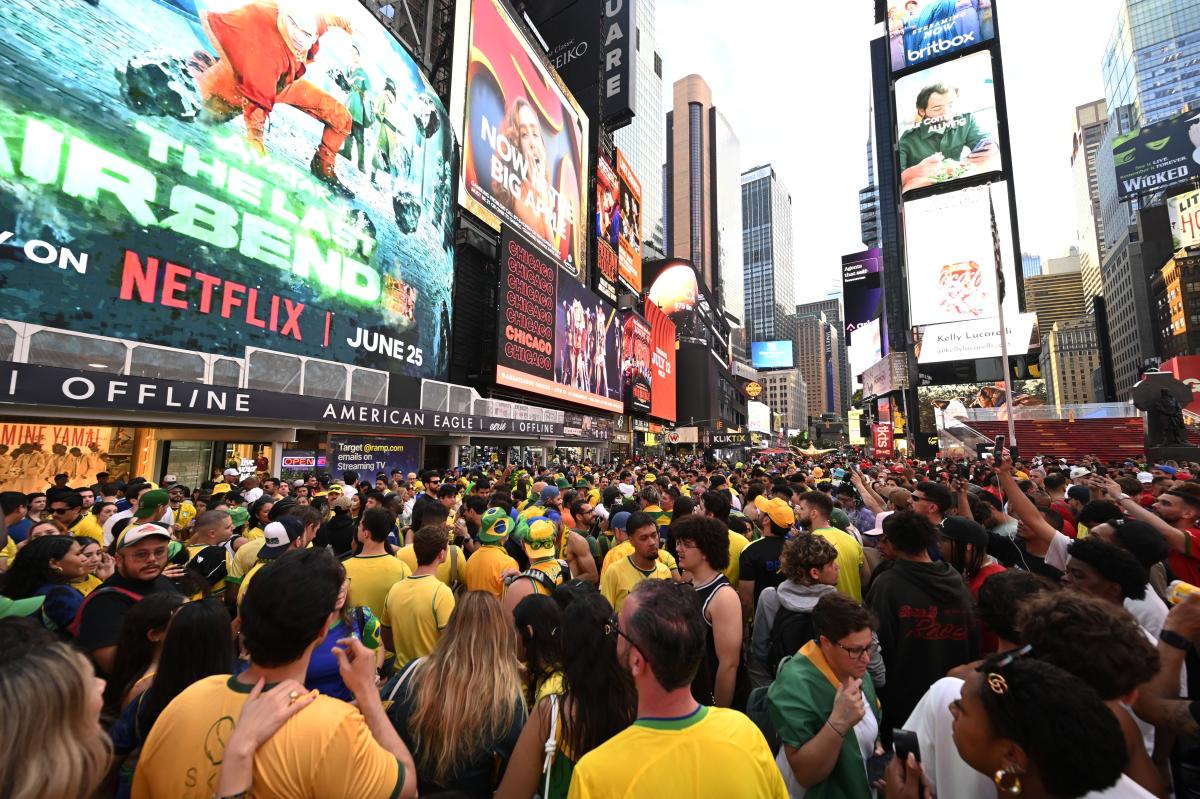
That might be partially true, but visitors from 48 countries — the most who’ve ever traveled here for a sporting event — saw something different that gave us a sharp wake-up call. These guests, speaking dozens of languages, wearing Viking horned hats, plaid kilts and other national symbols and waving multicolored flags from every country, found an America we’ve been too closed-eyed or maybe too cynical to see. One that is friendly, fun and beautiful.
The World Cup took place in 16 stadiums in three countries — Canada, Mexico and the U.S., which hosted matches at 11 stadiums. Some of the 104 matches were played in big cities like Los Angeles and New York (actually, New Jersey), but others were played in what some call flyover country — Kansas City, Dallas and Houston. These exuberant fans who took over our cities found warm and welcoming people to greet them, not the rude, ugly Americans we often hear about.
In midwestern Kansas City, the smallest host city, residents greeted the team from the African nation of Algeria with open arms, and the University of Kansas played the Algerian national anthem. The Tartan Army from Scotland marched through Boston playing bagpipes and drank all the beer from surrounding pubs with locals. Team Norway won the hearts of all with its exuberant Viking row, which they did by the thousands in Times Square and on an escalator at Boston’s railroad terminal.
Europeans were wide-eyed at our all-you-can-eat buffets, free salsa and chips, giant pizzas, free refills of soda and coffee, and the incredible excess of Costco, Dick’s Sporting Goods and Buc-ee’s gas stations that serve barbecue. Hidden Valley saw a 7 percent spike in sales of their ranch dressing as Europeans went home with quarts of it after they tasted it for the first time. The creamy dressing was suddenly sold at airports, prompting TSA to issue a warning to international travelers that they couldn’t chug it or carry it on board planes.
A German tourist with the handle FreddyLA7 on the social media platform X grew a fan following of his own. When he posted that he loved country star Ella Langley’s music, she invited him to a concert. When his flight to Canada was delayed and would have prevented him from seeing Germany play, Air Canada reached out offering to help. Former football star J.J. Watt supplied Freddy with extra luggage while celebrity chef Gordon Ramsay left him treats in his hotel room.
This foreign love for America shouldn’t have been a surprise to me. I learned at an early age that sports are a great uniter, and I thank my father for exposing me to it by watching “Wide World of Sports” with him every week. While the U.S. has hosted worldwide events like the Olympics, the World Cup is dedicated to one sport — soccer. Dominant worldwide, soccer has slowly been growing in the U.S. I thank Sacramento Republic FC for turning Sacramento into a football town, as they call the sport in Europe and other countries. Going to a match at Heart Health Park is like one big block party. I’ve learned about hat tricks, stoppage time, nil-nil and penalty kicks. Many people also credit the TV show “Ted Lasso” for educating them about international soccer. We’re building several new stadiums in the Capital Region, so you can expect Sacramento to be an even more sports-centered town. (Preview of our September issue.)
And on the world stage, we got to see some of the greatest soccer players of all time — Cristiano Ronaldo of Portugal (who I learned was named after Ronald Reagan) and Lionel Messi of Argentina, both of whom may have played their last World Cup. We were also introduced to the new guard: 19-year-old World Cup winner Lamine Yamal of Spain, 22-year-old Jude Bellingham of England (stadiums sang “Hey, Jude” to him) and the 6-foot-5, 26-year-old real-life Viking Erling Haaland, who entranced us all with his talent, big smile and the cowboy hat and stuffed raccoon he bought in Texas and brought home to Norway.
And it was quite the experience to see 80,000 foreign visitors at a stadium knowing all the words to John Denver’s “Take Me Home, Country Roads” and Neil Diamond’s “Sweet Caroline” and sing it in unison.
So maybe you don’t care about sports. The World Cup transcended it. Different cultures and languages were brought to our cities. People sampled customary dishes of the visiting countries and learned new geography. (Where is Cape Verde?) Downtown Sacramento blossomed with joyful noise as hundreds of happy people walked around in Team Mexico or Team USA jerseys on their way to watch parties.
As more than one person noted, maybe it’s the politicians, not the people, who divide us. America was asked to host the biggest of parties, and we nailed it, with tearful visitors bidding us farewell, thanking us for a glorious time and vowing to come back again for our U.S. hospitality. Let’s hold on to that.
Judy Farah
Editor

–
Stay up to date on business in the Capital Region: Subscribe to the Comstock’s newsletter today.