


This story is part of our June 2026 issue. To read the print version, click here.
All Hanna wanted was an hour — just one uninterrupted hour to celebrate. Her mother, Linda, put the phone on silent. It kept buzzing on the table.
“Mom, really?” Hanna said.
But this was typical. Linda had spent four decades as an obstetrician nurse and board-certified lactation consultant before opening her own private practice. The calls came from everywhere: physicians looking for guidance, mothers struggling to breastfeed, parents worried something was wrong. And she was in the middle of it all, the one who people called when they didn’t know where else to go for help.
The phone wouldn’t stop ringing because it couldn’t.
“I got a different sense of what was really happening in her world,” Hanna says. “She would tell these stories and be frustrated there weren’t better ways to communicate. All these folks were supposed to be connected, but didn’t have the processes, systems or technology in place.”
For pregnant women and new mothers, those communication gaps can become life-threatening. The U.S. has the highest maternal mortality rate among high-income countries, according to data published by The Commonwealth Fund. CDC analyses show that most pregnancy-related deaths happen after delivery, when support usually drops off. The maternal health crisis is especially hard on Black and Indigenous women, who are about three times more likely to die from pregnancy-related causes than white mothers. More than 80 percent of pregnancy-related deaths are preventable, the CDC reports.
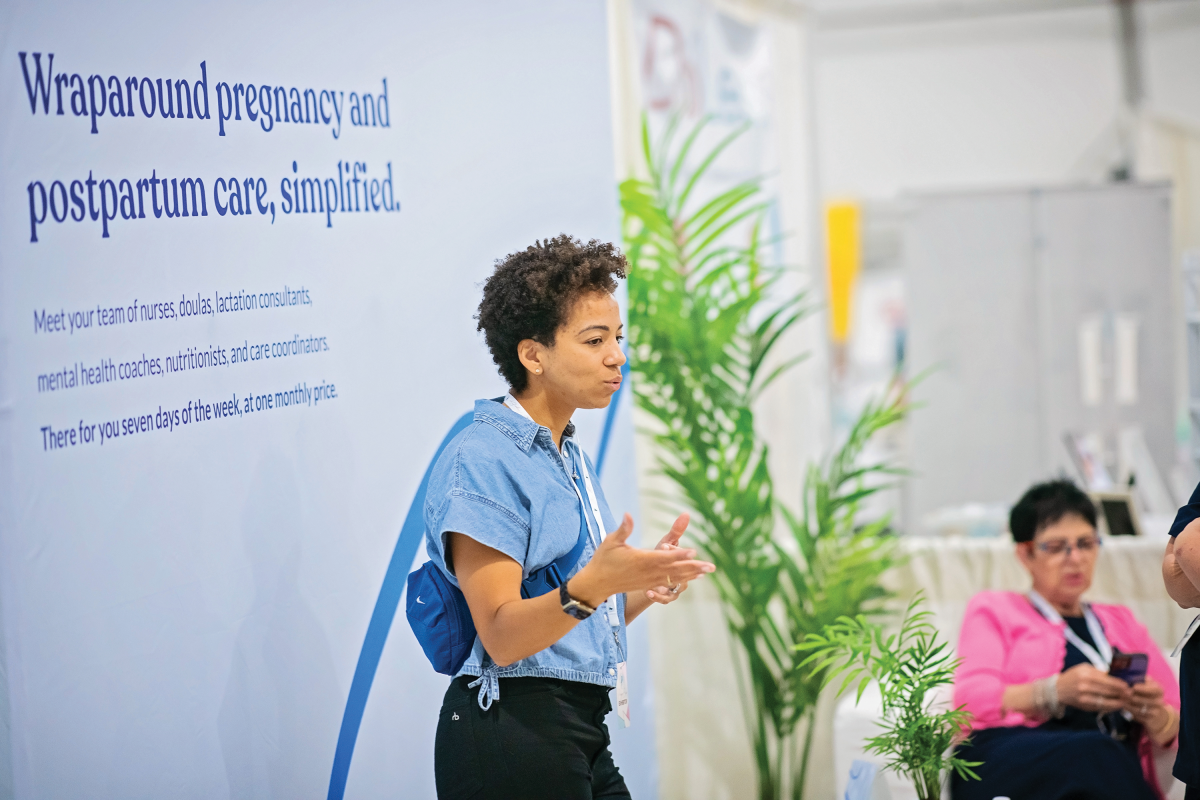
Mahmee CEO and co-founder Melissa Hanna speaks at Prego Expo, a
convention for maternal health services. (Photo courtesy of
Mahmee)
The Sacramento region is feeling the pressure with birth centers closing and fewer physicians to go around. In the past decade, CBS Sacramento reports that more than 50 labor and delivery wards have closed at California hospitals, and 12 counties now lack any hospitals with labor and delivery services. But as demand strains hospitals and resources, health systems in the region are responding with remote tools and wraparound services to create a safer, more integrated maternity journey.
In the company of supporters
Growing up around healthcare, Hanna realized mothers needed more than traditional systems could provide. In 2016, she launched Mahmee, a maternal health platform for wraparound care that includes doulas, lactation consultants, nurses, mental health providers and care coordinators for mothers to have support before and long after delivery.
“The mission matters,” Hanna says. “It has such an immediate impact on people’s lives.”
One of the biggest issues in maternal health is the delicate window after delivery. Many patients don’t come in for a standard check-up until six weeks postpartum. But a lot could go wrong in that time. Mahmee aims to fill this gap by offering breastfeeding support, postpartum monitoring and mental health services without strict visit limits. The company also employs doulas, non-medical workers who provide emotional and physical support during childbirth, as salaried workers with benefits, which is unusual in a field dominated by contract labor.
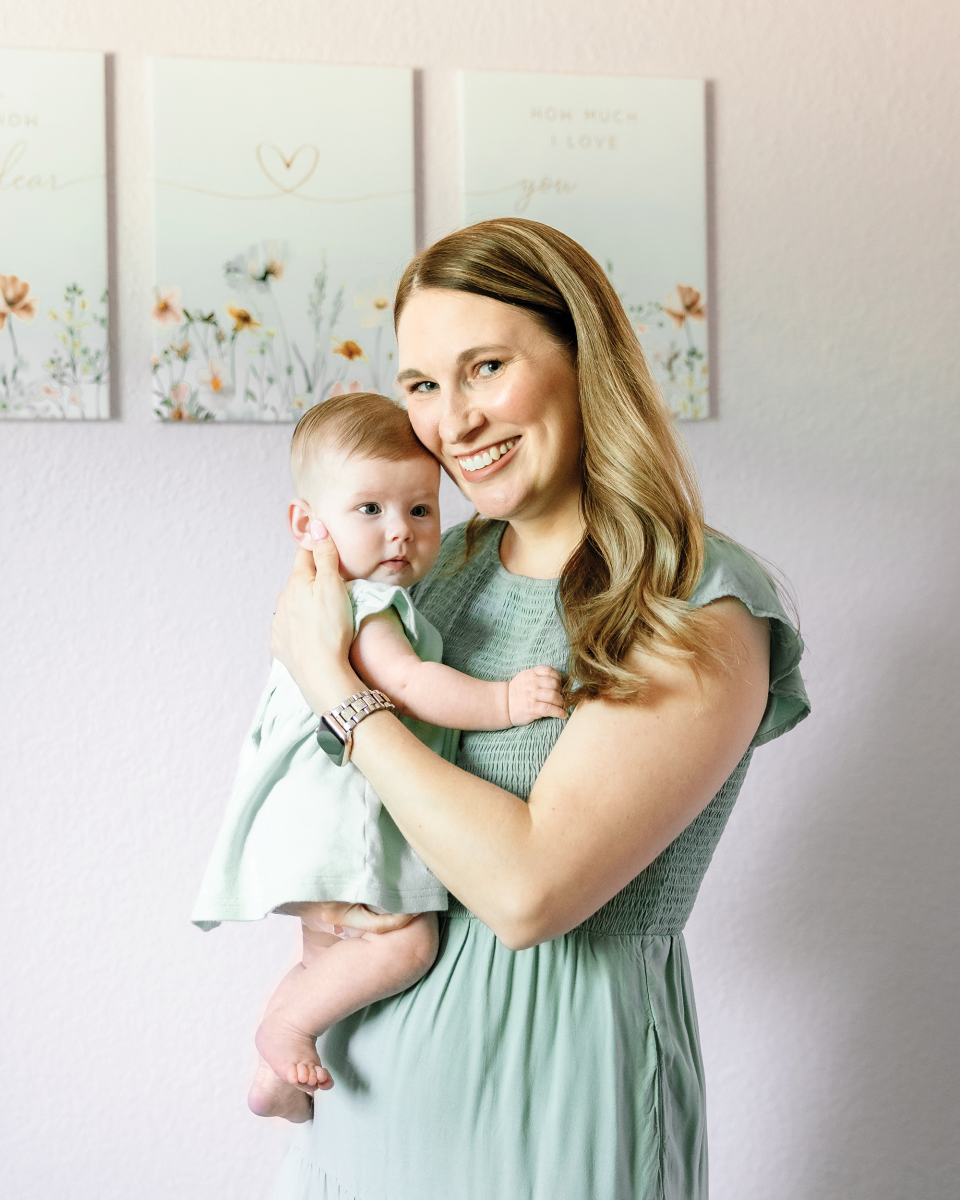
Allison Formoso holds her daughter Avery. Formoso says she found
support through Mahmee both before and after Avery’s birth.
(Photo by Melissa Strong)
But Formoso began experiencing postpartum depression and anxiety after the baby was born. And this made her feel guilty because she had such a solid support system. It was her first birth experience and she had no idea how much her life would shift.
“My entire adulthood has been focused on furthering my career and in an instant, everything changed,” Formoso says. “This tiny little human just shifted my mindset and goals that I have had for decades.”
As her daughter became “increasingly more fussy for no apparent reason,” Formoso says, she felt alone and completely lost on what to do. After receiving her responses from a mental health check-in, Mahmee linked her with a mental health and wellness coach and referred her to therapists specializing in postpartum health.
“I wish that this was discussed more, as it was extremely isolating,” Formoso says.
It’s complicated
Postpartum complications can show up through various warning signs, such as chest pain, trouble breathing, seizures or thoughts of harming yourself or your baby. (Seek emergency medical care immediately if you experience any of these symptoms. Early treatment can be lifesaving.)
Dr. Jennifer Overbey, an OB-GYN at Dignity Health’s Mercy Medical Group, says many postpartum mothers dismiss getting help because they’re exhausted, overwhelmed and focused on caring for their newborns.
“You’re tired, you’re not sure if these symptoms are severe enough to go in,” Overbey says. “You don’t want to leave your baby to go to the hospital.”
That hesitation can be dangerous, even deadly.
Overbey recalls one physician who had recently given birth and had a severe headache. She thought it would go away. By the time she came into the hospital, she had suffered a minor stroke and lost part of her peripheral vision.
“These types of things happen all the time with mothers,” Overbey says. “We as women are caregivers, so it’s easy for us to talk ourselves out of going in to get care sometimes.”
Remote check-ups
To keep track of vitals before they become emergencies, hospitals across the Sacramento region have turned to remote monitoring programs.
Mercy Medical Group sends patients home with blood pressure cuffs connected to an app. Nurses monitor readings and ask patients about symptoms like headaches, blurry vision and abdominal pain. If numbers spike too high, patients are directed to the emergency department.
Last fall, Sutter Medical Group launched its Sutter Sync pilot program, which also uses blood pressure cuffs and a weight monitoring device synced to patients’ medical records. Video visits allow mothers to get support from home, which physicians say is especially helpful for postpartum mental healthcare.
Mahmee’s clinic in Fresno is outfitted with cozy chairs and other
accoutrements meant to make mothers comfortable. (Photo courtesy
of Mahmee)
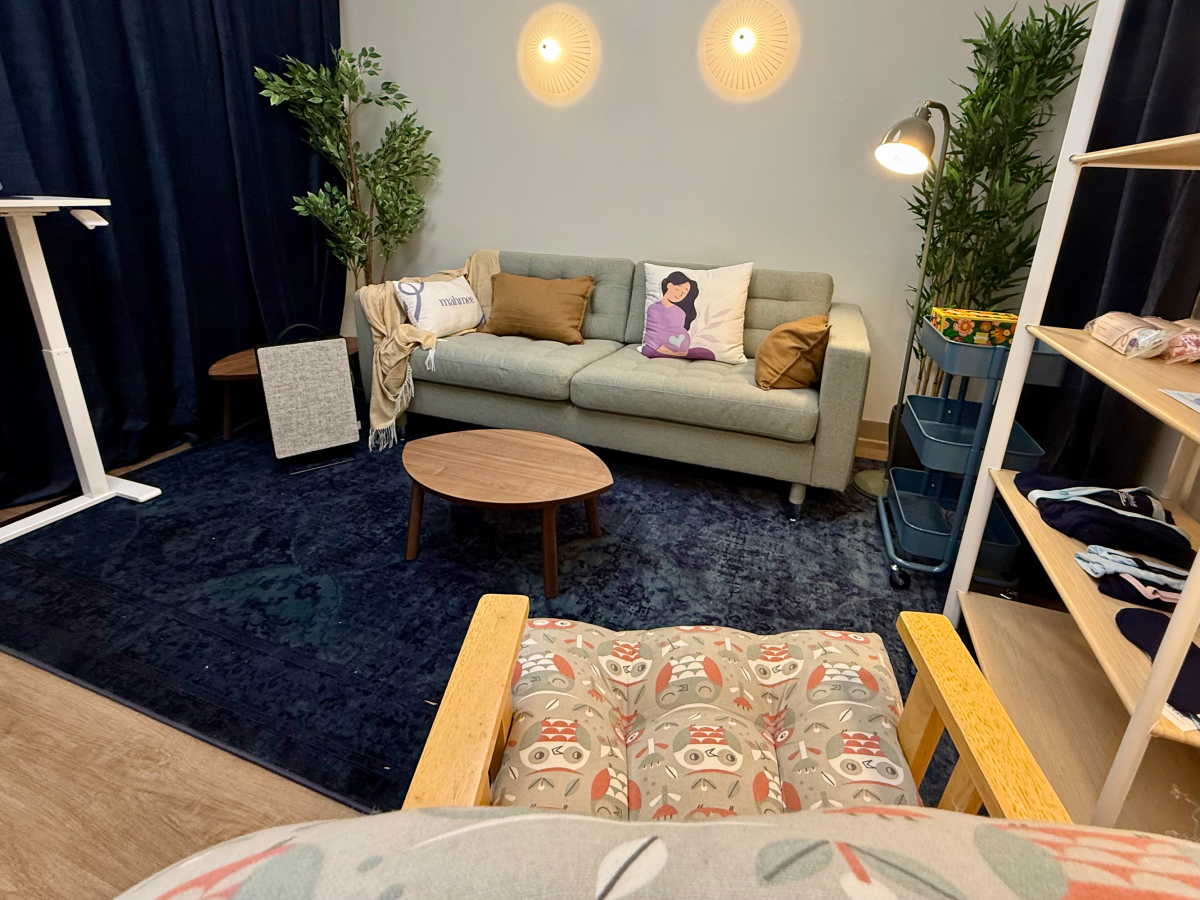
“Patients find it’s hard to get into the office with small children,” says Dr. Carrie Yiakis, an OB-GYN with Sutter Medical Group and one of the physician leaders for Sutter Health’s Women’s Service Line. “We know depression is such a significant risk, impacting so many women. A lot of people feel comfortable communicating from home, particularly those who just had a procedure or had a child.”
According to Dr. Jeffrey Hastings, an OB-GYN based at Kaiser Permanente in Folsom, maternal health problems begin before the delivery room. Conditions like hypertension and diabetes can increase risks during pregnancy and postpartum recovery.
“What Kaiser is famous for and does great is preventative care,” Hastings says. “The entire system is set up to help patients be healthy at baseline.”
Kaiser has also started using a device designed to treat postpartum hemorrhage, one of the leading causes of maternal complications and death. This tool uses suction to help the uterus contract more quickly and reduce severe bleeding.
“It saves lives,” Hastings says. “Saves people from blood transfusions.”
The doctor is out
Even as technology improves, health systems still need physicians to deliver babies. But the shortage of OB-GYNs has been getting worse, with projections showing nearly all states, including California, may not have enough by 2035.
This shortage will be most severe in so-called “maternity deserts,” rural pockets with little or no obstetric care. Overbey, who has been with Mercy Medical for about 18 years, says the biggest maternal health challenge is access.
“We’ve been recruiting for the same positions with much higher pay and a really nice bonus package and it’s still very dry,” she says.
She attributes the shortage to several overlapping factors. Many younger physicians are opting out of traditional around-the-clock obstetrics work to choose hospitalist positions. They want more predictable schedules and fewer demands outside the hospital. They want earlier retirements and a better work-life balance than previous generations.
“We’re not working like the guys of yesteryear,” Overbey says. “We just had two OBs that retired. One was 83 and the other was 77. And women are saying, ‘We’re not working like that.’ … I’m not missing my son’s basketball game.”
Supporting Black mothers
On one hand, this shift is helping doctors avoid burnout, but on the other, it also means fewer physicians available for office visits, surgeries and long-term patient care. Absences make a big difference in maternal healthcare, especially for Black mothers, who already struggle to feel heard and seen.
Healthcare providers across the region agree that representation matters for addressing such disparities. Overbey says Mercy Medical Group has focused on building diverse care teams and expanding remote monitoring at no cost to patients. Methodist Hospital in Sacramento also created an OB emergency department where every patient is evaluated by a board-certified OB-GYN before discharge.
Hastings says Kaiser has focused on reducing anemia and hypertension during pregnancy because both conditions contribute to worse outcomes and have historically affected Black patients at higher rates.
The health system has also expanded doula access and participated in statewide maternal health collaboratives for reducing unnecessary C-sections and improving birth equity. Hastings also notes Kaiser is developing a “bias impact response team” in the Sacramento and Roseville region.
“There is new tech in medicine, but the most important thing is the people,” he says. “Having a nurse with you the entire time, helping guide the experience, is so important and helpful.”
Different lanes
Ten years ago, while in graduate school, Hanna had moved back home and spent many nights listening to her mother’s nursing stories.
By then, Linda had left the traditional hospital system to deliver home-based care out of her customized 30-foot Winnebago, converted into a mobile maternal health office by the crew from Pimp My Ride. Inside was a space for lactation support, nursing bras and breast pump rentals. She used to drive from one side of L.A. to the other delivering services, Hanna says.
The Mahmee team at work. (Photo courtesy of Mahmee)
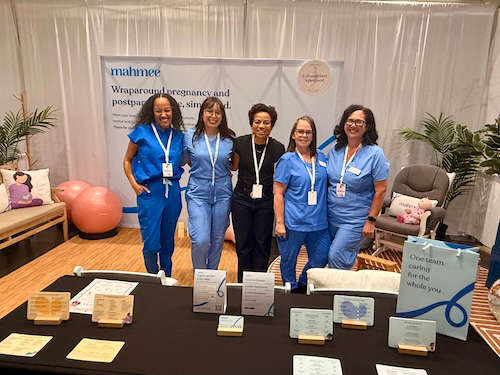
Before launching Mahmee, Hanna received a warning from Linda about the world she’d be stepping into: “‘There’s opportunity here, but you’re going to need to convince a lot of people to care about this cause.’”
But Hanna was committed, on a mission to “make the U.S. the best place in the world to give birth,” she says.
Despite this venture-backed startup life being unfamiliar territory, Linda came aboard as one of the co-founders, merging decades of clinical experience with her daughter’s technical savvy.
So what’s it like for Hanna working with her mother?
“I always ask: ‘What would it be like working with your mother?’” She laughs. “We have very different skill sets. She specializes in healthcare, I’m business and policy. We had to learn to respect each other’s lanes. That’s important. You don’t want the business of healthcare to interfere with the care of healthcare.”
–
Stay up to date on business in the Capital Region: Subscribe to the Comstock’s newsletter today.
Recommended For You
CARE Court Offers Help to Sacramento Residents With Psychotic Disorders — But Is It Enough?
Decades after deinstitutionalization transformed mental health care, California is testing new approaches to treatment, recovery and public safety
Recent legislation signals that the priority is getting people into treatment, but whether that translates to large-scale impact is less clear.

The Capital Region Is in the Vanguard of Autism Research and Treatment
Researchers, educators and students help unlock the mystery of autism
Autism is neither a disease nor a sickness. But for the increasing population of those diagnosed — one in 31 children is the current count in the U.S., according to the Centers for Disease Control and Prevention — it’s quite real. What might surprise you is that when it comes to learning about and managing autism, the Capital Region is very much in the forefront.
Beyond the Bottle
UC Davis is a hub for breast milk science and innovation
As a chemist of food science, J. Bruce German was accustomed to observing the tiniest things: protein particles, bacteria, mucin layers and much more invisible to the naked eye. But nothing prepared him for his first experience in the neonatal intensive care unit at UC Davis.
Becoming Mom in Midtown
New birth center gives women an alternative to hospitals or home
After Bethany Sasaki became certified as a lactation consultant about a decade ago, she took a break from her hospital nursing job to earn some cash consulting while caring for her newborn son. She drove all over the Sacramento region to meet with moms struggling to breastfeed. And her phone kept on ringing.