


This story is part of our March 2026 issue. To read the print version, click here. This story is part of our March 2026 issue. To read the print version, click here.
When Guy and Leslie Thomas moved from the Bay Area to Wilton, a rural agricultural community on the outskirts of Elk Grove, they knew they were looking for a home that was horse-and-country copacetic.
As the owners and operators of Wilton’s Rocking Willow, a full-service training barn for the hunter and jumper riding disciplines, the Thomases have their own horses that, like their family, would need a residence after the move east. To find it, they went to Vanessa Pymont at Windermere Real Estate.
Pymont, an avid equestrian who emigrated to the Capital Region from England, was ideally suited to the task. “I also have a ranch, and my husband and daughter jump, so we’re kind of horsey,” Pymont says. “It’s kind of easier to find people a place, because you kind of understand the language.”
Related: Along for the Ride: Second chances for needy horses
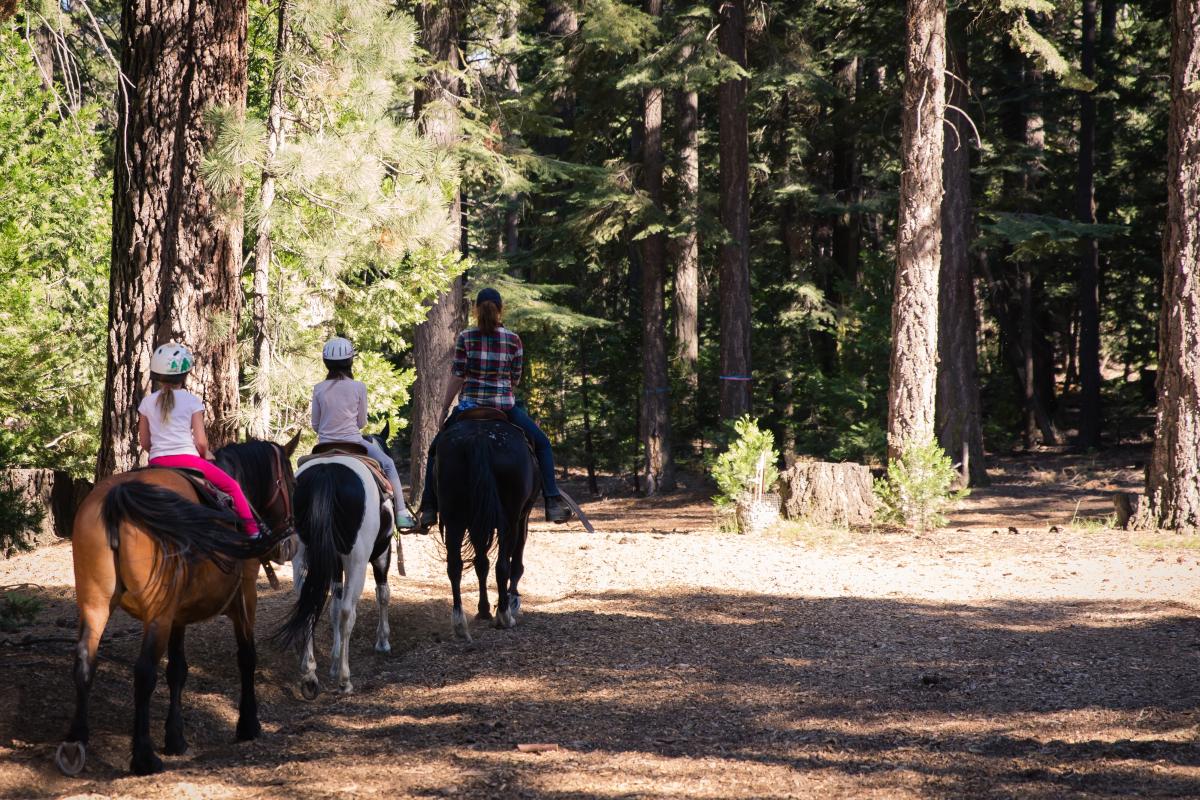
One example is proximity to trails, which is music to buyers’ ears. “Most people tend to ‘trailer to the trails,’” she says. Communities like Folsom, Rio Linda and Pilot Hill in El Dorado County offer trailheads where riders can park their horse trailers. “But I have friends on a horse property, and they have trails just behind their homes,” Pymont adds. “And then I sold one in Wilton, and that had trails behind it. So it just really depends on the property.”
Equestrians ride a horse trail in Northern California.
(Shutterstock photo)
Pymont found the Thomases a 10-acre property with a remodeled house and a six-stall barn. “When people look at a property, it may not be perfect,” Pymont says. “But there are always changes you can make to improve it for the horses,” such as changing out the arena surface to be kinder on their joints and upgrading fencing and stables.
For those who call themselves “horse people,” no amount of money or hours spent in the saddle outpaces their love for their steed. It’s an all-consuming sport that promises camaraderie, diversion and thrilling competition, but also pain — that of the body, heart and wallet.
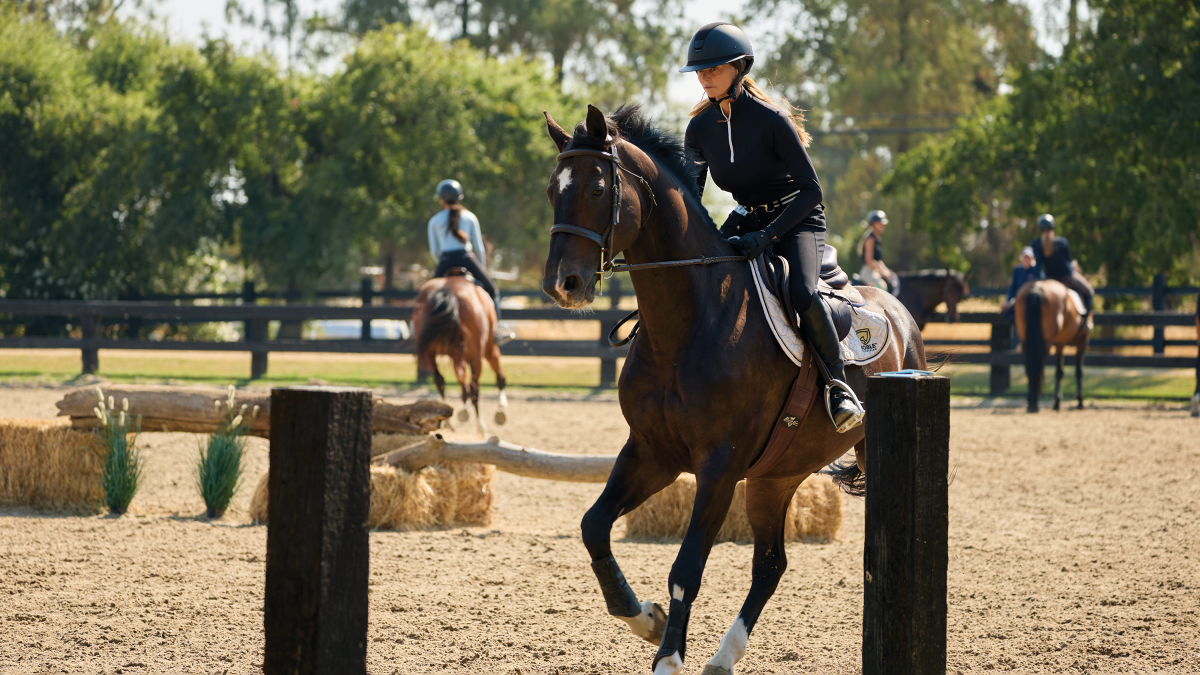
To Riley Benvenuti, co-owner and trainer at Riverbend Equestrian, an 80-acre, full-service horse training and boarding facility in Wilton, horses are family. So is her business, which she operates with her business partner and stepmother Aimee Hanson Benvenuti. Both women are among the area’s most accomplished equestrians and provide their clients with top-level care and tutelage along with their third partner, trainer and barn manager, Molly Brock.
“We are here morning and night, every day,” Aimee says on a mild morning when the facility is in full swing. Fifty-five horses call Riverbend home. Fifteen of those belong to Riley and Aimee. They refer to the entire operation as a “barn,” and seven full-time employees keep it running smoothly. A competition-level horse can cost $150,000 to $200,000.
Related: Finding Connection and Purpose in Youth Agriculture
“This is more of a barn where you come to see if you want to do this competitively,” she says. “So, I feel like when people make that decision, like, ‘Hey, we’re going to spend X amount of dollars on a purchase,’ you know what it costs month to month. You’re fully informed.”
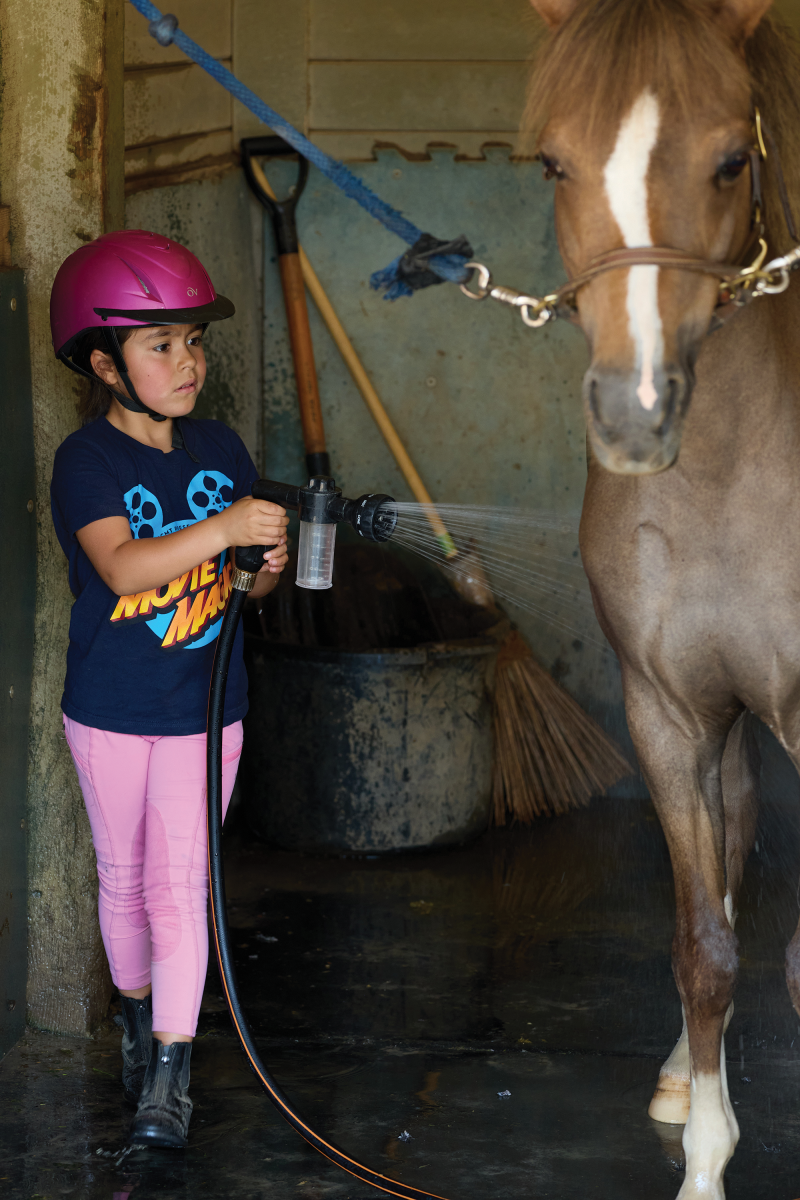
A young rider washes a pony at Riverbend Equestrian, which offers
lessons for all ages in addition to horse training. (Photo by
Fred Greaves)
“Our whole goal out here is making sure that our athlete partners, our horses, are well fed, taken care of, exercised,” Kassy says of the many evenings spent tending to her horse after work. “It’s two athletes trying to keep their heads together. They’re really designed, I think, by God, to work with humans.”
Kassy met Aimee and Riley through horse shows and moved her horses from Murieta Equestrian Center to Riverbend almost three years ago, when her previous trainer went into independent consulting. She chose Riverbend due to its excellent reputation. Like many in the equestrian community, Kassy has cautionary words for newcomers: “If this isn’t a passion, it’s too expensive, it’s too hard, and it’s heartbreaking,” she says.
Riley Benvenuti can speak to that heartbreak. She first got on a horse when she was 10 and spent her college fund on Arnold Palmer, a Dutch warmblood who became her beloved partner. She said goodbye to Palmer last year after he was injured suddenly while playing.
“It was fast and out of the blue. He wasn’t old. He wasn’t retired,” Riley says as she holds back tears. Still, she maintains perspective, an essential quality in both a trainer and a horse lover. “I think you would rather have done it and had that horse and had that relationship and feel the loss after than never to have had it.”
Horse hotel town
It’s a slow morning at Murieta Equestrian Center, 24 miles east of downtown Sacramento, just outside the gates of the Rancho Murieta golf community. A handful of clients work with their horses among the sprawling facility’s 12 outdoor and five indoor arenas, but it won’t be calm forever. As a prime destination for equestrian sports in Northern California, the place will be packed come fall.
“July and August are kind of quiet,” says MEC Manager Maryann Subbotin. “September, October and November, we go very, very strong into our horse show calendar.”
Over 20,000 humans and 25,000 horses filter through MEC every year, and it can accommodate up to 930 horses at one time. Major events, such as the Sacramento International Horse Show, are significant revenue generators. “We’re like a hotel. It’s getting the heads in beds. Here, it’s getting horses in stalls,” Subbotin says. “It’s where we make our money.”
One of the largest privately owned horse centers in California, MEC was purchased in 1982 by Carol Anderson-Ward. She says that what sets them above the rest is the facility’s ability to accommodate a wide range of shows, all designed to make the horses, riders and trainers shine.
Related: From Paddocks to Purses: The Ups and Downs of the Sport Horse Business
In 2018, Anderson-Ward expanded her equestrian hospitality empire and opened The Murieta Inn and Spa, which sits just down the road from MEC.
When she was 7 years old, Anderson-Ward rode a pony at William Land Park, and the rest is history — she’s been a horse lover ever since. “Horses made me who I am today,” she says. “I will always appreciate that.”
‘Worth it’
Kairis Joy Chiaji is many things. She’s a doula, a foundation board member for the Sacramento Black Chamber of Commerce, a pastor and a braider. She also belongs to Loyalty Riderz, an equine outreach group that’s part of the Northern California Coalition of Black Cowboys and Cowgirls.
Kairis Joy Chiaji on her mare Namib at July’s Black Cowboys
Parade and Festival in Oak Park. (Photo by Helen Harlan)
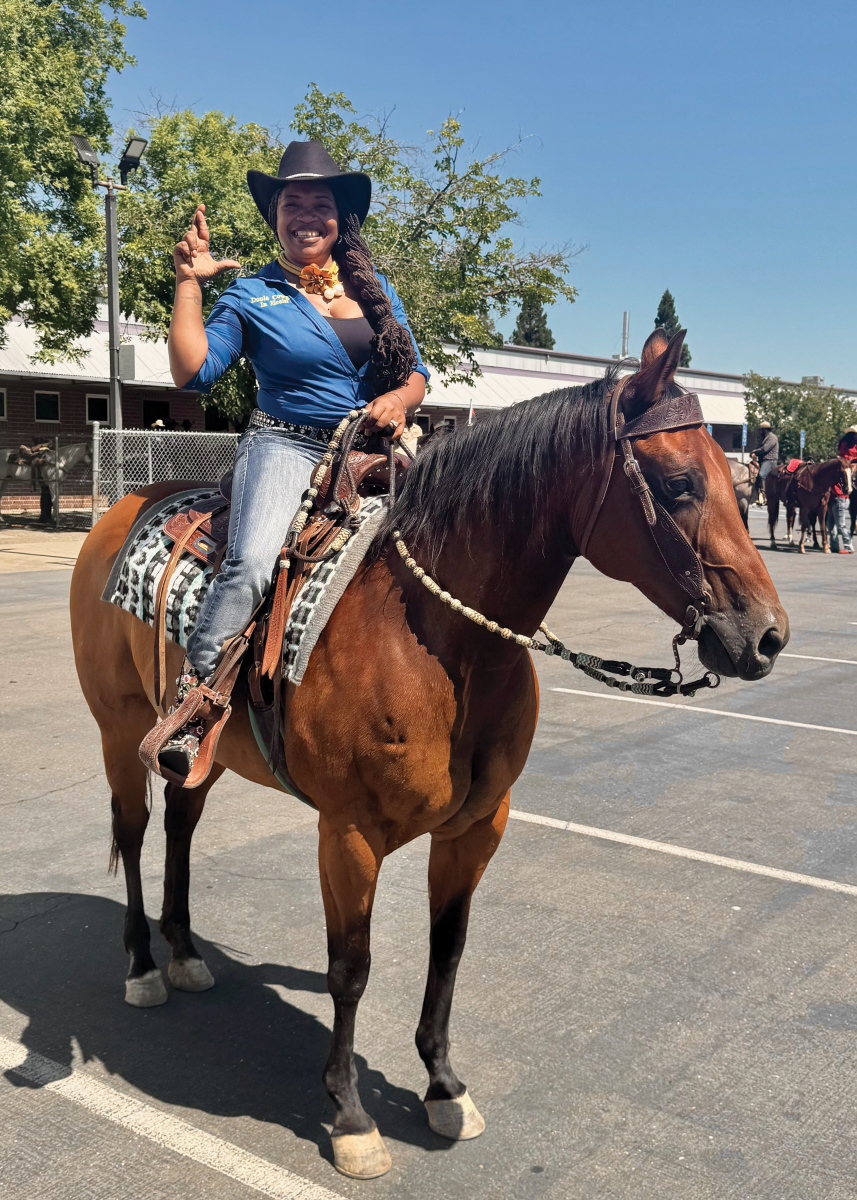
Chiaji found both her horses through word of mouth, Facebook and searching other online retailers. She cautions the online buyer to be wary. “You have to learn to kind of read between the lines, because sometimes they just copied another ad, and it has nothing to do with the horse that you’re looking at,” Chiaji says. “Some people are just trying to get horses and sell them really quick.”
Namib, a 17-year-old American quarter horse, was listed for $5,000, but she negotiated the final price to $4,000 on the advice of her trainer, Lauren Murrell, from B&L. “She told me everything is negotiable,” Chiaji says. Nyeusi, a 16-year-old Tennessee walker whose full name, Nyeusi Zuri, means “Beautiful Black” in Swahili, was purchased for $2,000 from a friend in Loyalty Riderz.
Chiaji has an eye for secondhand deals and once found a $6,000 saddle on consignment for $500. She found the saddle (with headstall) that she uses for shows on Walmart.com for $270, down from $400.
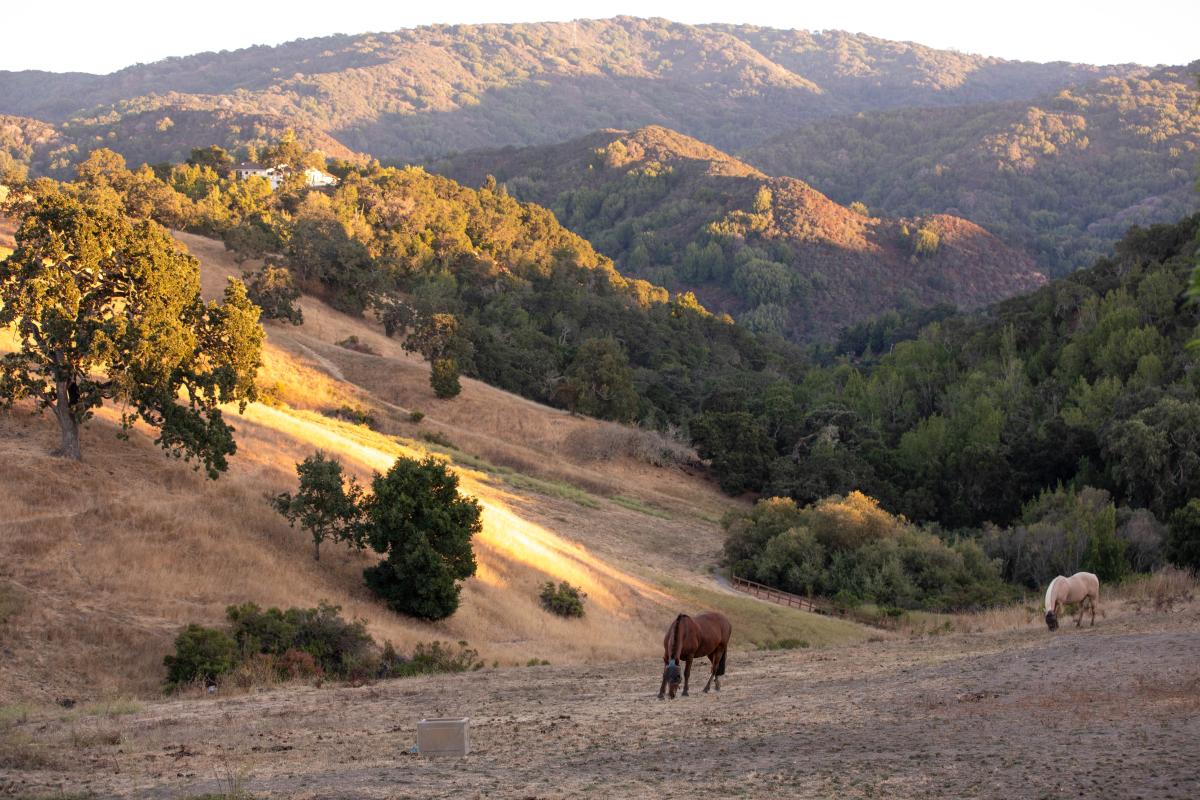
Horses graze in Byrne Preserve in Los Altos Hills at sunset.
(Shutterstock photo)
Competing in amateur shows, such as the Gold-N-Grand All Breed Open Show, coming up this spring and summer at MEC, can also take a bite. Fees and stall rentals can come to $1,200 a show. Competitors stand to win ribbons or, if you make it to the top, belt buckles. Chiaji has won three buckles.
Yearly veterinarian visit bills for both mares are reasonable. Chiaji uses Loomis Basin Equine Medical Center in Penryn, who come out to B&L twice a year and perform shots, physicals and dental care for around $200 per horse per visit. “We’re just sort of on a routine here,” she says.
Related: A Different Sort of Ride Along: Sacramento is one the few cities with a cavalry
Come tax season, none of this is a write-off. Chiaji says she just eats the expenses, including a recent emergency ICU visit that cost $8,000. “Nothing would make it not worth it,” she says.
In 2019, Chiaji put her friend’s then 4-year-old grandson, Karter, on a horse. Though he found it terrifying at first, the event “broke the ice.”
Since 2023, Karter, who has autism, has gone horseback riding once a week at the nonprofit TROTR, a therapeutic horse riding and off-track rehabilitation ranch in Woodland. His time on the horse is one of the many activities he participates in through Alta California Regional Center at no expense to his family. Karter’s grandmother, Sharon Barrino, says TROTR has helped with Karter’s core and balance issues as well as his social skills.
“Meeting new people was all overwhelming for him, and he also has some rigidity about having his hands dirty and being unclean,” Barrino says as she watches her now 9-year-old grandson in an arena on a bright Tuesday morning. “And so this has helped us not wash our hands 100 times a day.”
And it’s not just the kids that find it therapeutic to be there.
“For me personally, I feel like my mission in life is to take a little bit of a load off of people’s shoulders,” says Debbie Shoup, a volunteer and riding instructor at TROTR. “I’ve always felt like that’s my purpose on this earth. It’s a very personal thing, but like, I feel like that’s why I’m here.”
Like many in the Capital Region equestrian community, Shoup, whose day job is in consulting, praises many aspects of the lifestyle. She breaks it all down to one thing: the love of horses.
“When you’re with a horse, they bring you into the present. It’s this big, 1,000-pound animal, and they’re very calm and sweet, and I think that the rest of the world just melts away because you have to be so present,” she says. “I’m living the dream.”
–
Stay up to date on business in the Sacramento region: Subscribe to the Comstock’s newsletter today.
Recommended For You
From Paddocks to Purses
The Ups and Downs of the Sport Horse Business
Tucked between subdivisions, strip malls and office complexes, in and around the metropolitan sprawl of Sacramento, horses and their owners are quietly making their mark in the business community.
Finding Connection and Purpose in Youth Agriculture
Meet the enterprising and inspiring young folks of FFA and the teachers who inspire them
FFA, known to many under its old name, “Future Farmers of America,” is a national youth organization run by the Department of Education. We met a number of Capital Region young people who are learning about livestock rearing, forestry and more through the organization’s local chapters.
Who Will Harvest When I’m Gone?
Small farms struggle to connect with the next generation of agricultural producers
Annie and Jeff Main started farming after college, inspired by the back-to-land movement of the 1970s. They farmed on rented land for 17 years and then bought their own 20 acres in Capay Valley, in Yolo County.

Along for the Ride
Second chances for needy horses
Alyssah Schafer was born with a congenital heart defect and has never been able to run or compete in sports. Over time, her friends drifted away, and the girl became depressed. But then she met a mustang named Montana at All About Equine, a horse rescue and rehabilitation organization in El Dorado Hills.