


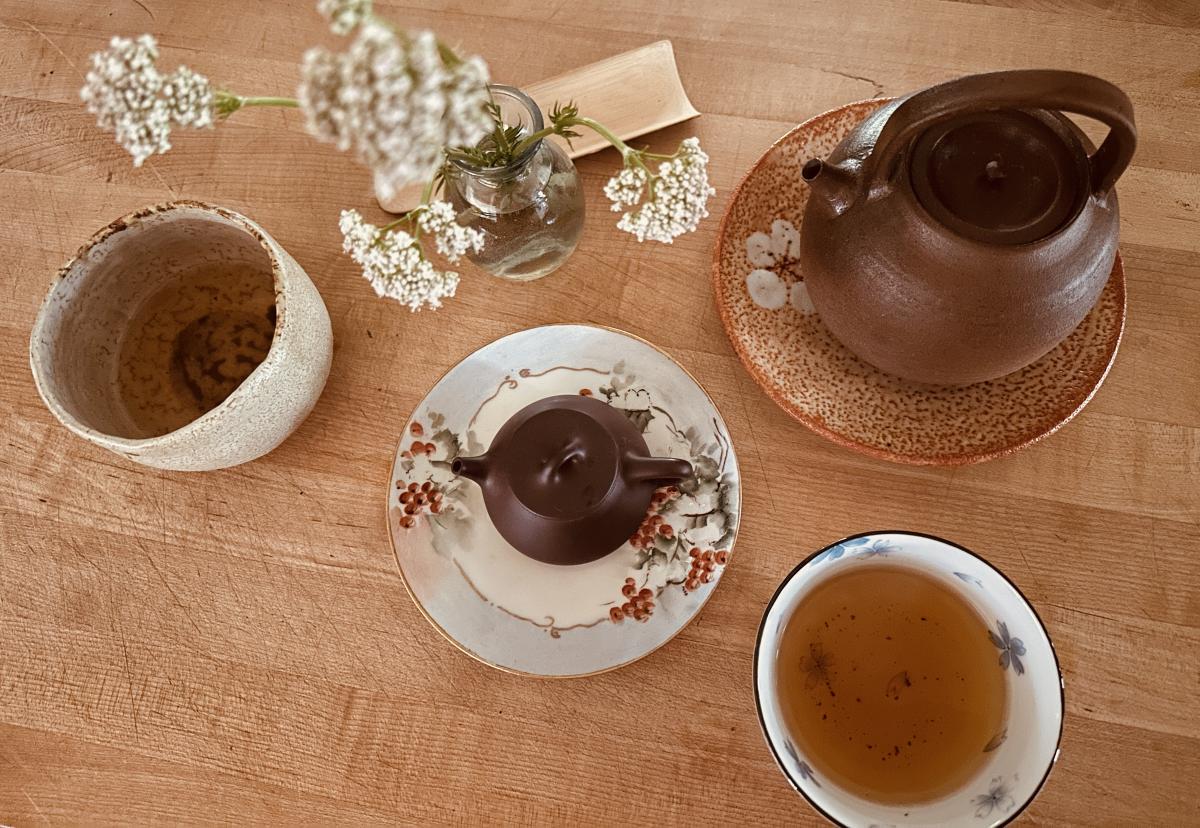
Linda Walker, the new owner of Tea Cozy, has tasted over 180 varieties of tea. She was a high school sophomore in 2010 when she interned at the small tea shop at the Arthouse on R. Walker took over after the previous owner, Nami Thompson, retired in July. Walker, when she’s not putting the dishes to wash or managing the floor, can be found educating customers about various loose-leaf teas and serving a gongfu cha-style tea tasting experience.
Gongfu cha, which means making tea with effort in Chinese, is a method of preparing and appreciating high-quality tea in small amounts, through repeated pours. In November 2022, UNESCO added China’s traditional tea processing techniques and associated social practices, including gongfu cha, to its Representative List of the Intangible Cultural Heritage of Humanity.
Pu’erh tea is a fermented tea from Yunnan, China, said to have
medicinal benefits. (Photo courtesy of Deborah Jane)
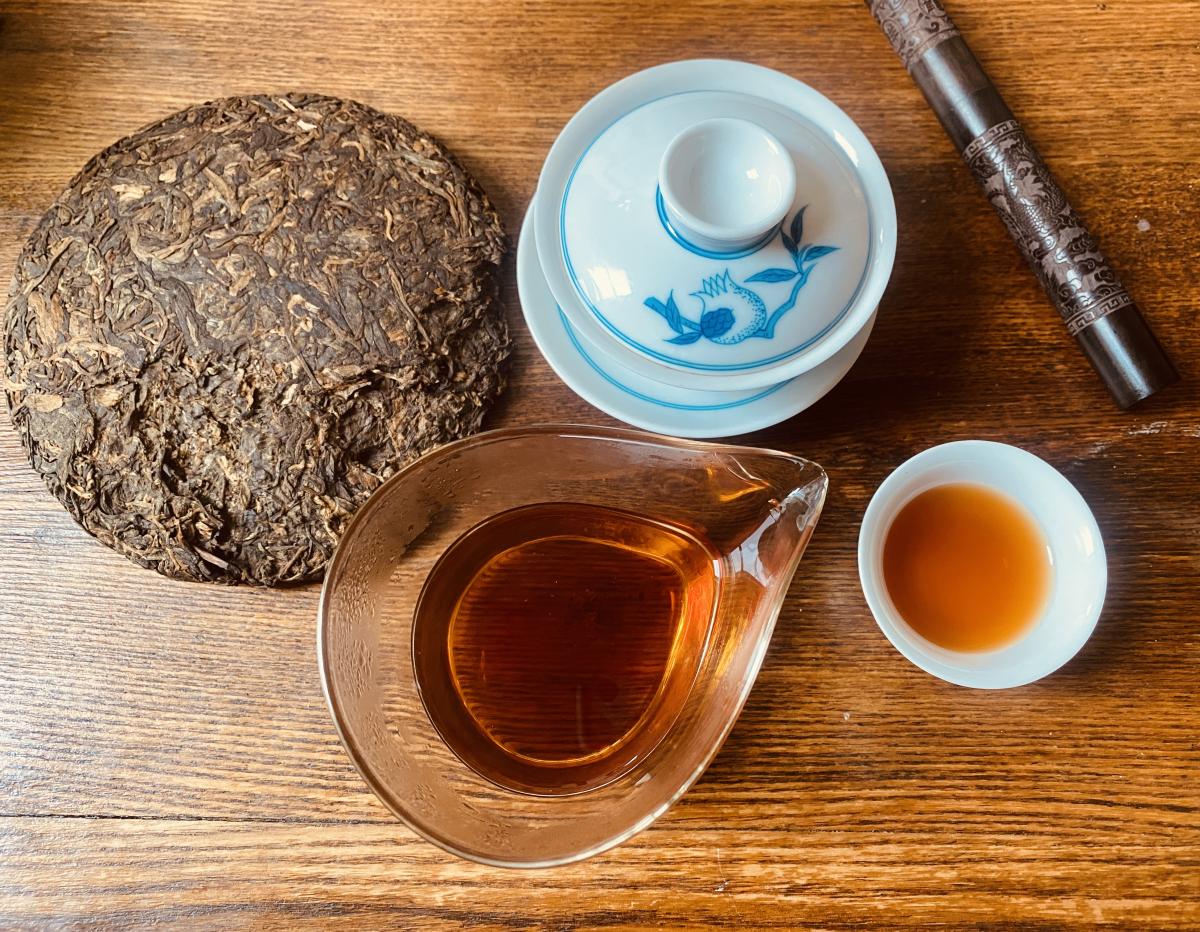
Gongfu cha is a skillful, artistic approach anybody can do at home with a gaiwan (a Chinese teacup with a lid and saucer) or a small tea set. It involves steeping large amounts of tea leaves in a small teapot, up to 20 times, and pouring the tea into cups. With each pour, the flavors unfold further, revealing the leaves’ qualities.
This style of brewing tea is growing in popularity in the Sacramento area. The experience is considered meditative because it involves multiple preparatory steps that encourage mindfulness, patience and presence. Many are turning to the art form as another way to find balance and harmony.
Cozying up
“Different cultures are interested in it, not just Chinese,” Walker says. “It’s the younger (people), like high school or 20-something-year-olds, who are invested in their spiritual growth.” She says she gets customers from the “Russian rap scene” and in punk rock and metal gear who are curious about oolong and other elements of Chinese tea culture.
Walker explains how gongfu tea connects people from various cultures and ages and has become increasingly popular over the past five years. This led Walker to start selling teaware and to create a gongfu cha starter kit for beginners who want to get started but find it daunting.
Walker says this gongfu cha is about adding five minutes of calm to one’s life, and tea pouring helps break the cycle of around-the-clock social media scrolling and other activities that might add stress. But she cautions customers against getting bogged down by tea choices. In the end, she says, “It’s just tea leaves and water.”
Beauty in the ceremonial
For M.J. Greenmountain, director of Jade Valley Retreat and CEO and founder of Jade Mountain Tea, gongfu tea is a way of life. Each day, he incorporates it into his yoga practice.
“I love how it makes me feel physically,” Greenmountain says, “the calmness of the ritual, the medicine of the pu’erh.” Pu’erh tea is a fermented tea from Yunnan, China, said to have medicinal benefits. Greenmountain says gongfu has helped him with his attention and focus, as well as with physical problems.
For M.J. Greenmountain, director of Jade Valley Retreat and CEO
and founder of Jade Mountain Tea, gongfu tea is a way of life.
(Photo courtesy of M.J. Greenmountain)
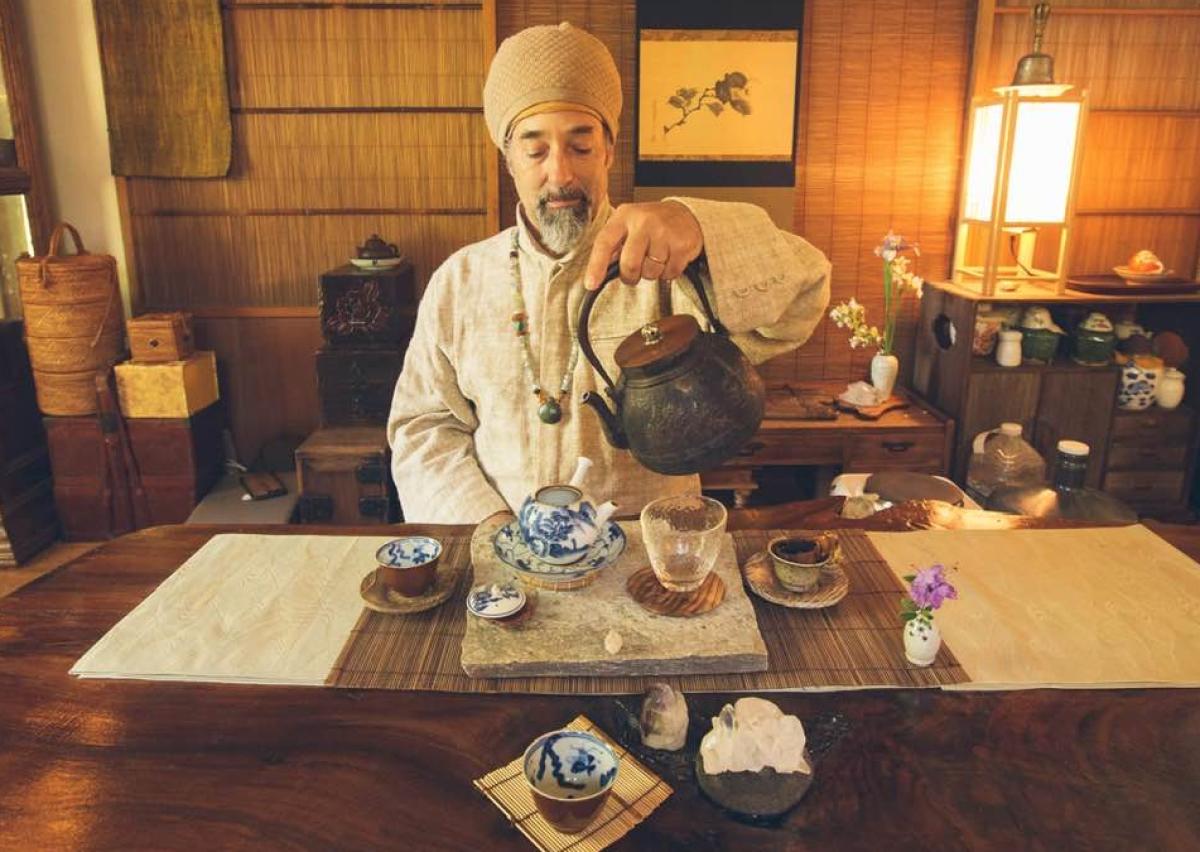
Greenmountain got into this ritual after meeting a teacher 27 years ago who taught him beyond tea culture, opening up an “entire universe” for him. For Greenmountain, it’s the whole experience, such as the tea art, aesthetics, meditation practice, writing poetry, singing (Greenmountain is a musician), that adds depth to his life. It’s also the “sense of beauty in the ceremonial,” the way the table is set up, the tea set, the tea room, the tea space, the atmosphere, that awakens his innate senses.
Greenmountain also noticed a growing interest in gongfu tea in the greater Sacramento Valley and foothills because it is accessible to everybody. He says it’s about cultural inclusion and people becoming more open. Greenmountain says this method of brewing tea also helps one to pause, step away from all the noise, and do something simple and elegant for oneself.
Greenmountain offers tea experiences at his estate near Nevada
City. (Photo courtesy of M.J. Greenmountain)
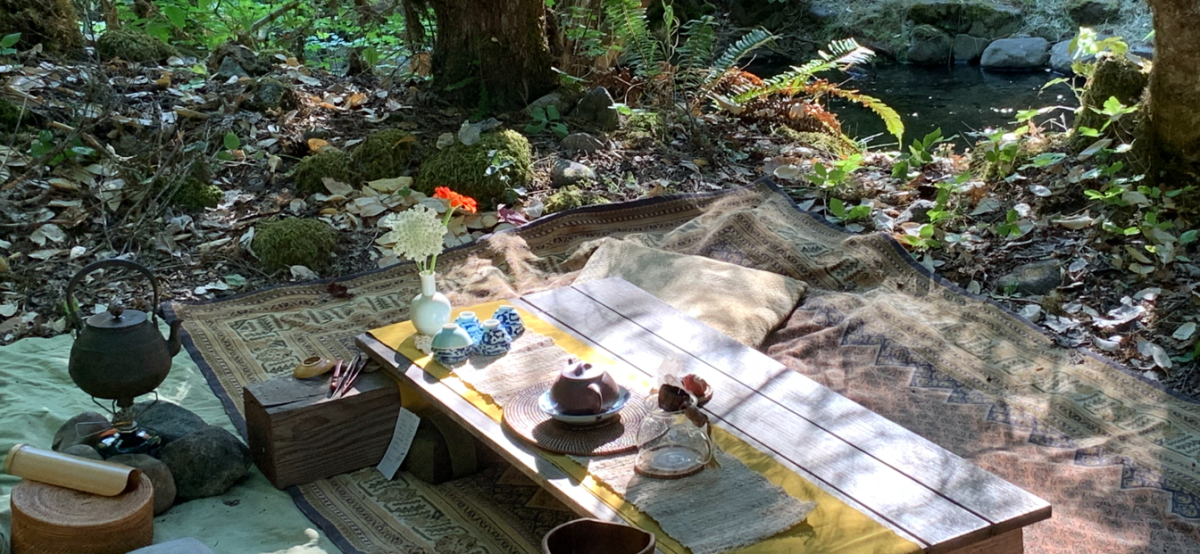
Greenmountain, who has been teaching Zen and about tea for the last 15 years, offers an authentic gongfu cha tea tasting experience. He says anyone can do this regardless of cultural background and can get started at any skill level. The best way is to find a local reputable tea house and start there. Once a person decides to practice this, it’s essential to do so consistently to notice the benefits and results. For Greenmountain, referring to how gongfu has made him feel: “I like how I move in the world, how I relate to the world. It’s been a life-changing thing.“
Sense of wonder
Deborah Jane, owner and creator of Botanica Village Apothecary, primarily practices Western herbalism. However, she recently also started offering gongfu tea for $25 at her store in Fair Oaks Village.
Deborah Jane, owner and creator of Botanica Village Apothecary,
recently started offering gongfu cha at her shop. (Photo courtesy
of Deborah Jane)
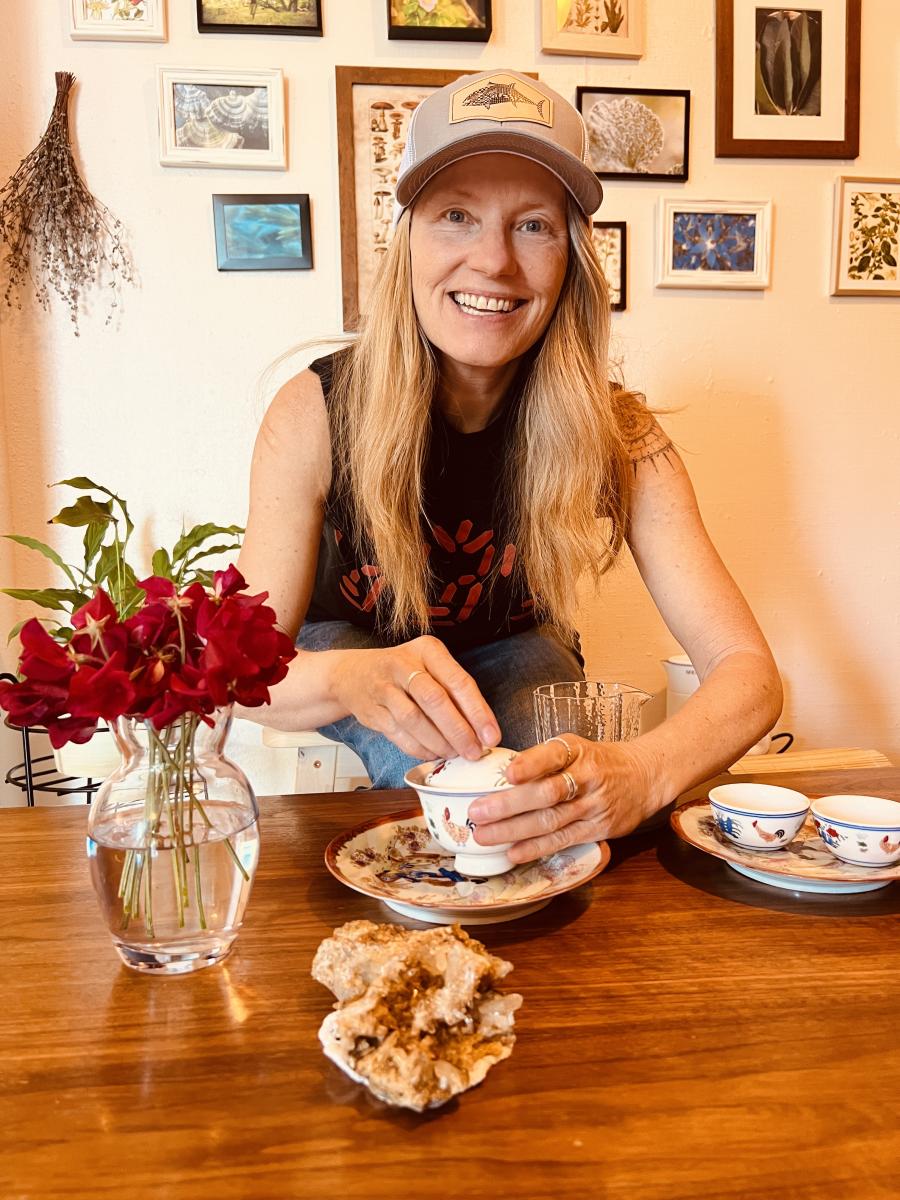
Some time later, Jane began studying Japanese-style tea at the meditation center Temple Kukuri in Fair Oaks and became fascinated by pu’erh. Her teacher, Sawako Ama, didn’t use pu’erh and referred her to Greenmountain, who Jane had already met once before at an event at the temple. She ended up studying with him for over a year and a half and says she will continue her education with him to expand her tea knowledge.
Jane enjoys this art form so much that she brings a gongfu cha tea set on trips. “My favorite is to take my little portable set and go to the river here, or nature, when we’re up in the mountains or on vacation.” Jane says gongfu cha “feels like meditation.” Jane says this method of preparing tea is more than just about slowing down. “You can have tea anywhere,” she says, but it’s the beauty and nature surrounding the practice that evoke a sense of wonder for her.
“It brings me to a place of that centeredness,” Jane says, “but also gratitude for who I am and all the nature around us that gives me direction in my life, especially at practicing Western herbalism. So these cross, these come together.”
–
Stay up to date on art and culture in the Capital Region: Follow @comstocksmag on Instagram!
Recommended For You
Tea Time
Consumer education is key for Capital Region tea shops
When Leo Hickman returned in 2003 from an eight-month tour in Kuwait as a combat engineer in the U.S. Air Force, he wanted a way to spread peace. With no idea how, he set out on a journey of self-discovery and backpacked through 27 countries.
Is Tea the New Happy Hour?
These Capital Region tea rooms bring a California twist to an English tradition
Afternoon tea evokes something people have always sought — “a feeling of rarely experienced elegance and class,” Mueller says.
The Rise of Alternative Health and Wellness
Businesses in the Capital Region consider the whole person
The approach of Whole Health, a movement led by the U.S. Department of Veterans Affairs, is “Let me understand who you are as a person. … What matters to you as opposed to what’s the matter with you,” says Dr. Michelle Dossett. “I think eventually it’s going to transform what we do in conventional medicine in this country more broadly.”
Making Wellness a One-Stop Shop
Two new Sacramento businesses provide multiple mind-body services under one roof
When Madeleine Lohman took her first class at the YMCA in 1999, yoga was already a mainstream fitness regime. But it didn’t take long for her to realize that limiting yoga to physical fitness denied the mental, physical and spiritual balance that the Eastern practice seeks.