


This story is part of our December 2025 issue. To read the print version, click here.
Odds are that when you think of your winter holiday rituals, food is at the top of the list. Growing up, my German step-grandma made arid and strongly spiced German pfeffernüsse (translates to “pepper nuts”), and my mom made nut-based cookies we called “Russian tea cookies” in a nod to our Ashkenazi Jewish roots, a confection with a dubious tie to anything Russian. They are also known as Mexican wedding cakes and may have origins in an ancient Arab cookie. Just reading this, your mind is likely flooded with sensory memories of your own winter holiday treats.
For those based in Sacramento, these memories may include specialties prepared for the diverse winter holidays celebrated in the region, from Gunther’s eggnog for Christmas to Osaka-Ya’s mochi for Japanese New Year. Like Santa’s workshop, Sacramento has a bevy of elves preparing goods for your holidays, and some are months in the making. We stopped in to observe the preparations.
The legendary ‘nog
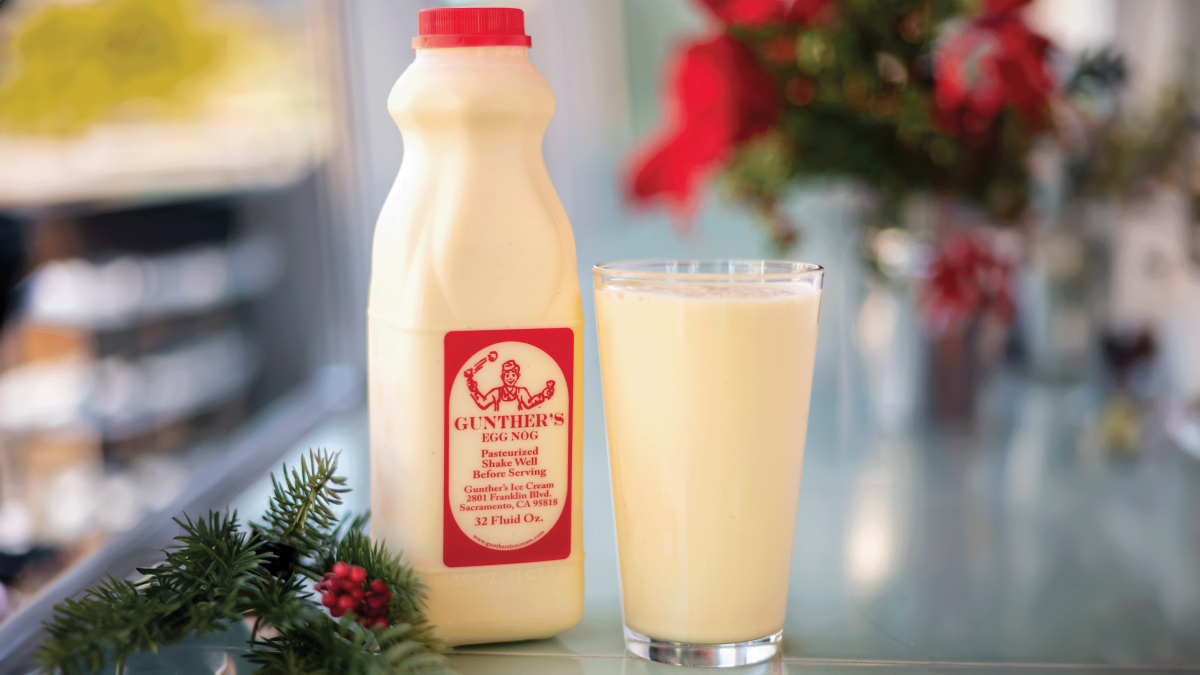
Eighty-year-old ice cream purveyor Gunther’s offers eggnog each holiday season as both a drink and an ice cream flavor. Marlena Klopp, who married into this family-owned business, confirmed that the recipe dates back to Gunther’s early days, soon after it was started by William and Iva Gunther in 1940.
Without giving away trade secrets, Klopp attributes the success of their eggnog to the high-fat cream they use, as well as the eggs, sugar, spices and, as she puts it, “all that yummy good stuff.” She says it’s so rich that, although she loves it, she is satisfied with a small glass — or a few bites of the ice cream flavor.
The quality of ingredients is so high, and the price so low (about $7.50 per quart this year), that Klopp said the profit margin is quite low, and it’s more about tradition and pleasing their customers. She mentions a customer that comes up from the Bay Area and buys it by the crate, sometimes coming up more than once during eggnog season, which extends from very early November to Jan. 1.
Gunther’s sold about 4,000 quarts of eggnog last year, and they always deem eggnog ice cream the flavor of the month every December. Klopp laughs that she wouldn’t even attempt to change that and risk inciting a customer revolt. This tradition extends to her own family, she says, “We have it at our Christmas table. In fact, if we don’t bring the eggnog, it’s almost like we don’t get in the door. … It just brings the holidays.”
Midnight mochi
Brothers David and Yoshiro Murakami, grandsons of Osaka-Ya’s
founders, work around the clock in December with their family and
other employees to supply mochi for Japanese New Year
celebrations. (Photo by Debbie Cunningham)

Osaka-Ya, one of the oldest Japanese confectioners in the United States, has been satisfying the community’s mochi needs since 1963 (and shares a name with a shop that opened in Sacramento’s now-demolished Japantown in 1903). That demand spikes around New Year’s Day, when Japanese families traditionally make a soup called ozoni with baked mochi dumplings. Many also snack on or gift the sweet varieties that Osaka-Ya is known for.
As with so many seasonal treats, the small business owners at Osaka-Ya work themselves to the bone to create them for us. David Murakami, grandson of the couple that opened the business at its current location on 10th Street in 1963, says that they work 9 p.m. to 3 a.m. every day the whole week between Dec. 26 and Jan. 1 to produce the mochi, which must be sold or shipped out fresh the next day.
They create 10,000-15,000 pounds of the pounded rice confection that week for sale in their storefront and to be shipped out to Oto’s Market in Sacramento, Sakura market in Stockton and Nijiya Markets throughout Northern California. When asked about the toll it takes, Murakami says, “We are so exhausted after the whole week is done.”
Cakes for entertaining
According to Gus Gonzalez of Teremok Grocery, a small shop that has served Sacramento’s Slavic community since 2003, the Slavic tradition is to cook at home during the holidays. That means that Teremok’s produce and grocery items must be extra stocked. Folks also entertain and need certain dishes to bolster their hosting arsenal.
Teremok Grocery, which has served Sacramento’s Slavic community
since 2003, offers a variety of cakes and other sweets leading up
to Christmas. (Photo by Gabriel Teague)
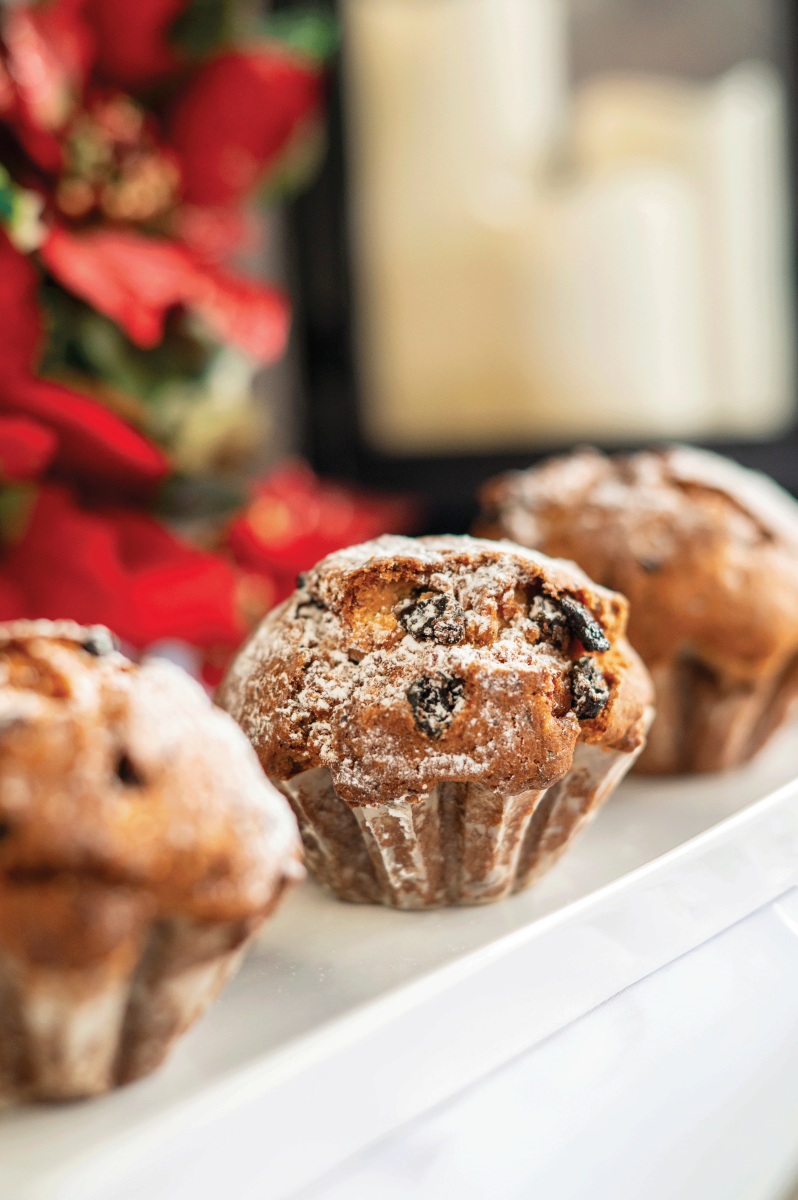
Teremok bakes and prepares many of these dishes in-house, with some ordered from other local sources. Their bread, which can run to 200-300 orders a day during the holidays, is baked on premises, a point of pride. “The bread is made with more natural things, not like when you go to Walmart,” Gonzalez says. “This is fresh, all baked in-house. We come early in the morning to prepare it.”
An ancient holiday recipe
Corti Brothers sells hundreds of niche grocery items that may be loved passionately by only a few (scrapple, anyone?), so of course they have a unique item for the holidays: mincemeat, with real meat in it. Mincemeat is a spiced English pie filling that dates back hundreds of years and that originally contained meat and fruit, with some sort of alcohol — either wine or brandy. Modern versions usually omit the meat, but not at Corti Brothers.
General Manager Rick Minderman explains, “It’s an acquired taste. You know that we are in a time where it’s a perfect storm of interest in the culinary. … That rises our vintage mincemeat to the top. … It’s made with beef suet, beef, raisins and brandy. … It is phenomenal.”
The mincemeat is available year-round by request, kept in the back, and is available in a case near the deli in pints and half pints during the winter holidays. Customers use it to make their own pies and tarts at home, and those that love it are passionate. Minderman says, “I have customers that I ship to in Southern California and into Oregon and a couple of people back East.”
A rum cake blossoms
Another aged delight is baked by Miss June (real name Carmen Francis), who makes the holiday rum cake for Calabash Caribbean, a new restaurant in North Sacramento. She retired from her career as a food and hospitality instructor when she moved to Sacramento from Jamaica two years ago to live closer to her son.
She met the owner of Calabash, Wolete “Sunny” Atherly, a few years back when she was visiting her son. Atherly owns Dubplate Kitchen and Jamaican Cuisine as well as Calabash, and Francis’ son took her there on her birthday for Jamaican food. Francis says, “When I ate the food I said, ‘This is the real deal.’ I met her, and because I like to bake, I made her banana bread, and I took it to her and she said she liked it. And from there, we blossomed.”
A Trinidad and Tobago-style black cake made with preserved fruit.
(Photo by Guettarda via Wikimedia Commons, licensed under CC
BY-SA 4.0)
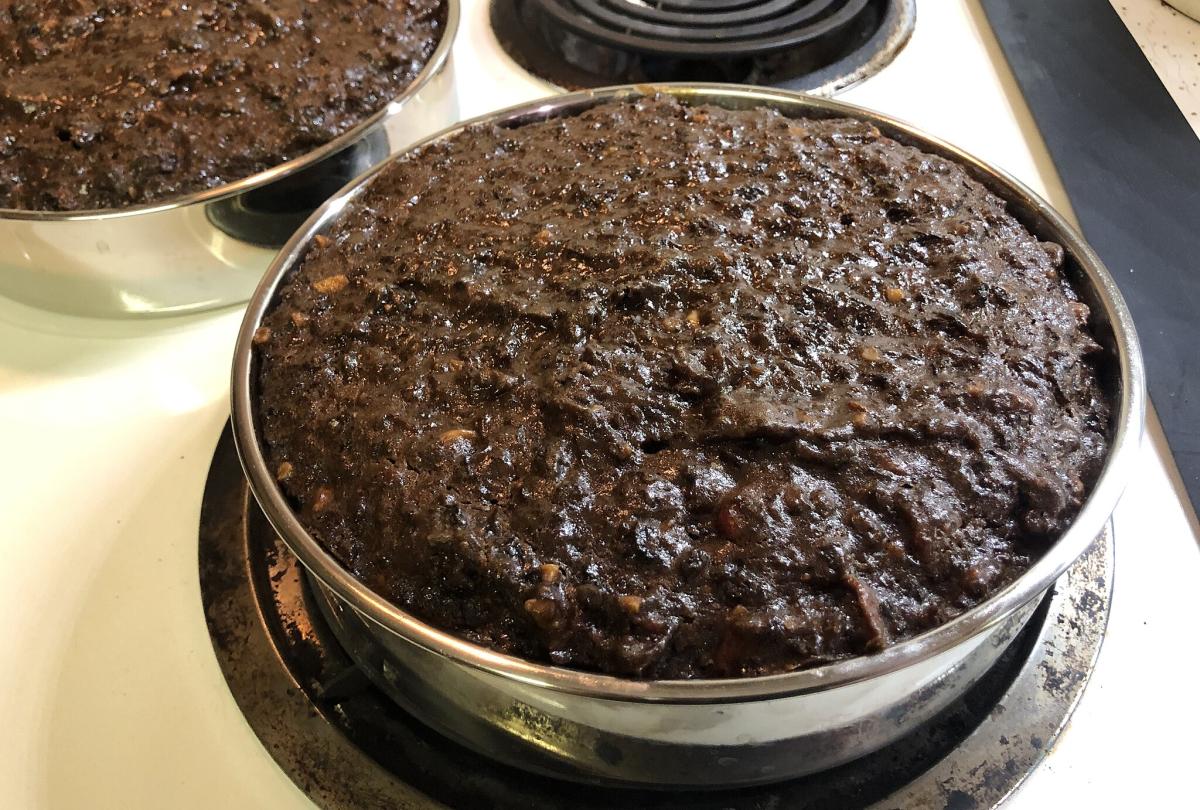
Specifically, what blossomed is a plan for Francis to make a Christmas cake that is popular throughout the Caribbean, sometimes known as Jamaican black cake, although she calls it fruit cake or rum cake. It’s a dense, fudgy, spiced, unfrosted cake made with wine-and-rum-soaked prunes and raisins. She offers up a whiff of the fruit that’s soaking in preparation — it’s sweet with a heady booziness. Some folks start soaking their fruit in January to prepare for the next Christmas season. Francis always has a batch going and says, “The longer you can soak the fruit, the better.”
The smell of the soaking fruit reminds me of another tradition in my family: rum balls made from crushed cookies, aging in a tin, ready to be gifted in carefully packed cookie boxes. The holidays are a time for us to slow down, savor some once-a-year indulgences and let folks know we care. These local businesses are ready to help.
–
Stay up to date on business in the Capital Region: Subscribe to the Comstock’s newsletter today.
Recommended For You
Nevada City Is More Than a Christmas Town
Visit the oldest theater in the West and other remnants of Gold Rush-era splendor
This Sierra Nevada foothills community is often the subject of glowing profiles in the national media and labeled a “Gold Rush-era town.” So what exactly does Nevada City tell us about that unusual and relatively brief time in history?
How Japanese Sweets Are Enduring and Evolving in Sacramento
A century-old sweet shop, a cult-status bakery and a homegrown pop-up bring Japanese flavors to the Capital Region
Today, Osaka-Ya is the only dedicated Japanese mochi and manju shop in Sacramento, but you can find other Japanese and Japanese-inspired sweets around the city.
La Dulce Vida
Meet the Capital Region panaderos bringing creative flavors and techniques to Mexican bakery classics
Pan dulce (in English, sweet bread) is being reimagined by intrepid bakers across the Capital Region. Comstock’s recently spoke with three local panaderos who are taking pan dulce to new heights while simultaneously paying tribute to the cultural traditions and food memories that shaped them.
Neighborhood Favorite: Konditorei Austrian Pastry Café
How a ballerina and a baker built a Viennese pastry shop in Davis
Anyone who has visited the coffee houses of Vienna will see the
resemblance between those venerable institutions and Konditorei
Austrian Pastry Café in Davis.