


This story is part of our April 2026 issue. To read the print version, click here.
In the story of California as a state losing corporate headquarters, Ronald Mittelstaedt fits the narrative almost too well.
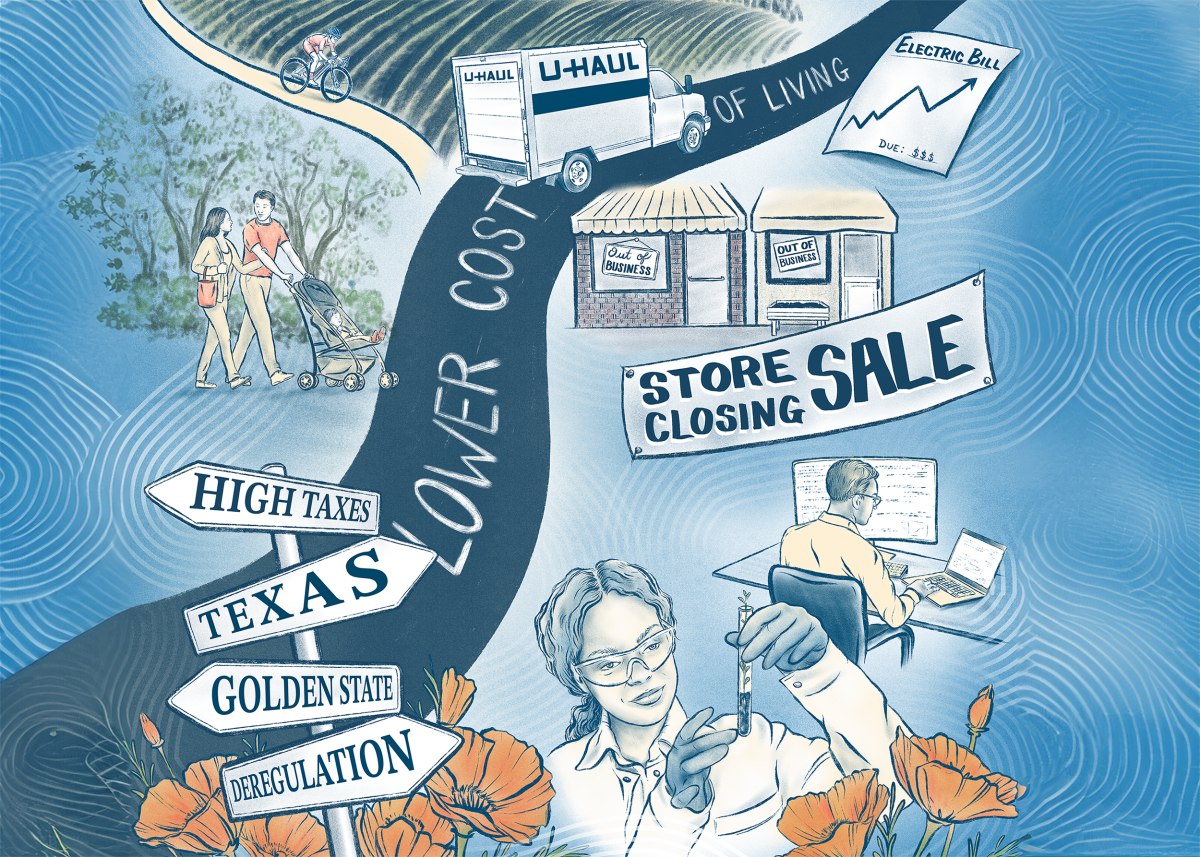
In 2010, Waste Connections, where he’s president and CEO, started weighing the idea of uprooting its headquarters from Sacramento to Texas. Many of the reasons had to do with wanting happier workers. Homes, gasoline, electricity and more are cheaper in Texas, making the overall cost of living about 15 percent less. Unlike California, Texas has no capital gains or state income tax, meaning the company’s workers would have more take-home pay.
When the company loaded up its trucks to move to The Woodlands, outside Houston, in 2012, more than 90 percent of employees, most of them native Northern Californians, went too. Since then, Waste Connections has surged from $1.5 billion to $10 billion in revenue and from about 6,000 to 26,000 employees. The company couldn’t have achieved the same success in California, says Mittelstaedt. “The talent we needed wouldn’t have come to Sacramento,” he says.
But there’s another side of California too: A place that continues to draw and retain companies that need specialized science and tech talent.
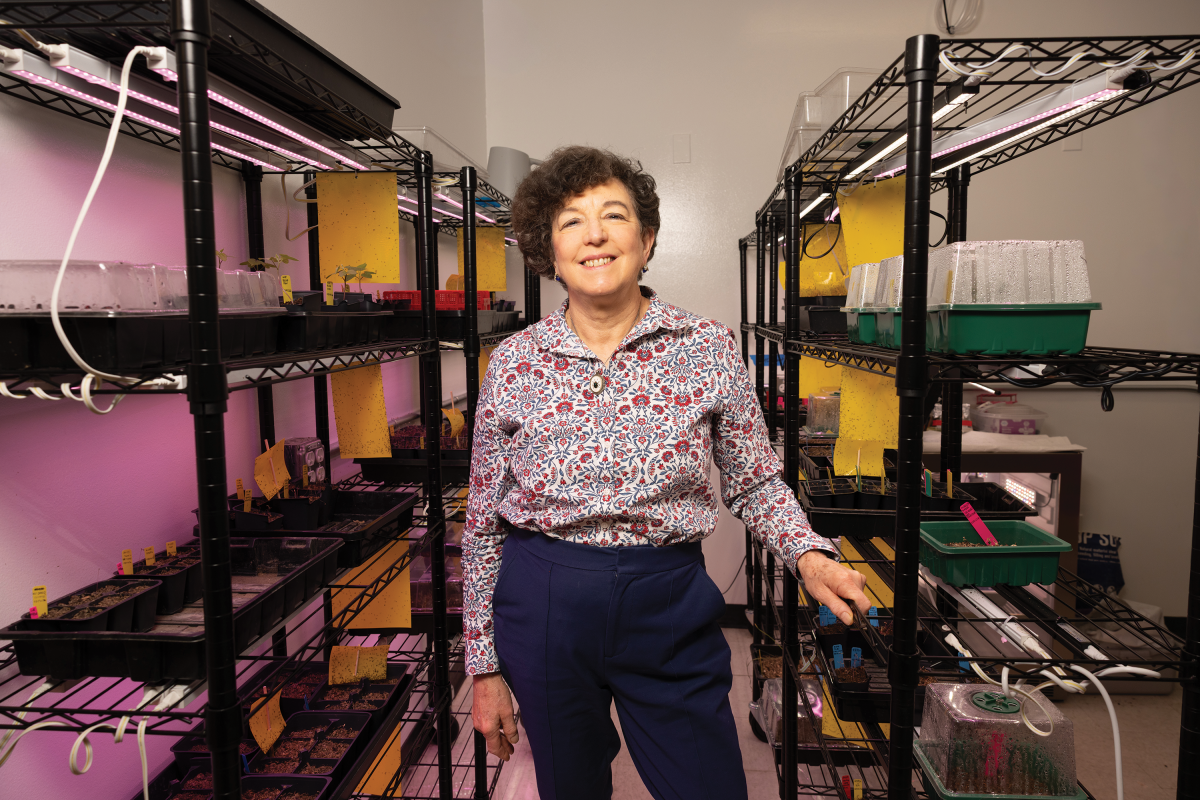
Pam Marrone is the face of that. In 2006, she started Marrone Bio Innovations, which made biological products for crop protection and plant health, headquartered in Davis. In 2022, she sold the business to Bioceres Crop Solutions. The new CEO wanted to move it to Research Triangle Park in North Carolina to cut costs and eventually relocated the administrative and finance functions there. Marrone, who’d stayed on the company’s board, understood the reasoning — Research Triangle has an “incredible ag biotech system,” says Marrone.
But it wasn’t long till Bioceres brought everything back to Davis. The cost savings weren’t enough to justify relocating. And employees preferred Davis. In the Raleigh-Durham area, “you have to get everywhere by car. It’s very spread out, very big. There’s no public transportation. So it’s a different lifestyle,” says Marrone.
Related: Pam Marrone, pioneer of biological agricultural products, expands her reach through advising
In 2023, she launched a new Davis-based company, Invasive Species Corporation, which creates products to control non-native pests. Davis fits the lifestyle of her talent pool: UC Davis graduates who like the city’s easy biking and transit. Farmers, her customers, are close by, making it easy to do field trials. Biological products are regulated by the state, but the regulation is reasonable and predictable — her biggest problems of late have been with tariffs and products sitting in customs, she says.
“This region is a gem that doesn’t get the publicity that St. Louis and Research Triangle Park get in terms of agtech startups,” she says. The state, she says, “bends over backwards” to help businesses launching in that sector.
Pam Marrone, co-founder of Invasive Species Corporation in Davis,
is a biotech entrepreneur specializing in organic pest control.
(Photo by Katy Karns)
The cases of big companies abandoning California have attracted lots of media attention for a reason: Federal data show an acceleration in the number of firms leaving. The state’s tax and regulatory climate ranks among the toughest in the country. But that may not be the full picture. The state and Sacramento still host plenty of startups and lure companies from abroad.
Taxes, regulations and companies on the move
Nationally, more firms are migrating at a faster pace than before. About 6,500 moved in 2021, up from about 4,000 in 2002.
But that trend has winners and losers, and California is the second. A 2022 report by the Hoover Institution noted that the state lost 352 company headquarters from January 2018 to December 2021 and that the number of departures accelerated: More companies relocated in 2021 than any other year in that period. The authors blamed high taxes, punitive regulations, high labor costs, high utility and energy costs and high costs of living, especially housing. Indeed, on the Fraser Institute’s latest “economic freedom” index, which ranks states according to government spending, tax and minimum wage levels, union density and more — California was 47th.
On another metric, manufacturing jobs, the state is sliding backwards, too. Since September 2022, it’s shed about 83,000 manufacturing jobs. One industry group, the California Manufacturers & Technology Association, argues those losses stem from state regulations and high equipment costs. Still, economists don’t agree on the causes of manufacturing job cuts, which are happening nationally.
Related: Is the Business Exodus to Texas Real?
Some of those explanations fit the stories of two other Sacramento businesses that left for Texas. Titans of CNC sells machine tools and offers online education on machining and manufacturing. In October 2020, the company, which won a 2017 Sacramento Region Innovation Award, said it was moving from Rocklin to Flower Mound, 10 minutes from the Dallas-Fort Worth airport.
In October 2020, Titans of CNC moved from Rocklin to Flower
Mound, Texas, 10 minutes from the Dallas-Fort Worth airport.
(Shutterstock photo)

In a 2020 social media video that drew more than 100,000 views, owner Titan Gilroy highlighted lower taxes and cost of living. He told his employees that moving would give them a raise as their taxes fell. “Get out of these apartments — you’re going to buy a house,” he told them. Employee gym memberships, a company perk, dropped from $140 per individual in Rocklin to $64 per family in Flower Mound, he added.
For another owner, the reasons were more Sacramento-specific. Mark Snyder co-owned the kitchen and gift store William Glen and a sister store in downtown Sacramento. In 2021, the company shuttered both and moved to a fulfillment center outside Fort Worth.
Snyder told news outlets they left because of the number of unhoused people camping outside the stores and rising shoplifting, which cost the company $15,000 a month. “Do I stay and fight? How long do I put off my dreams and what matters?” Snyder told a reporter. “I’d pay higher taxes if we got more for our high taxes — like good schools and highways. But not in Sacramento or California.”
Both owners declined requests for comment on how they view those moves today.
Corporate headquarters relocations don’t always mean abandoning the state. Many companies shift the front office and keep employees in California. But headquarters transfers matter because they suppress in-state hiring, according to an August 2024 analysis by the Bay Area Council Economic Institute, an economic and policy think tank. It compared hiring by four corporations — Tesla, Hewlett-Packard, Snowflake, and Charles Schwab — whose headquarters left the state. In three of the four cases, the share of their hiring in California dropped by double digits. It rose for one of the four, but the increase was less than 3 percent.
Related: Boom From the Bay: The influx of high-skilled workers is boosting Sacramento’s economic prospects
Exacerbating matters is the state’s population loss. After the 1848 discovery of gold on the South Fork of the American River between Auburn and Placerville, 300,000 people poured into the state within the next six years, bringing more demand and more businesses. Today, the same is happening in reverse: From 2018 to 2025, there was a net outflow to other states — movers-in versus movers-out — of about 2 million people, most often driven by high housing costs, according to an analysis by the Public Policy Institute of California.
Those housing costs may also impede hiring for in-state companies. Before the pandemic, 33 percent of the job postings of California-based Fortune 1000 companies were in-state, a number that’s dropped to 25 percent, according to the Bay Area Council analysis.
All of that may understate the magnitude of company flight. Before 2019, net out-migration of California companies — incoming firms minus outgoing firms — had never hit more than 200 in any year except 1994. But in 2019 it topped 209 and then ballooned to 741 in 2022, according to a Comstock’s analysis of federal Bureau of Labor Statistics data. Altogether, in the five years from 2019 to 2023, the state lost almost 2,100 companies on net. New York State came second at about 1,800. No other state’s number surpassed 1,000.
But companies leave for lots of reasons
The state’s business climate also isn’t everything. Some companies that closed operations in the Sacramento region say their reasons had nothing to do with taxes or regulations.
In 2021, the Educational Media Foundation, a faith-based broadcaster, announced it was moving from Rocklin to Tennessee’s Nashville area. “California was good to us,” says CEO Tom Stultz by email. But they needed to be closer to the artist and music community in Nashville.
Educational Media Foundation, a faith-based broadcaster, moved
from Rocklin to Tennessee’s Nashville area. (Shutterstock photo)

In February, Anheuser-Busch shut down its Fairfield brewery, which employed 240 people. A spokesperson said by email it closed two other plants in New Jersey and New Hampshire to channel money to a $2 billion modernization of its 100 other facilities.
And a Sacramento fuel manufacturer that didn’t wish to be named opened a new production facility in Texas in 2024 and will launch another by 2027. A representative says they put those in Texas instead of California because of Texas’ lower electricity prices and cluster of energy industries. But the company retains its Sacramento headquarters because it can tap corporate talent here and has access to high-quality labs in West Sacramento.
Business numbers are still growing
As bleak as much of this appears, the bigger picture isn’t so grim. The biggest driver of the California corporate numbers isn’t companies leaving the state but the number of new corporate headquarters launching and folding within the state. In 2021, for example, about 200 moved out of state. But that year, about 800 opened in-state while 750 shut down, according to an analysis by the Public Policy Institute of California.
Overall, the number of California businesses keeps growing: About 245,000 opened and about 183,000 closed from March 2023 to March 2024, a net gain of about 62,000 companies and 87,000 jobs, according to the latest federal data. That’s part of a longer trend. From 2015 to 2024, the number of state businesses grew from about 1.5 million to 1.9 million.
Related: Trump’s Tariffs Hurt Some Local Businesses, but Prompt Others to Shift Gears
In Sacramento, firms are coming in from abroad. Last year, the Greater Sacramento Economic Council reported attracting a dozen foreign-owned companies to the region between 2021 and 2024, creating almost 3,000 jobs.
Bottom line? The effect on employment of company headquarters leaving California “is not negligible, but it also does not reflect a major change in the state’s employment picture,” concludes the Public Policy Institute.
And for those who can afford it, the state’s climate and land will always be a draw. Even Mittelstaedt sounds wistful discussing the tradeoffs of Waste Connections’ move. There are those Texas summers — “105 during the day and 102 at night,” he says.
And California has its ocean, mountains and valleys. “There’s just one Santa Barbara, one Carmel, one Napa, one San Diego, one Pismo Beach. You don’t have that anywhere else, right?” he says. He still has a home in Sacramento and misses family who live here.
“I hate to say it, but all the things that the state government doesn’t have anything to do with are great in California,” he adds.
–
Stay up to date on business in the Capital Region: Subscribe to the Comstock’s newsletter today.
Recommended For You

Is the Business Exodus to Texas Real?
Comstock’s president and publisher considers the apparent exodus from California to states such as Texas.

Women-Led Startups Are Growing — So Why Is VC Funding Still So Low?
Female entrepreneurs in Sacramento say they face greater challenges launching in the startup world
Women-founded companies now make up 7.1 percent of U.S. startups, but they receive only 2 percent of venture funding. Here’s how Sacramento innovators are pushing for change.

Boom From the Bay
The influx of high-skilled workers is boosting Sacramento’s economic prospects
Leaders in business and development say the trend could alter the trajectory of the region’s economy for years to come.
After Supreme Court Tariff Ruling, Sacramento Businesses Brace for What Comes Next
Clarity helps, but shifting trade policy, energy prices and consumer spending still complicate planning
We checked in with business owners and industry experts in and around Sacramento to understand how local businesses are navigating this complex moment.