


Editor’s note: This is the first installment in Comstock’s multi-part exploration of the effect of tariffs on Capital Region businesses. See part 2 in the January 2026 print issue or online.
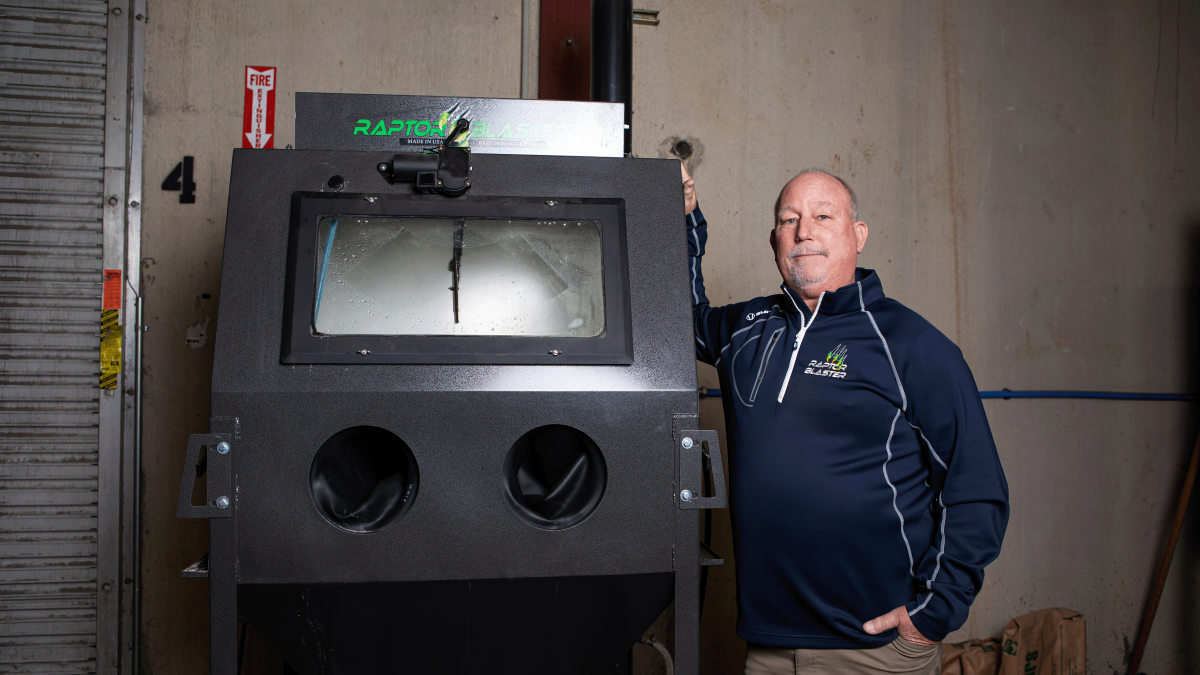
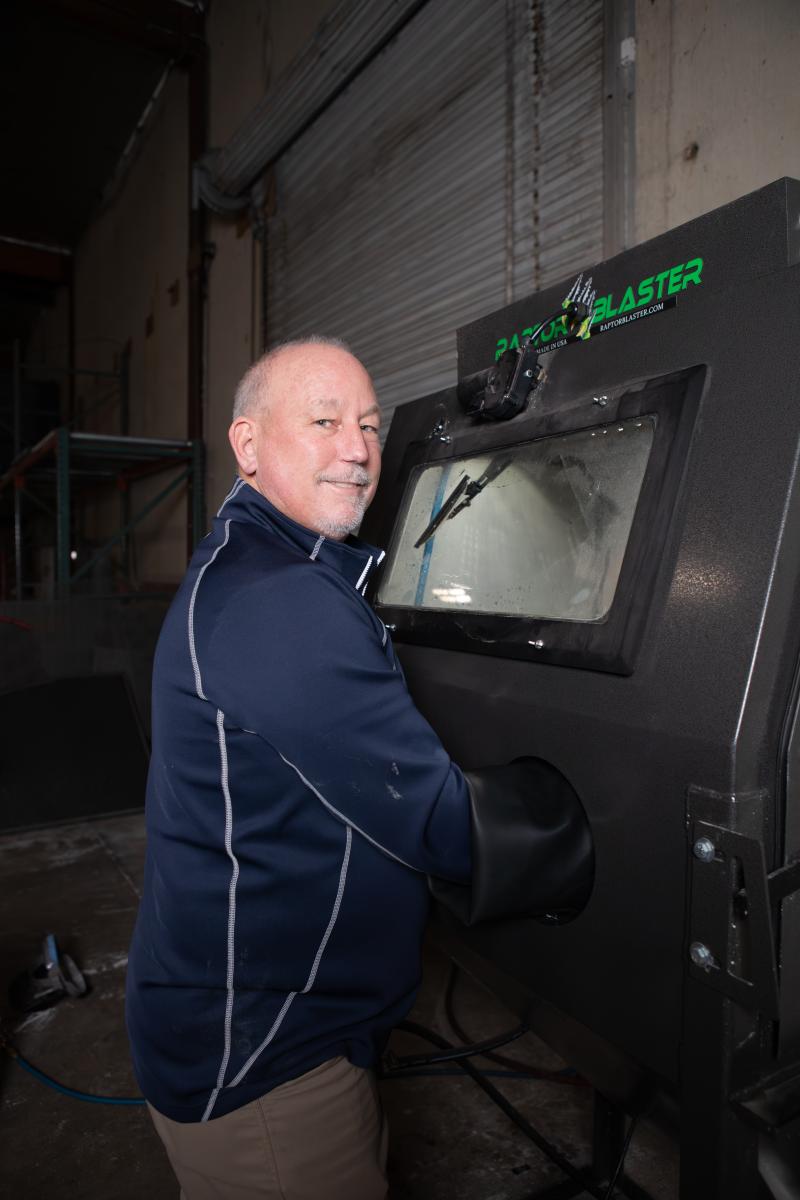
Rick Hayes is the owner of Raptor Blaster, a south Sacramento business that manufactures sandblasting cabinets. You might not know what a sandblasting cabinet looks like (a vaguely android-esque steel box with two lined orifices for the operator to insert their hands), much less that there’s a company building them within Sacramento city limits. But Raptor Blaster is just one of many small- to medium-sized manufacturers and distributors in the Capital Region that are now engaging in a complex calculus to figure out how they can best operate within the evolving tariff landscape.
Rick Hayes demonstrates the operation of one of his sandblasting
cabinets. (Photo by Robin Douglas)
However, there have been fluctuations of prices that Hayes pays for inputs for such as foreign-made steel. “Our base cabinet is built here locally by a machine shop that does fabrication,” he says, “but it depends on where they get their materials. U.S.-made steel is most of it, and its price has not increased.”
Since President Donald Trump’s April 2 imposition of tariffs on imports of many categories of foreign goods, changes in prices and supplies have been creating uncertainty in the marketplace for regional businesses. Meanwhile, their customers are dealing with inflation. We asked Capital Region businesses how they are adapting — and whether they see any benefits.
‘Slow and painful’
Katheryn Russ is a professor of economics at UC Davis and a research associate at the National Bureau of Economic Research. “The tariff protection lessens competitive pressure for these U.S. manufacturers to keep prices as low as those offered by foreign rivals, increasing profit margins as long as not too many of the materials they use in production are also targeted (or targeted at a higher rate),” she says via email. “The tariff protection in this case expands profit margins and, in theory, their ability to hire or retain workers.”
However, tariff-spurred job creation is off to a slow start. Employment numbers from the data processing firm ADP show a decline of 18,000 private-sector manufacturing jobs across the U.S. in November. That’s a steep drop from October, when manufacturing employers shed 3,000 jobs, according to ADP.
Two months is noteworthy, but not a trend, according to Russ. “A true trade theorist would say that in the long run, employment will end up the same either way (with or without the tariffs), as wages will adjust to achieve full employment in the long-run equilibrium. But the transition, at least, appears to be slow and can be painful.”
On that note, we turn to Fabrice Moschetti, owner of Moschetti Artisan Roaster in Vallejo. The imported coffee he buys from Brazil was tariff-free until the Trump administration imposed a baseline “reciprocal tariff” of 10 percent on imported goods globally, then increased tariffs on Brazilian imports another 40 percent in July, in part because the government of Brazil was prosecuting its past president, Jair Bolsonaro, for planning a military coup against his successor, President Luiz Inácio Lula da Silva. Tariffs on coffee imports, along with hundreds of other agricultural products, were lifted in November in an effort to reduce food costs, but it will take time for the price relief to fully reach consumers and businesses.
It’s been a struggle to find an adequate supply of coffee, according to Moschetti. That’s had an inflationary ripple effect on the businesses he supplies. “It’s been difficult to tell the mom-and-pop owner-operators who we work with that our prices are increasing 40 percent,” he says.
Another local business owner, Eric Andrus, runs GameBall, a company that designs computer accessories which are manufactured in the U.K. and China. The company’s headquarters are in Las Vegas, while Andrus works out of his home in Roseville. His business is reeling from the tariffs. “I have had to raise my prices across the board,” Andrus says.
Higher customer prices are not the entire story of the tariffs for him. “I have also had issues with the incorrect tariff being applied,” Andrus says, “but I was forced to pay since it was held at customs. I have been fighting since May to get this corrected. I doubt I will ever see this money back.”
Tariffs on trial
Some companies are banding together in protest of tariffs. Price Johnson of Rocklin is the chief operating officer of Cephalofair Games, a company that makes physical and digital games based in Pacific Grove. He and 700 other small businesses are part of an amicus curiae (“friend of the court”) to the U.S. Supreme Court with testimonials against President Trump’s tariffs on foreign imports (Trump v. V.O.S. Selections, Inc. and Learning Resources, Inc. v. Trump). Their coalition, We Pay the Tariffs, is based in Washington, D.C.
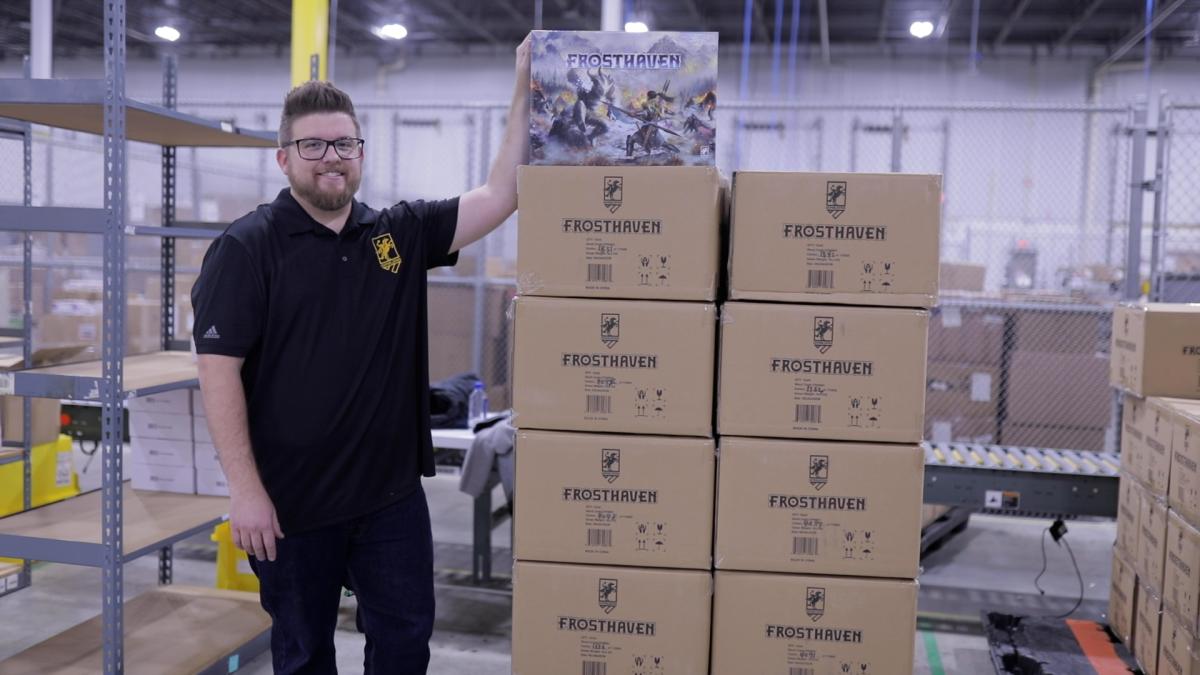
Price Johnson of Rocklin is the chief operating officer of
Cephalofair Games, a company that makes physical and digital
games based in Pacific Grove. (Photo courtesy of Cephalofair
Games)
“Tariff volatility has meant job eliminations, company-wide furloughs, and product delays/cancellations,” Johnson says via email. “We’ve paid approximately $144,027.46 in new U.S. tariffs in the last few months alone, and had multiple products stuck overseas for months during tariff volatility.”
Meanwhile, the Supreme Court, with a conservative majority, is expected to issue a decision on a “demand for restitution” from businesses paying the tariffs soon. The case challenges the president’s authority to impose tariffs due to a “large and persistent annual U.S. goods trade deficits,” creating a national emergency.
A decision against the imposition of tariffs could trigger a refund from the federal government to the businesses that have been paying duties on imports during the past eight-plus months. The refund bill could reach tens of billions of dollars.
Cephalofair Games imports a wide range of components for its
games from overseas, which are affected by tariffs. (Photo
courtesy of Cephalofair Games)

But there are both winners and losers in the tariff game. Raptor Blaster of Sacramento is “up a little bit over last year, probably 2 or 3 percent,” says Hayes. “You know, nothing significant, but it’s hard to justify how much that is due to tariffs or competition pricing. It’s really hard to judge whether it’s the market doing better or doing worse.”
–
Stay up to date on art and culture in the Capital Region: Follow @comstocksmag on Instagram!
Recommended For You

The Industry Is Struggling, but Regional Vintners Think Wine Can Still Win
How lower demand, generational shifts in alcohol and potential Trump tariffs are affecting winemakers
After three decades of growth, the industry has seen three years of negative sales. Grape farmers are being severely undercut by cheaper bulk wine from abroad. Sudden, unpredictable tariff shock is knocking exports and profit margins off kilter. And there’s been studies of late suggesting that Gen Z, those born between 1997 to 2012, is abandoning the wine life and maybe even alcohol altogether. But local growers are optimistic nevertheless.
The Capital Region Is Not Alone in Its Challenges | Opinion
FROM THE EDITOR: Cities across the U.S. also have housing, crime, immigration and tariff concerns
I just spent a week in Washington, D.C., attending a National Press Foundation fellowship on local small business reporting. What I learned is that the Capital Region’s problems are not unique; small and mid-size cities around the U.S. are experiencing much of the same challenges and problems that we have here.
Manufacturing a New Vision for Stockton
Stockton manufacturers look to capitalize while operating in the historic region
In the late 19th and early 20th centuries, Stockton was a manufacturing powerhouse, helping to send items to market like America’s first mass-produced tractors. Stockton’s manufacturing sector declined over many decades, though there are now local leaders working to strengthen it again.

Building for the Future
California Manufacturers & Technology Association President Lance Hastings on the myriad challenges faced by the industry
Lance Hastings became president and CEO of the California Manufacturers & Technology Association in November 2018. Comstock’s spoke with Hastings about challenges faced by manufacturers and how CMTA works to improve the business climate.
Trump’s Tariffs Hurt Some Local Businesses, but Prompt Others to Shift Gears
What impact are tariffs having on the economy of California's Capital Region?
Conversations with Sacramento-area business owners show tariffs aren’t affecting all companies the same way. At least one is expanding fast because of them. But almost everyone is seeing some effect.