


This story is part of our June 2026 issue. To read the print version, click here.
Residential design rarely starts with a fixed architectural vision. More often, it begins with something smaller — a renovation that grows, a property with potential or a site that’s hard to ignore. Homeowners bring their personal ideas and priorities, and architects respond with options and questions about what matters most. Together, they make hundreds of small decisions until the home begins to take shape. As Brian Johnsen of Johnsen Schmaling Architects notes, “after several iterations and conversations, things start to unfold very naturally.”
In the Capital Region, where climate and landscape vary from valley floors to foothill ridgelines, responsiveness often defines the final outcome. Homes are shaped to open toward outdoor space, with courtyards, terraces and covered walkways extending daily life beyond interior walls. Material choices follow a similar logic. Natural materials like wood, stone, concrete and metal are selected as much for how they weather as for how they connect a home to its surroundings. The goal is to create structures that feel rooted in their site, but also shaped by how people actually live in them.
Here, we look at several homes across the Capital Region and the architects and designers who crafted them to reveal how residential design is driven by collaboration, context and conditions of place.
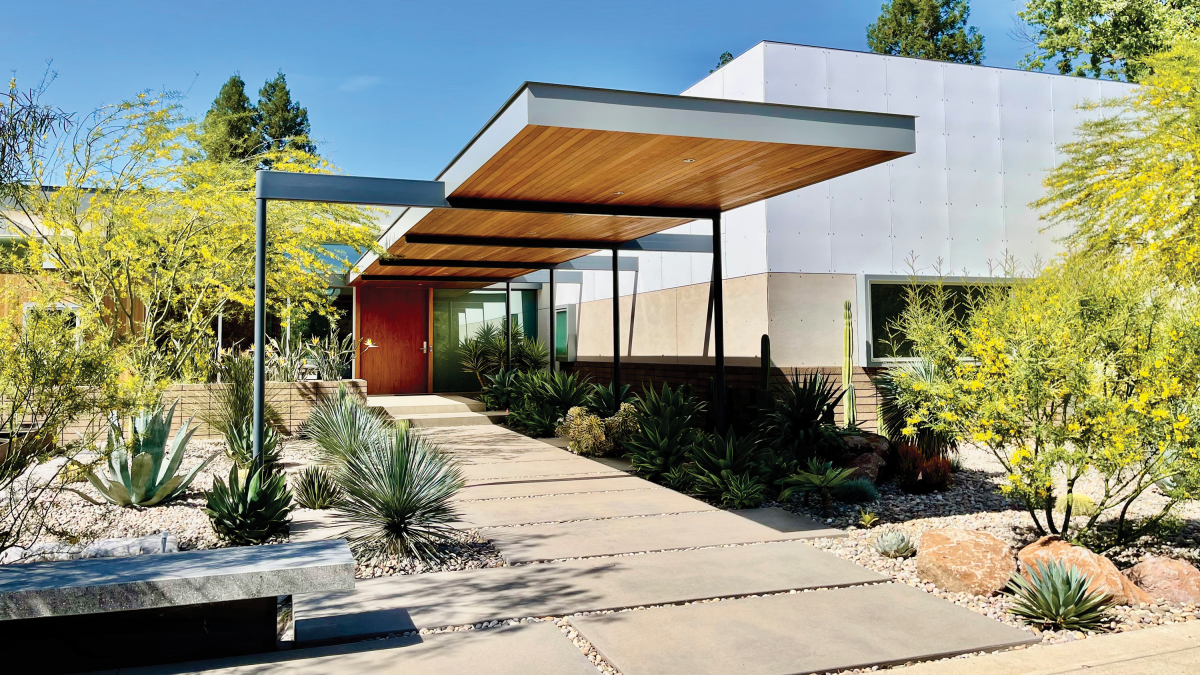
The design prioritized a private courtyard that organizes the
home spatially and experientially. (Photo courtesy of SAC Studio)
An Arden area remodel
- Location: Sacramento
- Architects: Jay Serrao and Melissa Szpik Serrao, SAC Studios
- Size: 6,000 square feet
- Completed: 2023
What began as a simple bathroom remodel soon gave way to something far more ambitious: a master plan of the entire property, including a 6,000-square-foot modern home in Sacramento’s Arden-area, reimagined from the ground up by husband-wife architects Jay Serrao and Melissa Szpik Serrao with SAC Studios.
The design prioritized a private courtyard that organizes the home spatially and experientially. From the courtyard, the house unfolds as a series of glass doors that pocket away and lead to a backyard oasis, complete with a pool, to make the most of the region’s unique climate.
“We love to take advantage of the valley’s long, mild seasons,” Serrao explains.
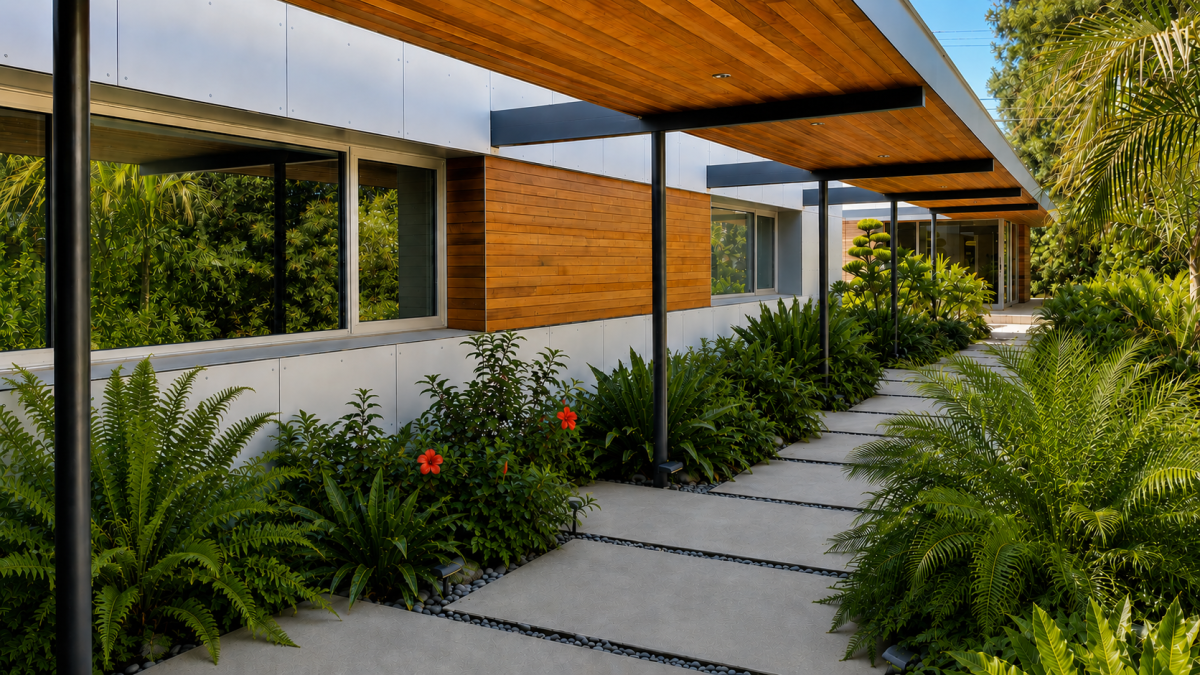
Design decisions throughout the home reinforce that connection to climate and seasonality. The flow is carefully calibrated with deep eaves, canopies and a precise orientation that helps mitigate Sacramento’s intense summer sun while maximizing livability. Stretching from the driveway to the entry and from the main house to a detached guest house, the canopy structures create a continuous shaded spine across the property. Lined with warm wood soffits, they offer both shelter and an architectural thread that guides movement and tempers light.
Materiality reinforces both durability and craft and further anchors the home to its environment. Board-formed concrete, custom concrete block, metal siding and large-format fiber cement panels establish a restrained modern palette, warmed by oiled cedar and mahogany. Inside, an oversized mahogany pivot door, bold red tile from Heath Ceramics and custom terrazzo floors anchor the entry. Meticulously sequenced anigre, an African hardwood, creates a seamless, furniture-grade finish. “All the wood comes from the same tree, so we can create book-matched veneers and everything looks very uniform,” says Serrao.
The landscape architecture complements the home’s modern expression with drought-tolerant plantings in front, and a Japanese garden in back.
Ultimately, the home reflects not just design ambition, but shared intent. “They really wanted an heirloom house that would grow with them and would stand the test of time,” adds Szpik Serrao. “That idea guided every decision.”
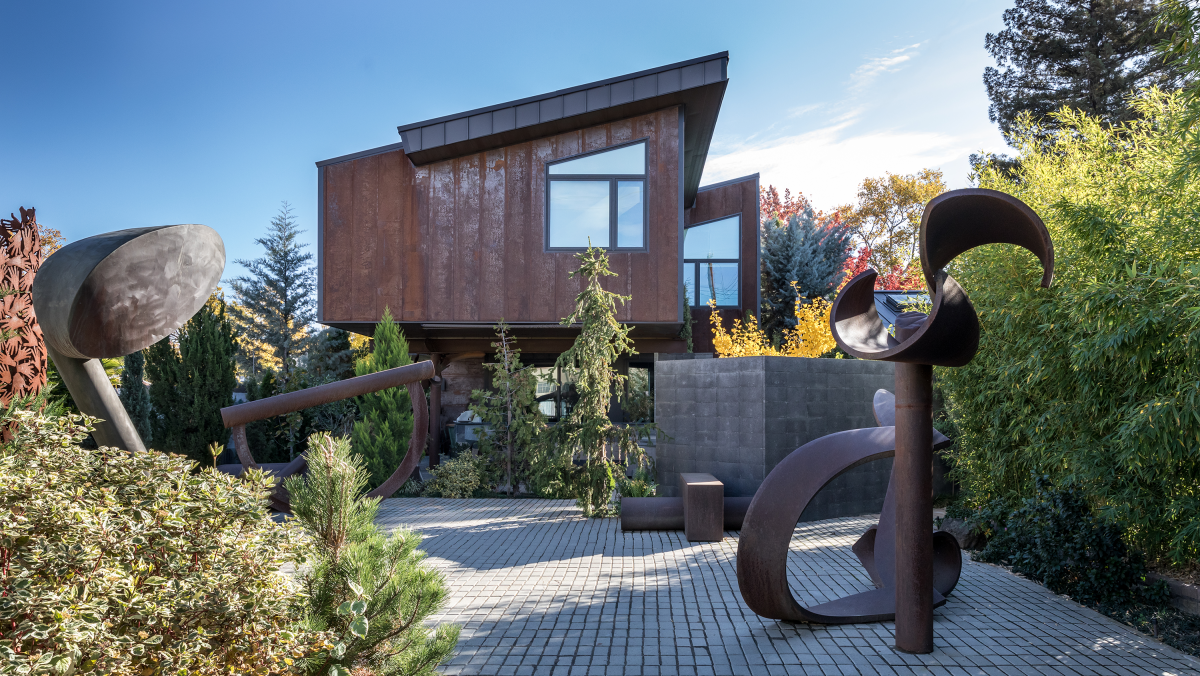
On a tree-lined stretch of East Sacramento, behind what was once
a tight grid of modest early-20th-century bungalows, sits a
property that resists any simple definition of a house. (Photo by
Kat Alves, courtesy of Kaufmann Architects)
An artist’s retreat
- Location: Sacramento
- Architect: Jim Bob Kaufmann, Kaufmann Architects
- Completed: 2024
On a tree-lined stretch of East Sacramento, behind what was once a tight grid of modest early-20th-century bungalows, sits a property that resists any simple definition of a house. It reads more like a private campus of intersecting volumes — part residence, part studio, part open-air archive of a sculptor’s life.
That sense of scale and structure isn’t new to sculptor Gerald Walburg, whose best-known public work, Indo Arch, rises in downtown Sacramento as a 40-foot steel landmark that helped define the city’s public art program. His practice often moves between sculpture and built form, treating materials and composition as something closer to architecture than traditional object-making.
Architect Jim Bob Kaufmann of Kaufmann Architects has worked with Walburg for more than two decades, a collaboration that has evolved into an ongoing dialogue between sculpture and architecture. Their latest undertaking is Walburg’s main residence.
“He will take a hundred percent credit for this house,” Kaufmann says of Walburg with a laugh. “But Gerald thinks in boxes that cantilever off of each other, tilt off of each other. When you look at his sculptures, you realize, it’s the same thinking.”
That sculptural logic runs through every part of the project. The dwelling, just one structure within a five-parcel compound, defies conventional expectations of a home. Concrete block, painted metal and Corten steel form a palette that is both expressive and sculptural. Large expanses of glass cut through heavy massing, drawing daylight deep into the interior, while dramatic cantilevers test gravity.
The technical challenges were as real as the aesthetic ambitions. Kaufmann points to the engineering required to make Walburg’s ideas inhabitable. “We had to get the lateral system to work within code so that in an earthquake, it all stands,” he explains. “The shear walls had to go from roof to foundation in one continuous line. That was a big challenge.”
Another defining moment came in the master suite, where a nine-foot cantilever projects over a steel I-beam that’s supported, improbably, by one of Walburg’s own sculptures. “Getting the structural engineer on board with that and then smoothing it through the building department was interesting,” says Kaufmann. “It wasn’t difficult, but it required a lot of thought.”
For Walburg, who turned 90 this year, he sees the property not as a finished project but an ongoing composition. “Architecture has always been a serious interest of mine,” he says.
His Sacramento property spans five adjacent lots, each originally occupied by early residential buildings that have been reworked, replaced or absorbed into a larger system. One structure serves as a studio, another as a gallery-like repository for Walburg’s extensive midcentury art and furniture collection and another as a newly built guest house that mirrors the main residence in material language. “I wanted to make it so I was living in a natural, almost park-like situation rather than in the city,” Walburg says. Sculptures — some monumental steel works, others more intimate forms — are placed throughout the grounds and interiors alike.
“It’s very much like a Japanese garden in how it’s composed,” Kaufmann says of the landscape that ties the site together. “There’s no parcel-to-parcel anymore. It’s just one big garden.”
The integration of the campus extends even below grade. During excavation for the main house, Walburg chose to expand the basement depth, ultimately creating a ten-foot-ceilinged space, which is unusual given Sacramento’s water table conditions. In the process, a large bronze sculpture was craned in and embedded into the structure before the floor above was completed. “It literally got built into the house,” Kaufmann says.
For Walburg, such gestures are extensions of a lifelong practice and how he works across various mediums. “The process of painting is similar to architecture and landscaping,” he says. “You determine size, light, temperature conditions. Then that determines where it goes.”
That sensibility has guided not only the architecture, but the evolution of the entire property, which is now held within a foundation intended to preserve and activate the site beyond Walburg’s lifetime. Public access, artist residencies and exhibitions are all part of that long view.
“It will be one of the reasons for people to visit Sacramento,” Walburg says of the future vision.
What makes the compound compelling is not simply its material or technical ambition, but the way it resists closure. Kaufmann and Walburg’s collaboration operates less like a client-architect relationship, and more like an ongoing work still being revised.
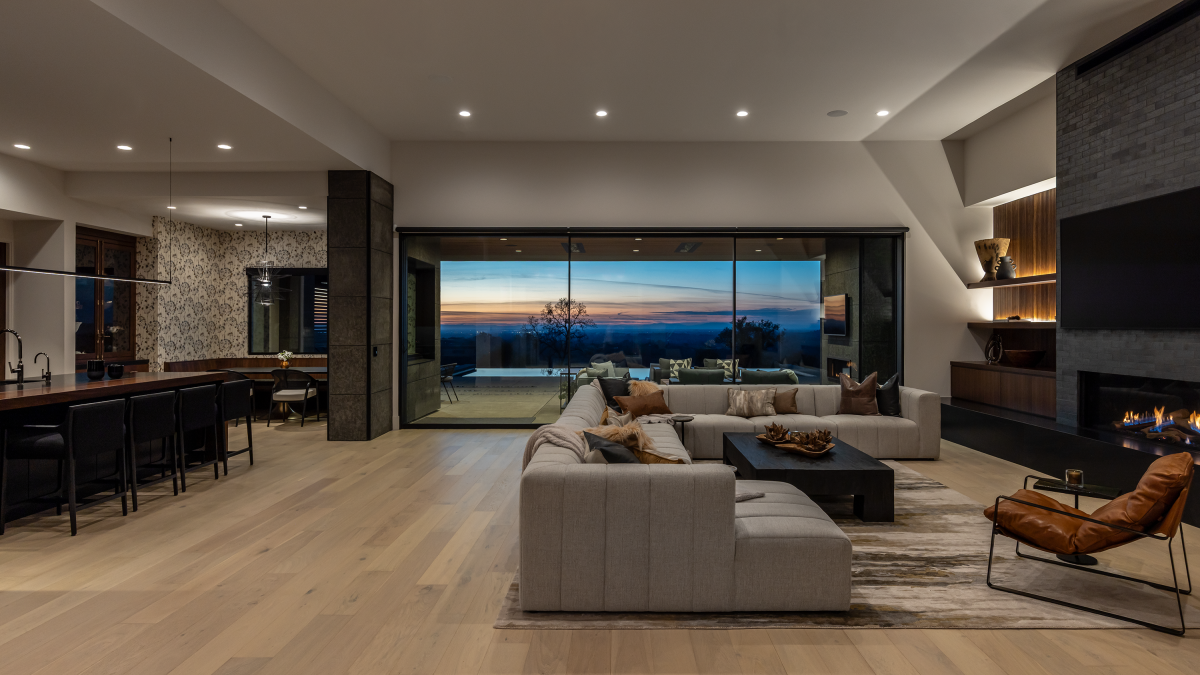
Sited on an elevated ridgeline in Newcastle, this contemporary
ranch home designed by Pete Lugo of Lugo Design reflects an
architectural response to both the site’s sweeping views and the
homeowners’ deeply rooted connection to place. (Photo by Kat
Alves)
Capturing hillside views in Newcastle
- Location: Newcastle
- Residential Designer: Pete Lugo, Lugo Design
- Size: 5,000 square feet
- Completed: 2025
Sited on an elevated ridgeline in Newcastle, this contemporary ranch home designed by Pete Lugo of Lugo Design reflects an architectural response to both the site’s sweeping views and the homeowners’ deeply rooted connection to place. Having lived on the same road for years, they purchased the unspoiled parcel with the intention of building their forever home.
“This was about capturing a feeling,” Lugo says. “We sat on that hilltop early on and asked, ‘How can the house reflect this?’” A design-build collaboration with JNT Building and a tightly coordinated consultant team shaped decisions in real time, reinforcing a highly communicative process.
Rather than competing with the hillside, the structure’s low-slung profile settles into it, with a muted material palette of large-scale basalt panels, cedar siding and sand-finished stucco. The effect is one that avoids imposing on the landscape while still asserting a modern identity.
For the homeowners, the design was less about starting over than refining how they wanted to live. “I wanted a very quiet and simple, low-profile house,” the homeowner says. “Something that didn’t stand out, but that you could see through from front to back.” From the entry, sightlines extend through floor-to-ceiling glazing, across an infinity-edge pool and out toward distant buttes and the city’s skyline.
The home’s indoor-outdoor flow is central to its experience. A deep, covered veranda acts as an extension of the living room, seamlessly connecting interior and exterior spaces through retractable glass walls and a continuous material palette. “The indoor space literally extends right outside,” Lugo explains. “It’s all one environment.”
Inside, the mood shifts to what both designer and homeowner describe as “broody” — a rich composition of walnut cabinetry, dark stone and neutral oak flooring. “We were looking for something warm and timeless,” the homeowner says.
Despite its simplicity, the project demanded precision. Custom floating mirrors preserve views in the primary bath, while carefully calibrated overhangs temper the harsh western sun. The result is a home that appears effortless, yet reflects a thoughtful commitment to collaboration and forward-thinking design.
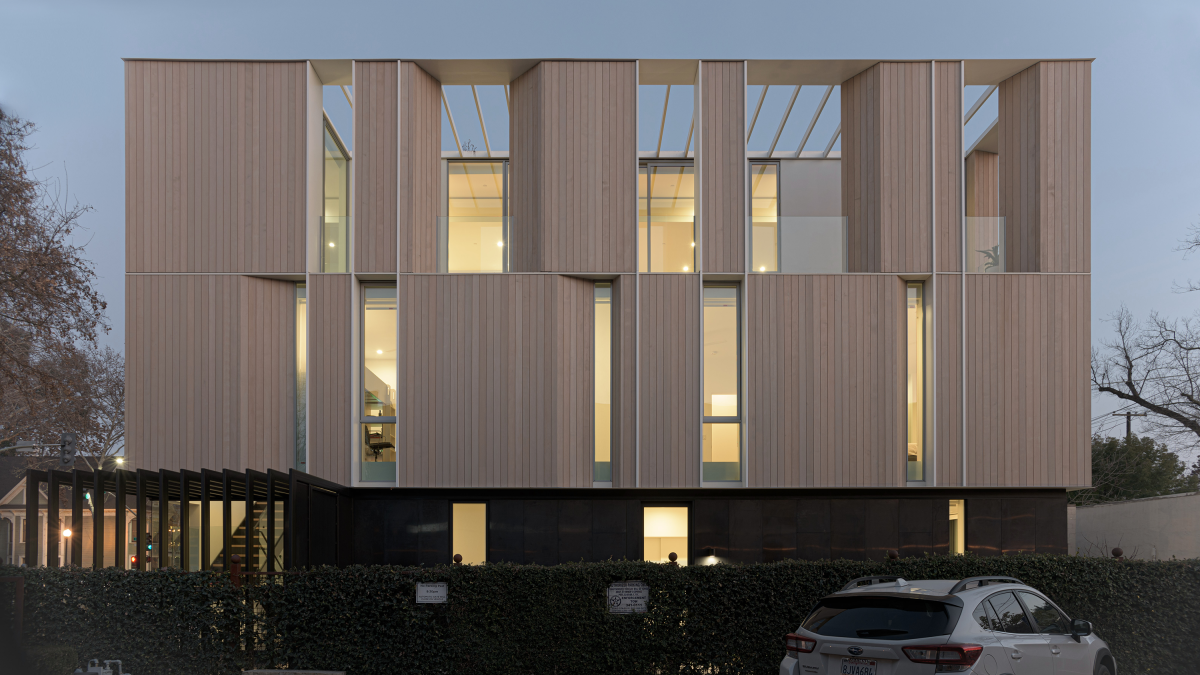
Designed by Johnsen Schmaling Architects, the project responds to
a complex site condition wedged between Boulevard Park’s historic
residential fabric and the denser, more utilitarian structures
that define the surrounding blocks. (Photo by John J. Macaulay)
An urban oasis in a compact city block
- Location: Sacramento
- Architect: Johnsen Schmaling Architects
- Size: 3,000 square feet
- Completed: 2021
On a tight urban parcel where residential character gives way to commercial edge conditions, this Sacramento residence is a study in architectural adaptability. Designed by Johnsen Schmaling Architects, the project responds to a complex site condition wedged between Boulevard Park’s historic residential fabric and the denser, more utilitarian structures that define the surrounding blocks.
“What we like about these in-between spaces is that they’re places where two worlds collide,” says principal in charge, Brian Johnsen. “You’re trying to respond to both the finer-grain residential context and the larger commercial scale at the same time.”
That duality became the project’s organizing principle. With limited ground-level access to light, privacy and outdoor space, the design shifted vertically, lifting primary living spaces above street level to capture light and distant views. The subsequent form is a stacked composition of interlocking volumes: a grounded base that engages the street, and a lighter residential mass above.
A raised terrace carved into the upper level extended the main living area outward while maintaining privacy from the street below. Carefully oriented, it maximizes southern exposure while buffering the intense Western sun. A trellised portico mediates the transition from street to home, revealing a small but intentional pocket of green space.
Material choices reinforce the project’s contextual logic. An L-shaped, steel-clad plinth anchors the structure at grade, designed to withstand urban conditions while maintaining a refined presence. Above, warm Alaskan yellow cedar softens the upper volume, paired with a filigree of white-painted aluminum that visually ties the composition together.
Inside, the palette is intentionally restrained. “The homeowner wanted a very serene, pure space — something that was flexible for art and capable of evolving over time,” says Johnsen. The result is a minimal interior framework that allows light, structure and city views to define the experience.
Originally conceived as a flexible single-family house and office space, the residence has since evolved in step with the owner’s life. The upper level is occupied by a long-term tenant, while the lower space operates as a short-term rental. The project received national recognition as a 2022 Record House by Architectural Record and received a 2023 AIA Housing Award in the “One- and Two-Family Custom Residences” category.
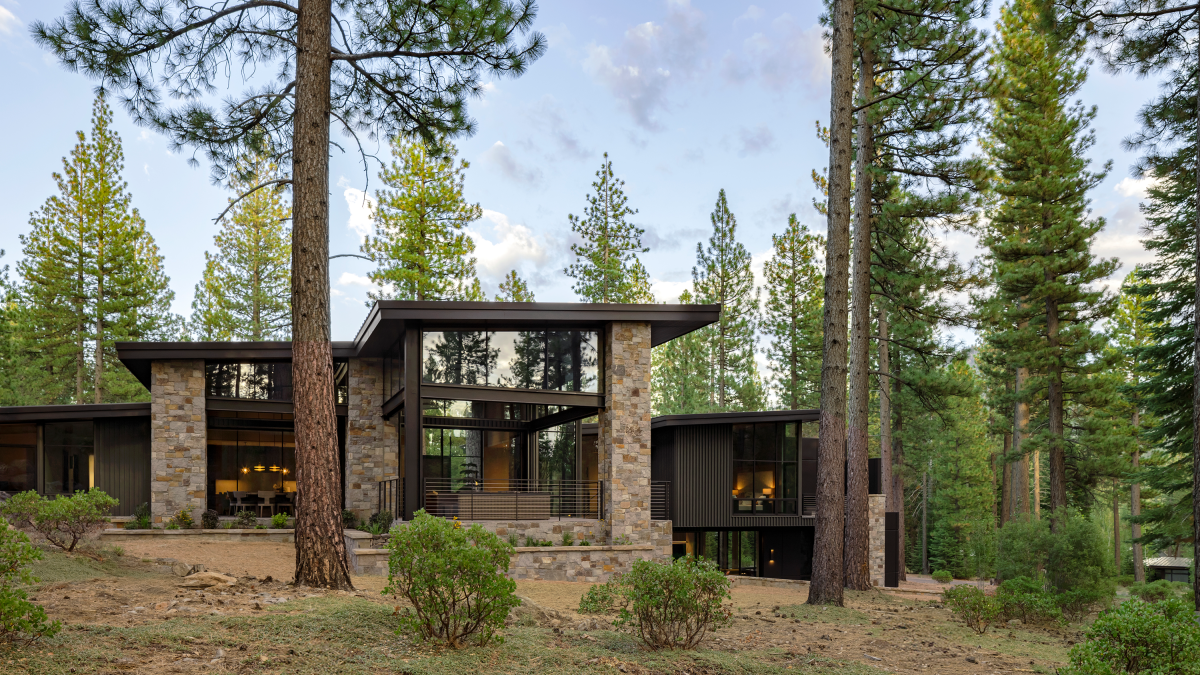
Embedded within the granite-studded and pine mountain terrain of
Martis Camp in Truckee, this exclusive modern residence was
completed in late 2025. (Photo by Stephanie Russo)
A contemporary retreat carved into the Truckee landscape
- Location: Truckee, Martis Valley
- Architect: Donald Fugina, Donald Joseph, Inc.
- Size: 6,321 square feet
- Completed: 2025
Embedded within the granite-studded and pine mountain terrain of Martis Camp in Truckee, this exclusive modern residence was completed in late 2025 and reflects a rare convergence: an experienced client, a seasoned builder and a design team intent on letting the land lead.
“This site really spoke to our firm,” says Craig Fugina, principal with Donald Joseph, Inc., noting that as one of the last available parcels, the site came with both constraints and opportunities. Founder and owner Donald Fugina was the lead architect on the project. Rather than resist the steep, rock outcropping, the team leaned in, using it as a primary organizing element. The result is a multi-level home that appears almost deceptively hidden from the street, due to how it nestles into the hillside.
From the rear, the home reveals its full vertical drama with
steel-framed expanses of glass extending toward forested views
and anchored by Montana ledge stone and corrugated metal. (Photo
by Stephanie Russo)
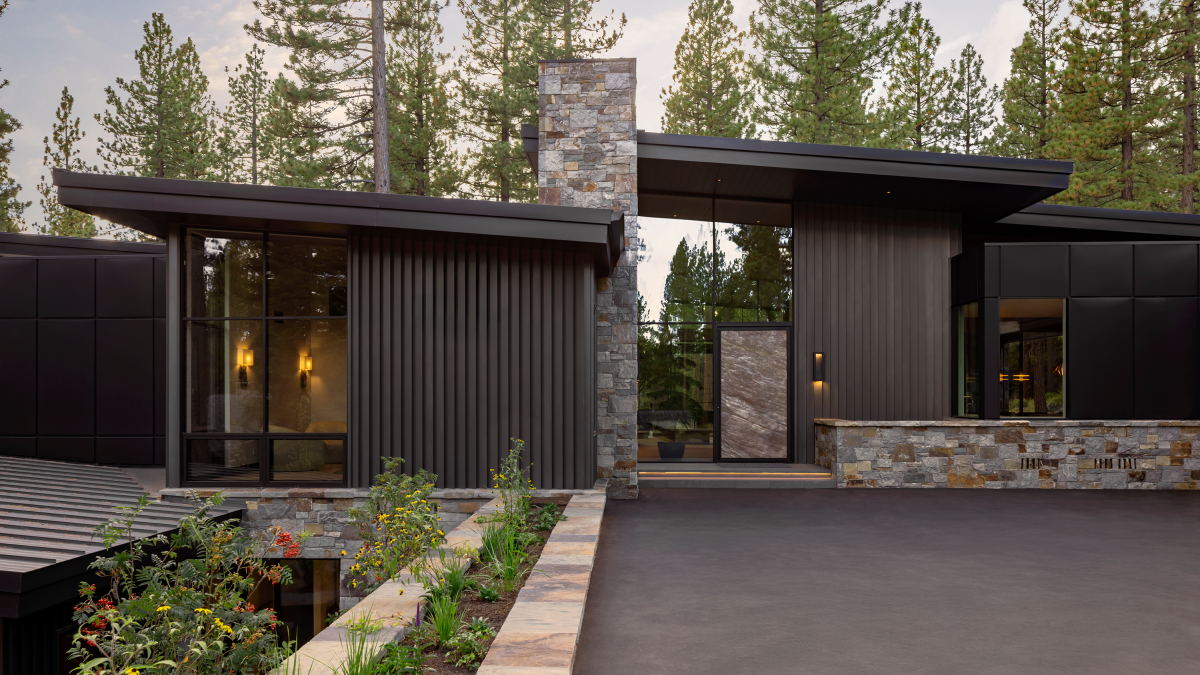
From the rear, the home reveals its full vertical drama with steel-framed expanses of glass extending toward forested views and anchored by Montana ledge stone and corrugated metal. The palette is both rugged and refined, chosen for aesthetics but also to meet evolving wildfire codes and Martis Camp’s exacting design standards.
“It took about three years from concept to completion,” Fugina says. “We were building in snow country and in a highly regulated community, so it took time.” Close coordination among architect, builder and structural engineer was essential, particularly in executing the home’s exposed steel elements and complex site integration.
Inside, the home shifts to what Fugina describes as a modern organic sensibility. Wide-plank white oak floors, custom millwork and stone carried indoors create continuity, while a close partnership with the homeowner — who had experience building multiple homes — shaped the interior architecture.
Equally important is the home’s dual role as retreat and gathering place. Designed for both daily living and large family gatherings, the layout balances intimacy with openness. “The design allows the home to live in different sequences, functioning just as comfortably for five people as it does for 25,” says Fugina. The home was honored with the 2025 New Residential Project of the Year award by the Contractors Association of Truckee Tahoe.
–
Stay up to date on business in the Capital Region: Subscribe to the Comstock’s newsletter today.
Recommended For You

Can Sacramento Build Its Way Out of the Housing Crisis? Experts Weigh In
Home building experts discuss the challenges of creating new housing. A Comstock’s roundtable discussion
Comstock’s recently summoned an expert panel to discuss how partnerships between builders and local municipalities are going.
A New Era of Library Architecture Is Taking Shape in Northern California
From Truckee to Davis, the Capital Region's newest libraries foster community and a sense of place
We profile several libraries in the Capital Region and the
architects who designed them to reveal just how radically these
institutions have changed — and why they matter more than ever in
a digital age.
This Little House With Big Heart Is a West Coast Anomaly
Renters are called to the tiny Victorian with a touch of Southern comfort in Sacramento
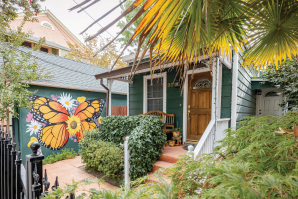
The “Little House” is the last remaining of four that once stood in a row on 22nd Street. It is a rare West Coast example of a “shotgun house,” reflecting the idea that a bullet could travel through the front and out the back door without hitting anything.
This Architectural Treasure in Nevada County Was Nearly Lost to Time
Now volunteers are restoring it to its former glory — and sharing its pioneering history with the world
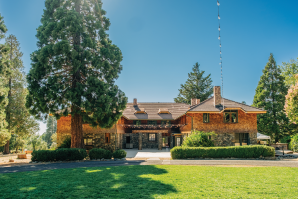
North Star House, designed by renowned 20th-century architect Julia Morgan and owned by North Star Historic Conservancy, has undergone a painstaking transformation.