


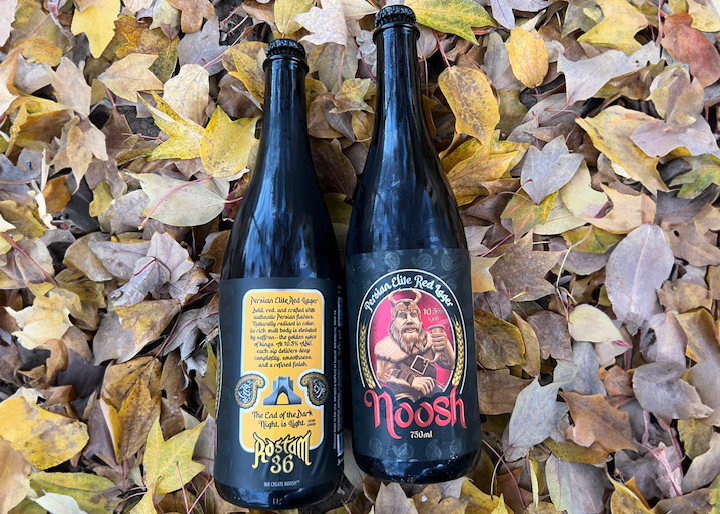
There are bottles and kegs of dark, saffron-tinged beer behind the counters of Persian restaurants in Sacramento, waiting to be opened and poured freely when Iran’s current government falls.
“All the restaurants that take my beer, I’ve given them at least five or six bottles each, and I told them that when Iran is free, serve it for free,” says Karan Khoshcar, owner of Davis-based beer brand Rostam36, on the phone from the San Francisco airport. “Just in case it happens while I’m on the flight.” He is on his way to Stockholm to take part in a demonstration in support of the anti-government protests in Iran, which he had been waiting for since his family fled their homeland after the 1979 revolution.
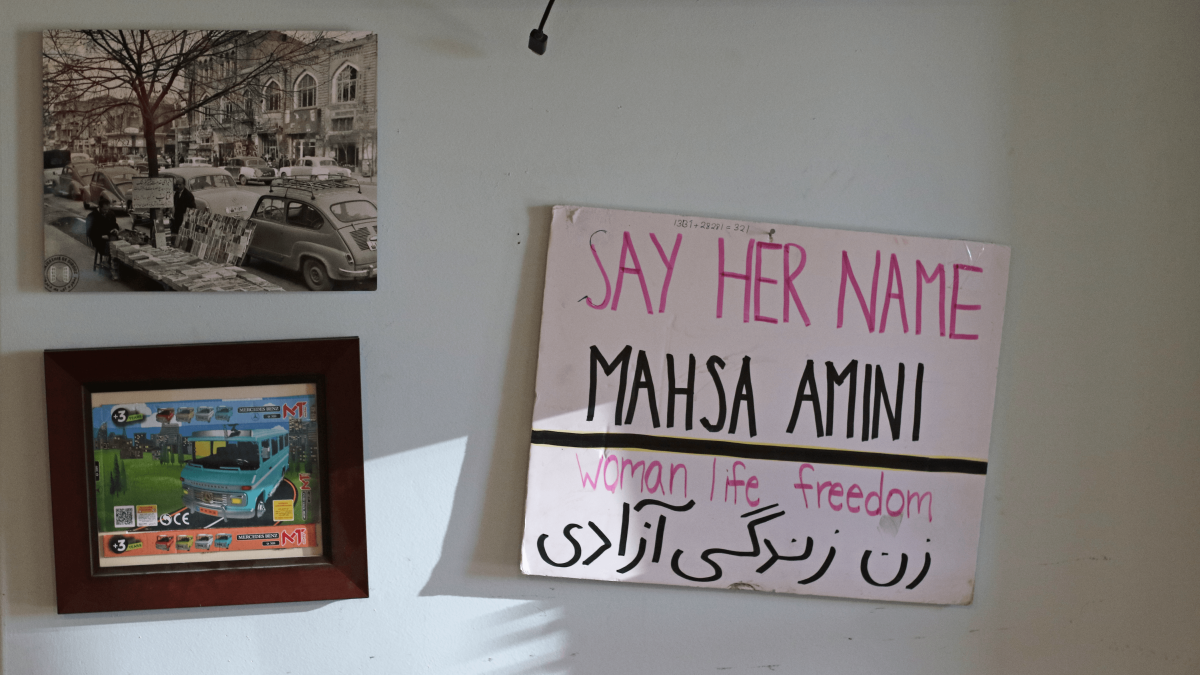
Khoshcar has spent much of the past decade trying to support the resistance movement in his home country from afar. His previous business, the restaurant Stand Up Kabob, was decorated with posters from the 2022 “Women, Life, Freedom” protests he attended around the U.S. and Europe after the death of Mahsa Amini, a woman allegedly killed by the “morality police” who enforce Iran’s strict dress codes. His beer cans feature a cartoon he drew of Ayatollah Khamenei’s beard mingling with a woman’s hair — symbolizing, he says, their equal value — along with the slogan “Women, Life, Freedom” in a numerological code of his own creation.
A “Women, Life, Freedom” placard decorates Stand Up Kabob in
2023. (Photo by Jennifer Fergesen)
Much has changed in Iran since Khoshcar opened Stand Up Kabob in 2019. Though the government passed a strict “hijab and chastity” law in 2024 to crack down on women who flouted the dress code after the 2022 protests, so many women continued to reject the hijab that the authorities eventually deemed the new law “unenforceable,” according to RadioFreeEurope. Photos and videos from Iranian cafes and shopping malls in 2025 show many women with their hair uncovered.
But the hijab law was not the only cause of discontent in Iran. Government mismanagement and international sanctions tanked the Iranian economy, leading to the local currency, the rial, reaching record lows in December. Tehran’s water reserves also approached rock bottom that month due to a combination of mismanagement and a historic drought. In the last days of the year, protests began with a strike of shopkeepers in Tehran and spread to universities and communities around the country. Videos shared before Iran shut down internet access last week show violence, fires and destruction. With the communication blackout, international groups have struggled to confirm the number of deaths, with estimates ranging from 2,500 to 20,000.
Meanwhile, Iranians in the diaspora are also organizing protests in solidarity with their compatriots, including in Turlock and Roseville Jan. 11 and in downtown Sacramento Jan. 14. Khoshcar attended the Roseville protest and says over 500 people attended. “It’s quite a lot for this area, because it doesn’t have that type of population,” he says. Some protesters held photographs of Reza Pahlavi, son of the shah deposed by the 1979 revolution, who has offered himself as a transitional leader for a democratic Iran. The organizers of the protests, Zhina Sacramento, have posted AI-generated images of Pahlavi standing beside President Donald Trump on Instagram. (The group did not respond to requests for comment.)
“They have lots of references to President Trump,” Khoshcar says of the protesters in Iran. “They always say something like, ‘Trump, pay attention, it’s time to take action.’” Trump, for his part, suggested that the U.S. military would strike Iran if the government continued killing protesters.
As of Friday, killings seemed to have slowed, with Trump going so far as thanking the Iranian government on social media for not carrying out the mass hangings it had threatened. Reports suggest that protests have quieted over the past week, with thousands in detention and a sense of “disillusionment” in the air, according to The New York Times.
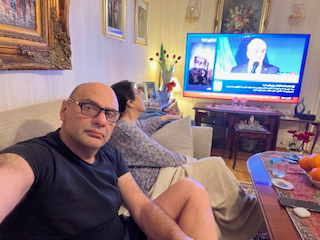
Meanwhile, Khoshcar is in Sweden, where local residents recently marched in support of the protesters despite freezing temperatures and icy streets. He watched Reza Pahlavi’s live press conference on television with his aunt. “She is shaking and watching,” he wrote via email.
Karan Khoshcar watches Reza Pahlavi’s press conference with his
aunt in Uppsala, Sweden. (Photo courtesy of Karan Khoshcar)
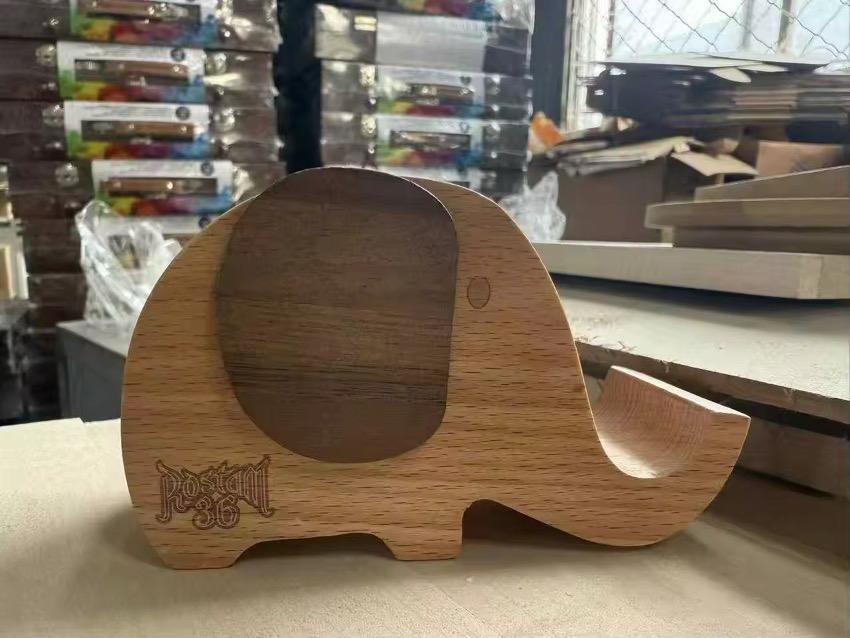
The bottles of “Persian elite red lager” at Maydoon, Shahrzad Fine Persian Cuisine and other restaurants remain sealed, but Khoshcar is ready. He has spent the past months developing his Rostam36 brand, which started with a German-inspired pilsner, beyond beer. He is printing its logo (inspired by a Persian legendary hero) and other symbols on a wide range of products, including slippers, bowls, eye masks, hats, reading glasses, clocks, carved wooden remote-control holders and other “useful things that people need,” he says.
Wooden remote control holders are among the products Karan
Khoshcar is selling under the Rostam36 brand.
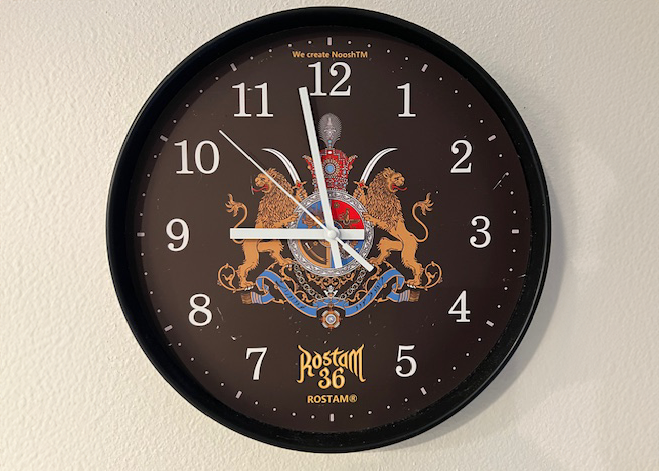
At the Roseville demonstration, he brought a stack of clocks emblazoned with the Rostam36 logo and the Persian royal lion, one of the main emblems of pre-revolutionary Iran, and sold 49 of them. He says he made $310 and donated it to the National Union for Democracy in Iran.
Khoshcar donated the proceeds from his clocks to the National
Union for Democracy in Iran. (Photo courtesy of Karan Khoshcar)
It’s a modest start, but Khoshcar says his goal is to build Rostam36 into a big enough brand that he can expand his business to Iran and help rebuild its economy. Until then, he plans to package pamphlets about the cause in the boxes of his products, which will soon be available for sale on Amazon.
“I’m not doing this to make money,” he says. “I just want the average American to know what’s going on.”
–
Stay up to date on art and culture in the Capital Region: Follow @comstocksmag on Instagram!
Recommended For You
Neighborhood Favorite: Stand Up Kabob
A Persian restaurant at a Davis car dealership aims to support the Iranian women’s revolution
There are many clues that Stand Up Kabob, a Persian restaurant
literally welded onto the side of a used car dealership on the
outskirts of Davis, is no ordinary kebab shop.
This California Beer Sends a Message of Solidarity With the Iranian People
Behind the crisp pilsner lies a numeric code meant to transcend language and challenge Iran’s regime
Beer has been illegal in Iran since the Islamic Republic rose to power in 1979. To follow the story of Persian beer, one must look beyond the borders of the country. The latest chapter takes place in Davis, home of Rostam36.
Sacramento Afghan Community Reacts to Suspension of Asylum Cases
In Sacramento County, home to the country’s largest Afghan American population, asylum seekers fear for their safety
The Sacramento region welcomed thousands of Afghan refugees and
asylum seekers in the aftermath of the U.S. withdrawal from
Afghanistan. After retaliatory changes in immigration procedures
following the shooting of two National Guard members, many are
worried.
Agave for the Soul: The Spiritual Quest for a New Tequila
How Melanie Shelby, founder of the tequila brand Enelalma, went from civic engagement to desert entanglement
Enelalma, a name that comes from the Spanish term for “in the soul” and embodies Shelby’s belief drinking great tequila is a spiritual experience.