


Fresh strands of crunchy papaya, chili pepper’s tongue tingle, lemongrass and ginger’s fragrant aromas await us as we lean over just-prepared Hmong dishes. I have convinced Chef Yia Vang, author of the memoir “In Yer’s Kitchen: Memoir of a Hmong Daughter,” to take me on a culinary tour of Hmong hot spots in Sacramento.
Yang, who grew up in Stockton, has family members and friends in Sacramento. On her visits she has learned of several local markets and restaurants that cater to the Hmong population.
Related: Why One of Stockton’s Biggest Food Cultures Still Flies Under the Radar: Hmong farmers and chefs share their cuisine through markets, restaurants and cookbooks
According to the Pew Research Center, Sacramento County is home to around 35,000 Hmong residents. With this large number of Hmong and a growing appreciation for their cuisine, our area boasts three Hmong-centered food venues where all can enjoy carefully prepared and delicious dishes.
K Fusion Eats
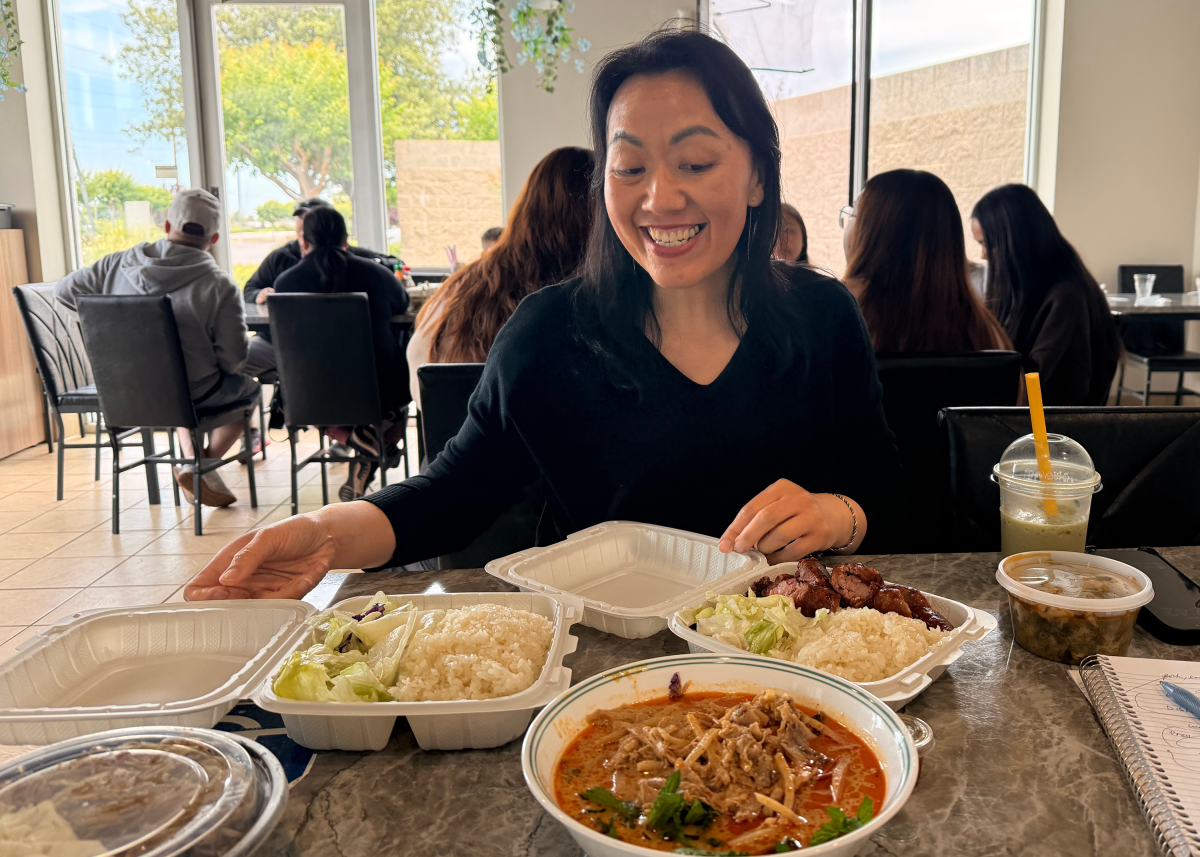
Chef Kia Le and her family started K Fusion Eats in January and the restaurant has already garnered rave reviews from the local Hmong community.
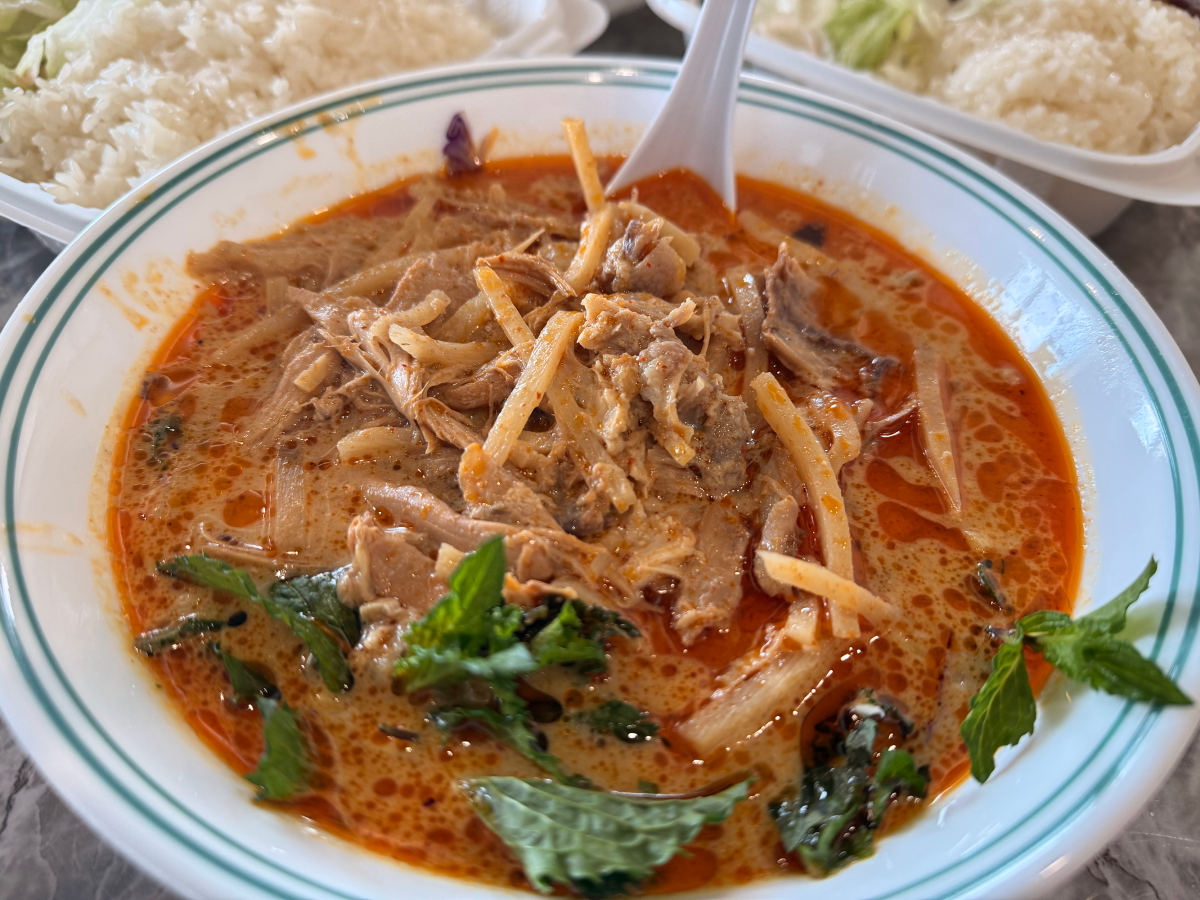
Kapoon is a chicken noodle soup with coconut curry, peanut sauce,
a copious amount of shredded chicken, aromatics like kaffir lime,
lemongrass, ginger, and fresh mint. (Photo by Gabrielle Myers)
The counter-service restaurant off Power Inn Road offers Hmong-inspired Thai and Korean dishes from scratch. The fresh preparation of the dishes and Le’s use of ingredients in prime and peak ripeness distinguish K Fusion.
On a Saturday at lunchtime, every table and chair is filled with local Hmong diners digging into delicacies like papaya salad, Hmong sausage, fried pork belly larb, eggrolls, chicken wings, pig ear & intestine stir fry, and steamed or fried and sauced catfish.
Vang says that these dishes are a fusion between Hmong, Laotian and Thai, as many Hmong people lived in Laos and Thailand before immigrating to the United States. She explains how dishes like catfish and papaya salad are more Laotian influenced, and that “we don’t see the more traditional dishes like larb or squash shoot soup in most restaurants.” Vang highlights how Thai and Vietnamese cuisines are more “colonized” than Hmong food, due to the influences of the colonizers on the cuisine and its availability in the those countries.
We sit in front of the busy, open kitchen and watch five chefs work the stove’s sauce, soup and stock pots, pull up fryer baskets sizzling with fried pork and eggrolls, and slice to order fresh green papaya and tomatoes for salad. The chefs work efficiently and with precision to bring the food out within an astonishingly fast 10-12 minutes.
The papaya salad is comprised of shredded green papaya, juicy tomatoes, torn mint, shrimp paste, fish sauce, lime juice, small amount of sugar and fresh diced chili peppers. The ingredients’ umami convergence rounds the salad’s heat and tang, while the fish sauce and shrimp paste reminds one of the fresh ocean that the Hmong had to cross to come to the U.S. Vang uses vibrant green cabbage leaves to pick up the shredded papaya, which creates a mellow crunch to balance the salad’s heat.
Related: Local Journalist Receives $100,000 Grant to Support Hmong Daily News
The steamed catfish presents a flavorful blend of kaffir lime leaves, lemongrass, chili pepper and fresh dill. Tender catfish absorbs the stew-like sauce and refreshes the palate rather than loading it down with catfish’s sometimes heavy flavor.
Vang says that while her family does not eat catfish at home, her “brothers go fishing in the Sacramento River to catch bass that they gut, salt and stuff with herbs like cilantro, lemongrass and ginger. They wrap the fish in aluminum foil and bake or grill it.”
Hmong sausage is one of Vang’s favorite meats, and she buys it in bulk when visiting the area. The chefs at K Fusion fry the sausage so that it is crispy on the outside and the fat rendered and juicy on the inside. The mix of ginger, onion, cilantro and red pepper create a perfect contrast to the sausage’s fattiness, and the piquancy and kick of fresh pepper dipping sauce make K Fusion’s Hmong sausage one of the best local sausage dishes.
The dipping sauce that Vang’s family makes contains fresh Thai chili peppers, green onion, cilantro and fish sauce. Vang says it is common to enjoy this sauce at every meal, even for breakfast. K Fusion crafts their own vibrant and savory version of this spicy and fragrant dipping sauce.
A steaming large bowl of kapoon arrives on the table. Kapoon is a chicken noodle soup with coconut curry, peanut sauce, a copious amount of shredded chicken, aromatics like kaffir lime, lemongrass, ginger and fresh mint. A soup’s depth of flavor defines its quality, and K Fusion’s kapoon has a deep and complex flavor that one can only get by using a whole chicken.
Vang describes the process for creating the soup as starting with slowly simmering a whole chicken until it is cooked. After the chicken is cooked, one pulls it out of the pot, picks and shreds the meat, and then puts the meat back in the pot with the robust broth and adds the other ingredients.
When Vang returns home to spend time with her family, she makes kapoon with her sisters. Vang’s older sister loves to top each bowl with a quail egg. “When I visit my family, I crave kapoon, papaya salad and Hmong sausage,” she says.
The chefs bring sticky rice to the table, which distinguishes itself from other rice in that each grain is separate but translucent and soft as one presses it against their teeth with their tongues.
For dessert, Vang recommends the Nam Van, which consists of tapioca pearls and jellies mixed with sugar and coconut milk set off in vivid layers of red, orange, green and white. This dessert drink is a light and refreshing end to a meal, with just a slight sweetness infusing the coconut milk.
Vinai Wholesale Market
At Vinai Wholesale Market, not far from K Fusion, Vang is in her element, pointing out whole chickens that the Hmong use for medicinal chicken soup, complete with feet and toes, as well as the fresh herb mixes that the chicken is simmered in. In Vang’s book, she shares this recipe as she describes her and her mom’s relationship.
Yia Vang shops at Vinai Wholesale Market in Sacramento. (Photo by
Gabrielle Myers)
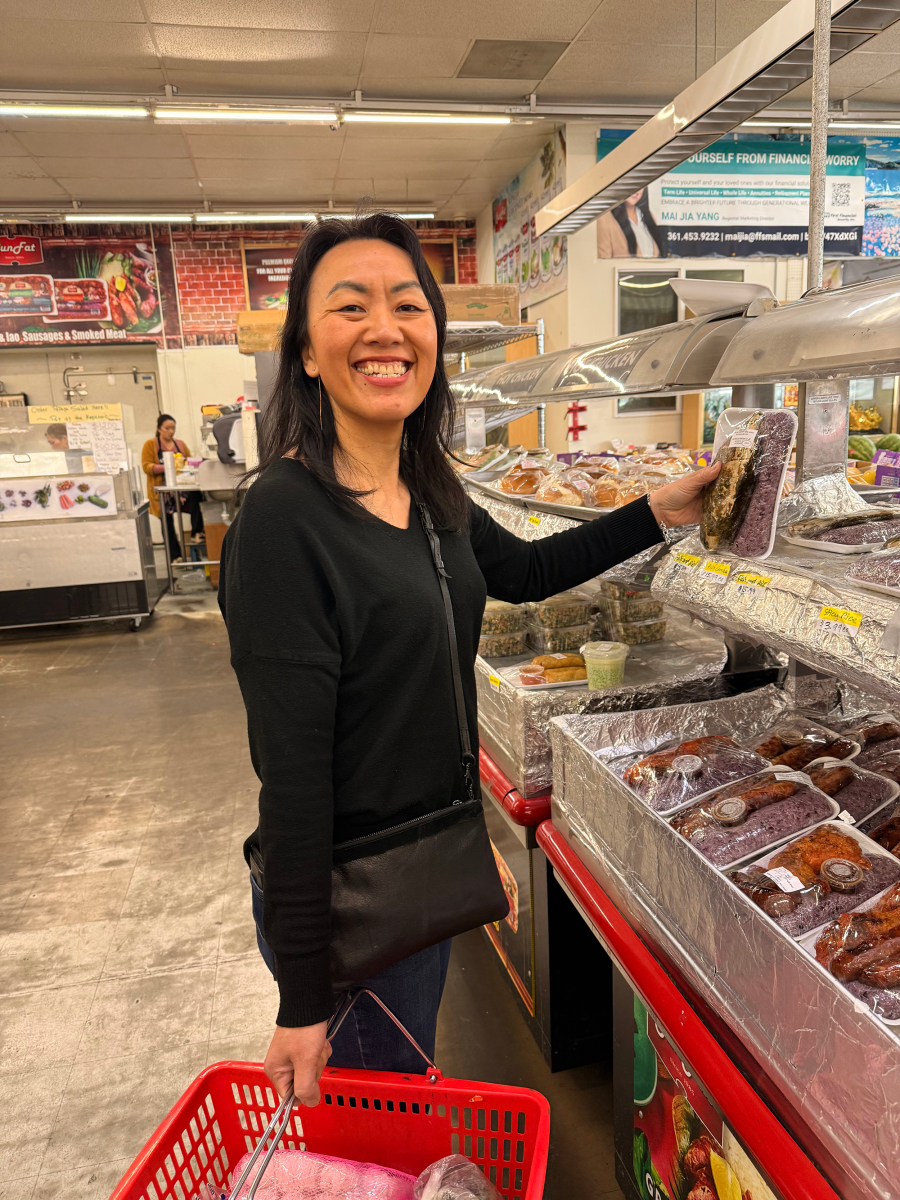
Vang proudly holds up a package of rice rolls and explains how the dish is made by stuffing pig intestines with rice, salt, ginger, and coconut. Other ready to serve dishes one can take to go include grilled fish with herbs and lemongrass, stuffed chicken wings, steamed pompano fish, spicy fish and beef laab, and a kapoon noodle soup set.
A plethora of fresh vegetables cover a significant portion of the store, with kaffir lime leaves, green papaya, numerous fresh greens, citrus, galanga and ginger filling the aisles.
Related: Neighborhood Favorite: South Area Market
Vang sifts through a freezer packed with close to 20 Hmong and Laotian sausage varieties. The varieties vary by sausage maker and level of heat desired, from no spice to extremely spicy. On the next aisle, fresh tofu made right off Stockton Boulevard in Sacramento sits next to sweet fermented rice, pickled mustard greens, fresh bamboo shoots and Pork Skin Jeow Bong Pepper Sauce, manufactured by Delicious Food 2 Go in Oroville.
On the other end of the store, huge stacks of every kind of rice imaginable rise higher than our chests. One brand from Thailand explicitly states it is grown by a Hmong Family in large letters. Rare rice varieties such as purple sticky rice and black rice can be found on the back shelves.
Jimmy’s Deli Soul Food & Hmong Cuisine
On a visit to the other end of Sacramento, close to East Del Paso Heights, Jimmy’s Deli Soul Food & Hmong Cuisine has been serving Hmong classics alongside soul food favorites for over a decade. When one enters the store, it looks like any neighborhood convenience store with sodas, water and pre-packaged snacks, but towards the back, a large kitchen boasts mouthwatering food served from a counter.
The Hmong food Jimmy’s provides consists of Hmong sausage, pork belly, papaya salad, egg rolls and a cucumber salad with shredded green papaya, green beans and tomatoes, all served with traditional Hmong sticky rice.
Lue Thao is the owner and manager of Jimmy’s Deli Soul Food &
Hmong Cuisine. (Photo by Gabrielle Myers)
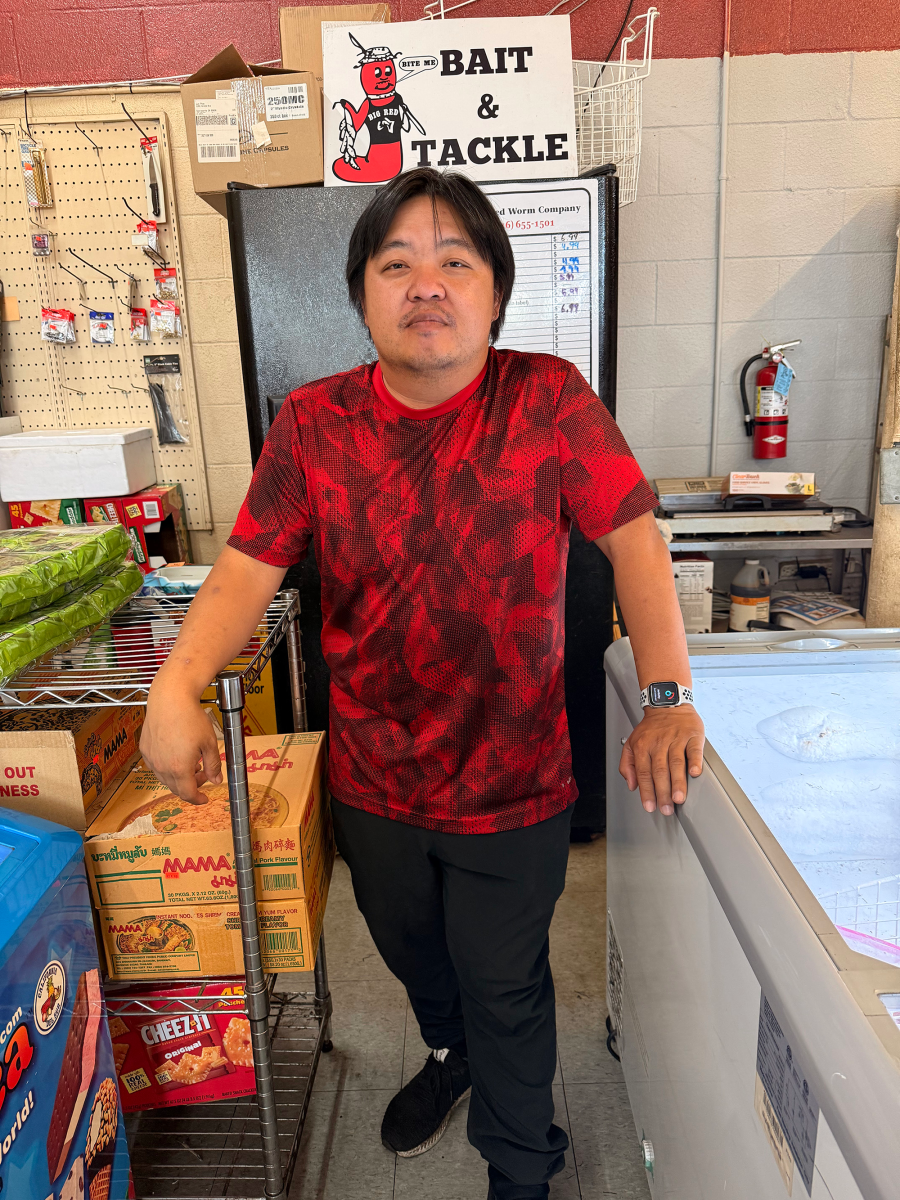
The owner and manager, Lue Thao, says that the dishes can be made as spicy as one wants, “up to 20 peppers in heat.”
Thao describes how his mother “used to work at the JC Penny warehouse in the neighborhood, but in 2012, when it closed down and moved to North Carolina,” she bought Jimmy’s. As the Thao family is Hmong, they would occasionally put Hmong dishes on the catering menus with the soul food, which ignited the community’s desire for this authentic food. Due to this increased demand, in 2015 the family decided to offer a full Hmong menu.
Thao expresses how “he grew up in this neighborhood and used to come here as a kid.” He explains how there used to be an arcade in the back where he and his friends would play games in during the late 1980s to early 1990s.
Jimmy’s juicy and tangy papaya salad and savory meats shine bright in this neighborhood where the Thao family maintains deep connections.
In addition to these three Hmong food spots, according to Vang, the Hmong often have “small pop ups within the community that are communicated by word of mouth.” Vang describes how one older woman might excel at making fermented rice balls and another might make delicious squash shoot soup, and a sharing of these dishes and the process to make them will occur, both strengthening and reinforcing Hmong food traditions within that community.
“In the Hmong community, there’s a sharing of knowledge, a passing down of recipes from woman to woman. If we eat something amazing and learn how to do it, we’ll train another, teach each other how to make it,” Vang says. “We have a very strong-knit community in the sense that we share what we have.”
–
Never miss a story: Get Comstock’s weekly newsletter delivered to your inbox.
Recommended For You
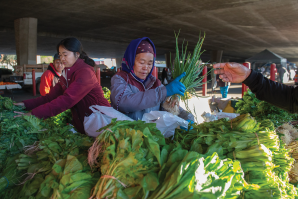
Why One of Stockton’s Biggest Food Cultures Still Flies Under the Radar
Hmong farmers and chefs share their cuisine through markets, restaurants and cookbooks
Hmong food, now served primarily in homes and at markets, may be poised to gain broader attention in the food scene.
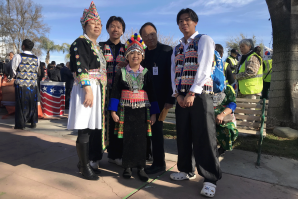
Local Journalist Receives $100,000 Grant to Support Hmong Daily News
Website covers an ethnic community that comprises about 1 percent of the Capital Region’s population
A coalition of funders is trying to save journalism, and one of the first to receive their aid is a little-known website serving a small ethnic community in Sacramento. Eighteen Press Forward grantees were based in California with only one in the Capital Region: Hmong Daily News.
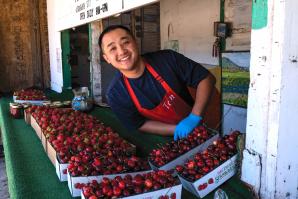
Strawberry Fields Forever?
California’s Iu Mien strawberry farms face a succession crisis
Dust kicks up in a cloud and the sound of gravel crunches as cars and trucks pull into what’s become a summer staple in the Capital Region — fresh strawberry roadside stands. The ramshackle wooden stands, with bright red hand-painted strawberry signs and makeshift awnings to shield workers from extreme summer heat, are typically open seven days a week in peak season.
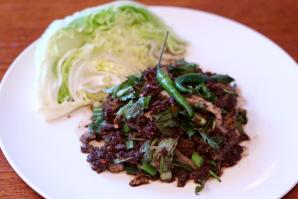
Neighborhood Favorite: South Area Market
Neighborhood Favorite is a new monthly web column that profiles
independent restaurants around the Capital Region to showcase the
diversity and resilience of our local food entrepreneurs. In the
first installment, we visit one of Sacramento’s longest-standing
Lao restaurants.