


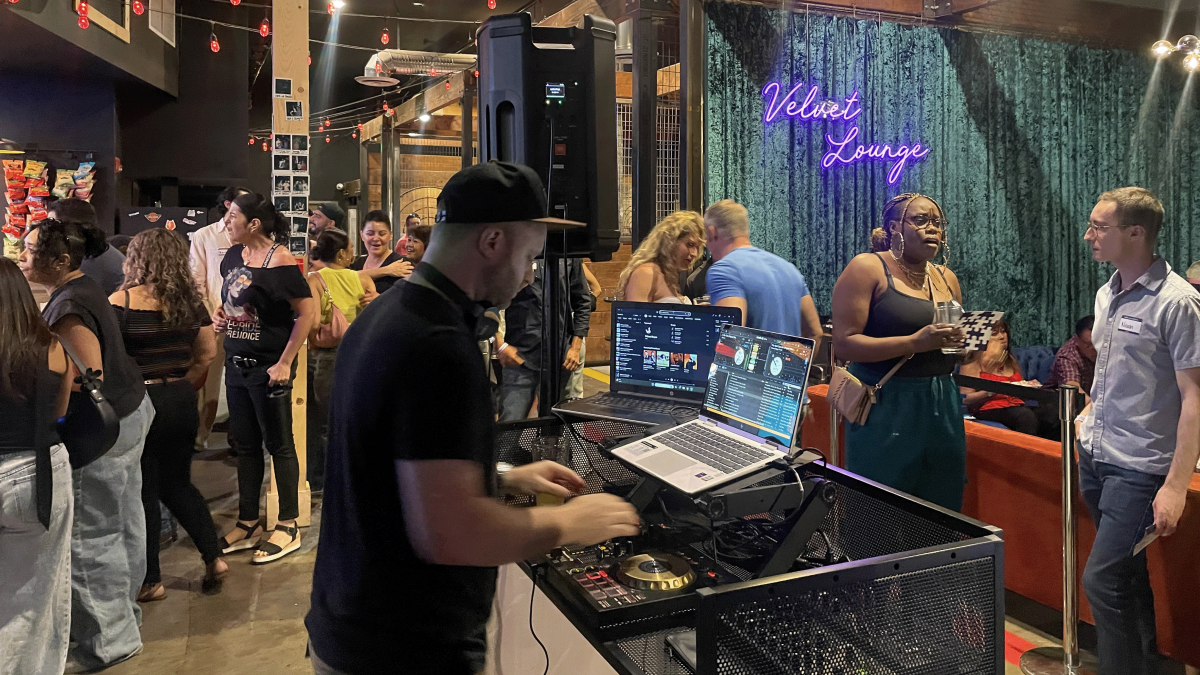
For Sacramento brewery co-owner Katie Cooper, live entertainment isn’t just fun; it’s essential for her business. Mattie Groves Brewery in Midtown regularly hosts events that draw in customers, but some require an entertainment permit from the city. Operating without one could lead to warnings and fines from $250 to $25,000 for each day until the code violation is resolved. The Sacramento Code Compliance Division generally operates on complaints, so Cooper took a calculated risk. She isn’t the only one.
“We’ve been aware since we opened that a lot of places do this, and so it’s generally okay, but technically is not permitted by city rules and regulations,” Cooper says. “That’s always been stressful. And obviously, we want to be compliant, but the entertainment licensing and permitting as it was previously was very expensive and onerous, and it was just not realistic for a business at our scale.”
For over two decades, businesses both big and small in Sacramento had to pay thousands and undergo a rigorous permit application process if they wanted to host a concert or show. But over the summer a new ordinance created a three-tiered system, making it faster and cheaper for restaurants, bars and cafes to get live entertainment permits.
The city instituted its previous entertainment permit in 2003. Permits initially last two years; after one two-year renewal, qualified permit holders could apply for another two-year extension at no cost. There were typically around 70 permit holders at any given time, say city officials. The costs and strict review process deterred some would-be applicants. “This one-size-fits-all kind of approach to entertainment was, quite frankly, being too restrictive on some businesses,” says Dustin Hollingsworth, assistant director of the city’s Convention and Cultural Services, which oversees the entertainment permits.
Related: What’s Missing in Sacramento’s Nightlife Ecosystem
In March, the city council approved an ordinance that created a new entertainment permit system. At that time, program management was transferred from the Code Enforcement Division to the recently created Entertainment Services Division, which is under the Convention and Cultural Services Department. The Office of Nighttime Economy collaborated on drafting the ordinance.
In May, the fees for the three tiers were set: $2,230 for a general permit, $1,820 for a temporary permit (for one-time events) and $750 for a limited permit, which are for venues where entertainment is a secondary operation and the maximum occupancy is under 300. With the limited permit, shows must end at 10 p.m. weekdays, 11 p.m. weekends. The application review process is more relaxed compared to those for the general and temporary permits.
Permit applications opened at the end of July. Once the previous one-size-fits-all permits expire, businesses will have to apply for the general or limited permits. Both permit types last two years. The renewal fee is $1,720 for general and $650 for limited. As with the previous permits, renewals for the new permits last two years and can be extended to four years at no charge.
Even quieter showcases of talent like comedians, dancers, hypnotists, magicians, mimes and theatrical performances require a permit. However, the March ordinance created plenty of exemptions. Recorded music played in the background over the radio, a jukebox or any kind of electronic device is free. But if there’s a DJ present, that requires a permit. Live musicians playing in the background are also free, so long as the sound isn’t amplified and doesn’t require a ticket to experience. Spoken word events including book signings/readings, poetry recitations and trivia contests are also exempt.
Related: Twin Lotus Thai Jazzes up Local Music Scene
The city intends for the more accessible limited permit to draw in new applicants, eventually growing to around 30 to 50 holders in total. But four months after launch, only three businesses have applied. Officials attribute this to a lack of public awareness in spite of media coverage and public announcements. “We’d like to see a better public response,” Hollingsworth says. “Everybody seems excited about it, but the applications that are coming in aren’t a complete reflection of that.” The city will launch an informational campaign sometime next year.
Documents obtained via public records requests show the three limited permit applicants are Uncle Vito’s Slice of NY, the Brazilian cafe Tupi and the ax-throwing lounge ForePlay. The owners of the pizzeria did not respond to interview requests, but owners of the other two said they applied only after discussions with the city.
Back in September, ForePlay owner Doug Link was hosting a DJ for a private event when code enforcement stopped by. DJs have occasionally performed at the K Street bar in recent years, but this was the first time Link received a citation for having entertainment without a permit. He was surprised, calling it “a kick in the ass.” Link quickly got to work remedying the issue but struggled. He said the old entertainment permit didn’t seem worth the effort and was “outrageously expensive.” But then someone told him about the new limited permit, and his application was approved within six weeks of submission.
Eduardo Faustino, owner of Tupi, says he had a positive
experience applying for a limited entertainment permit. (Photo
courtesy of Tupi)

As for the Entertainment Services Division, Link emphasized, “they were all a pleasure to work with, and they more than met their deadlines. And I’m very pleased, and I don’t get the chance to say that a lot with the city of Sacramento, so I would like to say it here.”
Eduardo Faustino, owner of Tupi, also had a positive experience with the city. He has hosted live music on Tupi’s rooftop bar without a permit for over a year, which he says the city was aware of. In September, when the city reached out to inform him of the limited entertainment permit, he applied to ensure his business was aboveboard. Faustino said he wishes the fees were cheaper, but for him it’s worth the money.
Related article: Neighborhood Favorite: Tupi Coffee
“Having entertainment, it’s something that helps the rooftop get business,” Faustino says. “And for us, it’s very necessary to have that kind of freedom. I just want to make sure that we are compliant with the city code.”
With the limited permit, Faustino plans to host more live music, especially DJs and bossa nova and jazz bands. He said entertainment helps draw in customers and supports local talent. “For us, it’s always a win to have live music.” Over time he hopes to establish Tupi as a place known for “good music, good food, chill vibes.”
The owners of Crest Theatre expressed interest in acquiring a
limited permit for Empress Tavern but say the idea is on hold.
(Shutterstock photo)

As for Cooper and her brewery, each week they currently host a game night, a trivia night (both exempt from the permit) and an open-mic night, which does require a permit. Unlike the old system, Cooper said the limited permit seems “attainable,” and she plans to apply before the new year. Maybe someday the brewery could host concerts or ticketed shows. For now, Cooper needs to save up to cover the application fees.
“I know it doesn’t sound like a lot, but dishing out $750 is something that just takes some planning and some coordination,” Cooper says. “For us, we’re running a tight ship, so we just need to save up a little bit.”
Corrections Dec. 19, 2025:
- A previous version of this article stated that entertainment permits were previously under the purview of the Office of Nighttime Economy. They were managed by the Code Enforcement Division.
- A previous version of this article stated that the Office of Nighttime Economy is under the Convention and Cultural Services Department. It is under the Office of Innovation and Economic Development.
- A previous version of this article misstated the previous fees for limited and general permits.
–
Stay up to date on art and culture in the Capital Region: Follow @comstocksmag on Instagram!
Recommended For You
What’s Missing in Sacramento’s Nightlife Ecosystem
City leaders and industry veterans say the state capital needs more live entertainment venues. The solution? A construction project and changes to city code
Channel 24 is a new indoor midsized venue that aims to fill a gap in Sacramento’s live entertainment ecosystem. Meanwhile, the city wants to make it easier for restaurants to host live shows. Will it be enough to fill the voids in the market?

Late-Night Dining Returns to Sacramento
After a pandemic slump, it’s again possible to get a meal past midnight in the capital
When the pandemic put a plug on nightlife, some of the spots that fed that world either whittled down their hours or closed outright. In the past few years, though, options have been respawning on the grid and surrounding areas. Their colorful, contagiously optimistic atmosphere echoes the mood of Sacramento nightlife’s post-pandemic resurgence.

Free Parking?
How Sacramento is prioritizing housing for people over housing for cars
After decades in thrall to the car, local developers and legislators are beginning to rethink parking and the role it should play in the city.
Why Are Big-Name Bands Playing at These Mountain Town Venues?
Venues in Nevada City and Grass Valley attract name acts, and the scene could be growing
Quietly, a robust live music scene has emerged in the foothills, with several venues able to draw in well-known acts. And if the changes in Grass Valley are emblematic of another thing, it’s that this sector is growing.