


This story is part of our September 2026 issue. To read the print version, click here.
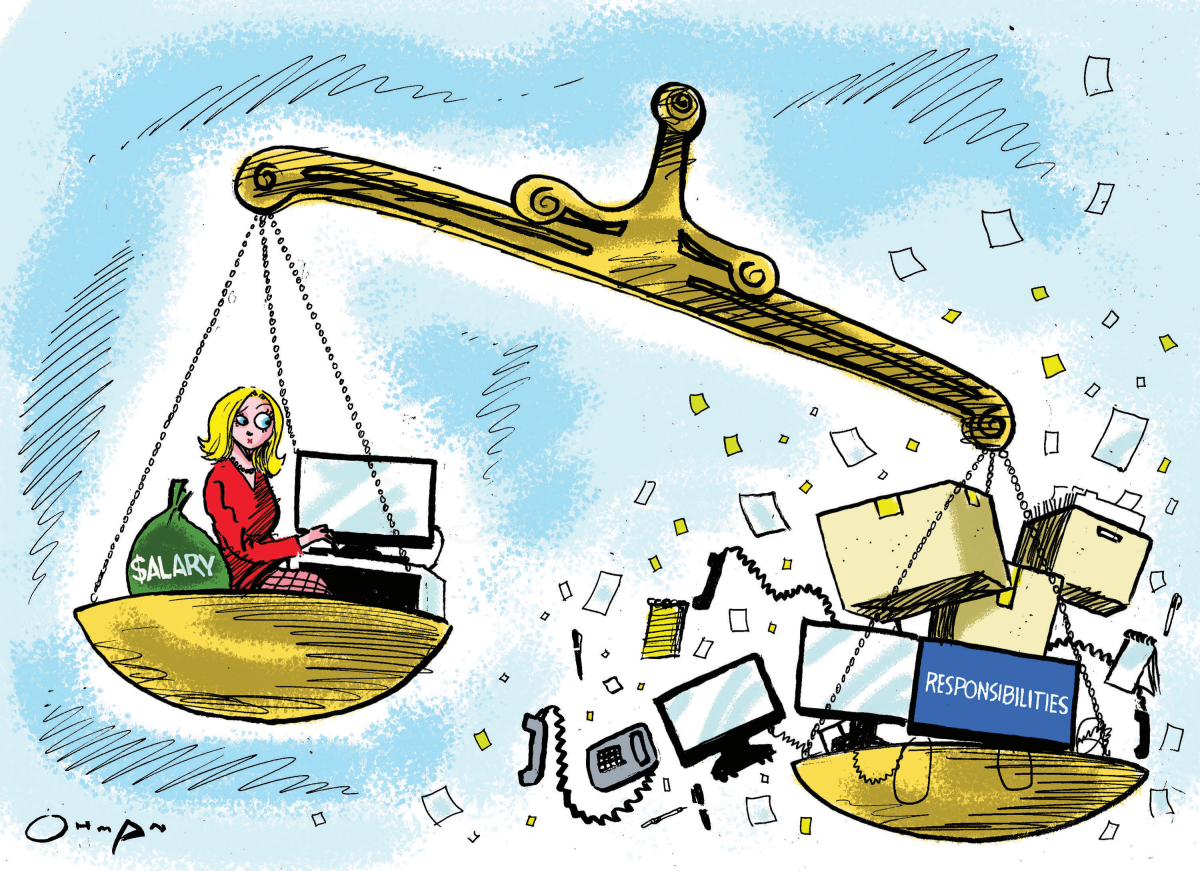
The position was presented at one level during the hiring process, but the responsibilities feel significantly broader and more aligned with a higher-level role. Plus, the last person in the role had a higher title and salary than I do, even though the job descriptions are identical.
The challenge: My compensation is meaningfully lower than what I understand to be appropriate for the role.
I genuinely like the organization, the culture and my leader, which makes this more nuanced. I want to approach this thoughtfully and professionally.
How long should I wait before addressing a gap between scope and salary? (I didn’t negotiate the salary because it was 10 percent higher than the range on the job description — even though it was less than my last job. Plus I was desperate, out of work for over a year.)
How do you frame the conversation in a way that is constructive and likely to be well received?
It can feel really demoralizing to start a new job and realize you’re being underpaid. Plus, it’s super annoying when what was promised in the interview doesn’t match up with real life.
Let’s break down all the moving parts.
The job is more complicated than you thought it would be
This could be because your hiring manager knew that she couldn’t hire someone at the salary they had to offer, so everyone lied to you in the interview.
Companies lie all the time about what a job entails in order to recruit someone in their price range. But there’s another option, which probably makes sense here: Your boss and everyone else in the company underestimated how much work this position really is.
They probably didn’t realize how much work your predecessor did, so when she left, they were like, “Eh, this doesn’t need to be a senior position, and we can knock the salary down a bit.” You said they did end up paying you more than the listed salary, which means they realized they couldn’t find anyone for what they wanted and had to jump it up.
When speaking with your boss about a change in job description or a bump in salary, assume that the mistake was made in good faith. Managers often don’t understand the full scope of a job, especially when there is someone competent in the role. Things just get done — they don’t really understand how.
Having the conversation
Conversations like these are never easy, so preparation is your best bet.
- Figure out what’s most important. Is it that the salary is too low or that the responsibilities are too high? If you can only correct one of those, which one would it be? You have a much bigger chance of getting one of these than you do of getting both.
- Reset your expectations. There aren’t magical formulas for salaries. You earned more in your last job, but then it took you 14 months to find this one. Which may mean the salary you are receiving is the right one for the job. If you could walk out today and find a different job at a higher salary, then that’s the market telling you you’re underpaid. But I suspect you cannot. The current job market is tough, and you’re lucky to have found a role that mostly satisfies you. So, unless you’re willing to walk away, you can’t be too demanding.
- Assume the best. If you go into the meeting with a chip on your shoulder, it will show, and it will make the conversation more difficult than it already is.
- Approach this as part of a check-in. You’re new to the job, so lots of things will be new, and it’s not a surprise that not everything was as you expected. That said, you like everything about this job except for the mismatch between pay and responsibilities.
When you check in with your boss (a 90-day or six-month check-in would be great!), focus on how things are going and get her feedback on how she perceives your performance. If she thinks you’re failing miserably, then now is not the time to ask for more money.
In that case, you can bring up this point: “This job level seems to be higher than the written description. Can we talk about doing a level reset or prioritizing the responsibilities?”
If your boss praises your work and seems satisfied, then it’s time to take this route: “This job level seems to be higher than the written description. Can we talk about a salary adjustment that better matches the actual workload?”
Regardless, you’re not walking away from this job, so keep it positive. If your boss is hesitant to make changes, schedule a follow-up and prepare to revisit later.
–
Stay up to date on business in the Capital Region: Subscribe to the Comstock’s newsletter today.
Recommended For You
Dilemma of the Month: How Do I Handle an Anonymous Complaint?
The Evil HR Lady offers a step-by-step guide to addressing employee complaints
If you ignore anonymous complaints, you not only put the company at more legal risk, but also let employees know you didn’t take it seriously.
How Do You Terminate a Remote Employee? Do They Need to Come in if They Live Locally?
Dilemma of the Month: The Evil HR Lady talks reductions in force
First, I’m sorry you have to lay off these employees, but here are the things you need to think of.
Is Beer at Work a Problem, or Is It a Sign of Something Bigger?
Dilemma of the Month: An HR manager's workplace battle exposed a bigger issue
After raising concerns about workplace drinking, an HR manager found herself questioning her relationship with the company president.

Two Employees Are Clashing Over Loud Music in the Workplace. How Do We Keep the Peace?
Dilemma of the Month: The Evil HR Lady discusses 'toxic accommodations'
What should you do about an employee who likes music so loud it can be hard to hear customers — and accuses people of harassment if they ask to turn it down?