


This story is part of our April 2026 issue. To read the print version, click here.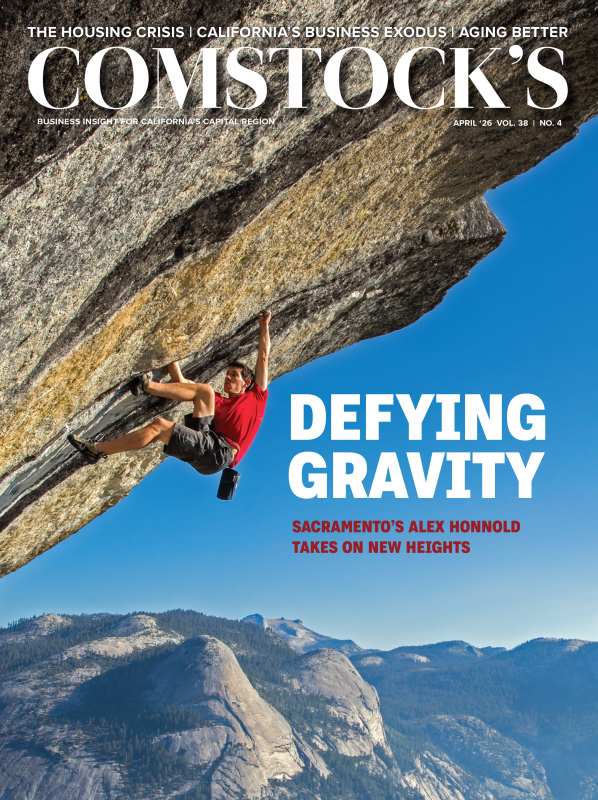
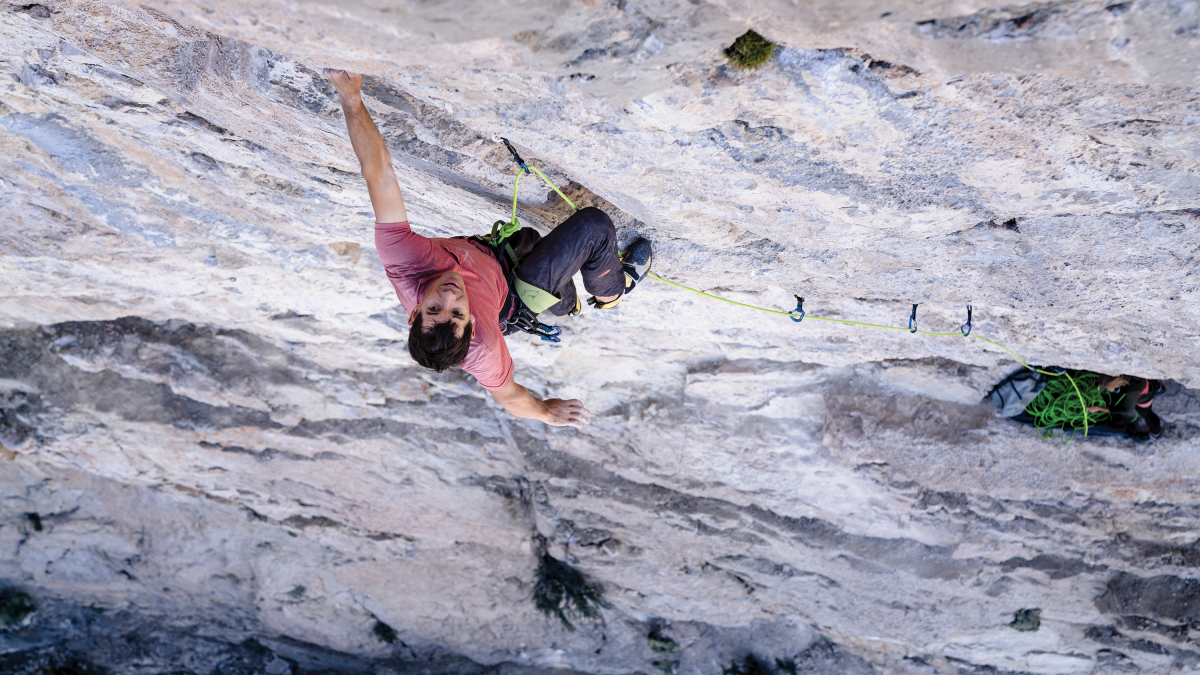
Alex Honnold prefers ascending the sheer walls of Yosemite, Denali or Patagonia. But when giant rock formations or a skyscraper are unavailable, a 15-by 6-inch piece of tulipwood, embedded with a variety of small, narrow holes, works well.
The world’s most renowned rock climber — sometimes without safety equipment — Honnold has spent the past 30 years stretching and lifting his body on fingerboards. With names like Beastmaker 2000, Frictitious Megalith, BananaFingers and Trango Rock Prodigy, every climber seeking improvement works these fingerboards. The various angled indentations of the apparatus for finger grips are essential to training.
Uncanny arm and leg strength are extreme flexibility requisites. While using as few as two fingers, climbers utilize hangboard workouts to replicate the often millimeter-thin depth or lack thereof in rock crevices. The goal is to build specific tendon and muscular strength to maintain tiny, often unforgiving holds. One whole-hand gripping style is called the “meat hook.”
“Basically, climbing comes down to being able to hold onto the rock,” Honnold says in a recent telephone interview with Comstock’s. “It’s kind of the most important thing. Obviously, going climbing is the best way to practice. But in the absence of actually climbing, something like a hangboard is one of the most specific ways in which you can train.”
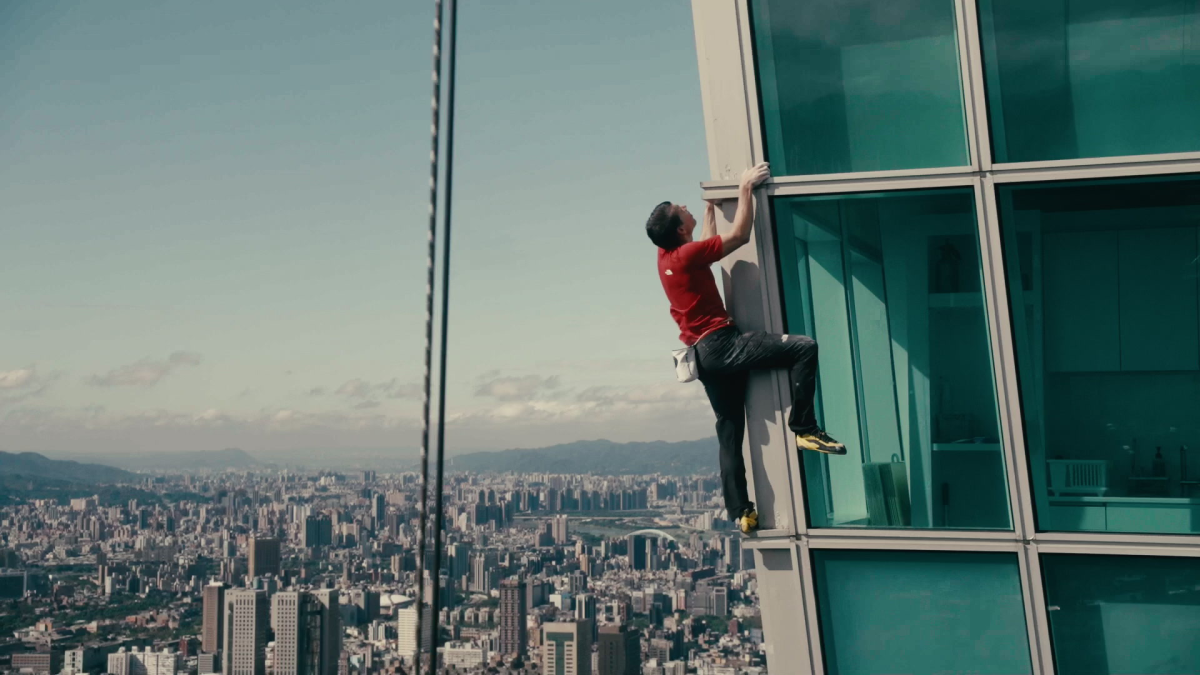
The 40-year-old Sacramento native is a husband and father of two young daughters who now lives in Las Vegas. In January, he added to his growing legend by climbing Taipei 101, the tallest building in Taiwan, without ropes. It was broadcast live (with a 10-second delay if the climber fell) on Netflix, with an audience of 6.3 million. The skills and fearlessness needed for the climb added to Honnold’s reputation as one of the best athletes in the world.
He trained while climbing in several countries and in Red Rock Canyon, a conservation area 17 miles west of the Las Vegas Strip. He also visited China several months in advance for a reconnaissance climb during which he often waved to onlookers far below.
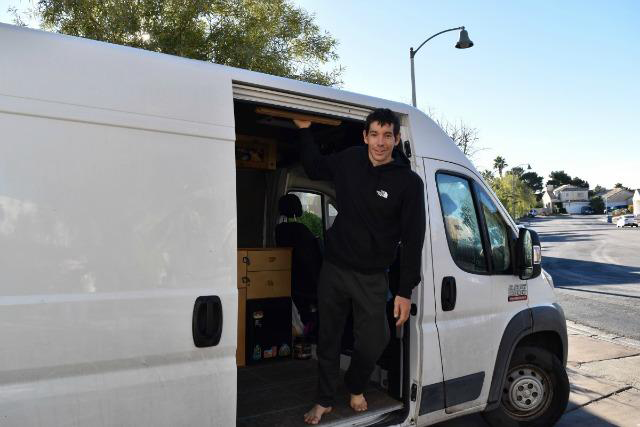
Honnold lived out of vans for several years, preferring their
convenience to travel to rock climbing destinations. (Photo
courtesy of Bruce Aldrich)
Honnold trained compulsively with stationary wooden mounts. He’s had the contraptions in two of the three vans he’s owned and lived in for years. He also has a small portable style, called an edge, for hotel room workouts.
Climbers most often excel in solitude or with a partner. Honnold holds multiple solo records and has team records with best friend Tommy Caldwell. He has several other climbing partners, including Sacramento professional Carlo Traversi. Solo and with partners, Honnold has done thousands of climbs around the world, the majority in obscurity.
But three of Honnold’s free solo exploits — climbing with hands and feet alone without ropes, harnesses or protective gear — changed everything.
Honnold’s climbing prowess first attracted a mainstream audience in 2011 in a 13-minute “60 Minutes” segment. The show set up his ascent of Half Dome in Yosemite National Park, a two-hour free solo trek, which was then the sport’s first. With former correspondent Lara Logan as the interviewer, the broadcast was compelling.
Related: Touchstone Brewing Company Climbs High: A microbrewery opens alongside Sacramento Pipeworks climbing gym
The climbing community knew of Honnold’s unique traits. His laid-back style resulted in an acronym nickname, “NBD,” or No Big Deal. But the segment was Honnold’s introduction to the world. His large dark eyes appear perennially curious; his short black hair is perfectly unkempt. His 5-foot-11, 160-pound frame is sinewy and lean. Logan inquired about the climber’s perceived large hands. They’re not. But his fingers are wide, as if 20 digits are molded into 10.
In 2017, Honnold became the first person to free solo El Capitan in Yosemite. The effort, which the climber planned for eight years, took three hours and 56 minutes. The intimate footage of Honnold ascending the nearly 3,000-foot route was the focus of the 2018 Academy Award-winning documentary “Free Solo.”
“Many of the gyms in Sacramento I grew up in still exist, so I still have a soft spot for where I grew up.”
— Rock climber Alex Honnold
His recent Taipei 101 climb was broadcast as a sporting event with several announcers, including professional wrestler Seth Rollins. It showed Honnold at close range ascending the 1,667-foot, 101-story, largely metal skyscraper. It took 91 minutes.
Recreational indoor and outdoor climbing is a mainstream family activity. Professional climbing is an outlier. Speed climbing made its debut at the 2020 Summer Olympics in Tokyo (it was held in 2021 because of the pandemic). USA Climbing is the national governing body, managing competition and team selections. The sport will return in the 2028 Summer Olympics in Los Angeles.
But the majority of pro climbers in the United States and internationally are as far removed from the status quo as the remote peaks they challenge.
Honnold scaled Taipei 101 in January, an event broadcast live by
Netflix that had anxious viewers around the world holding their
breath. He took a selfie at the top. (Photo courtesy of Netflix)
“A lot of us operate more independently,” says Sacramento-based climber Traversi, who estimates the country has fewer than 100 men and women pro climbers. “But most of those aren’t making a living. If you’re looking at those making a living, it might be 20 to 30.”
Traversi, 37, founded The Boulder Field climbing gym in Sacramento in 2018. Beyond his success in multiple climbing disciplines, he’s a photographer and filmmaker. He has also trained with Honnold for years.
“It was a sub-category of our sport,” says Traversi of Taipei 101. “There are a lot of similarities between what happens when you climb a building and when you are climbing rocks. But there are a lot of differences as well.”
He adds, “I definitely consider what Alex did as more of a spectacle, like a show and not necessarily a sporting event. I thought it was cool. I talked with Alex in the fall. He just seems intrinsically motivated to do it regardless of the show and the money and all those factors.”
Honnold, who was raised in Carmichael and graduated from Mira Loma High School, began climbing as a child. A family tale has his mother, Dierdre Wolownick, discovering her son at age 2 on top of the family refrigerator and, within a few years, on the home’s roof.
Wolownick climbed as a youngster and returned to the sport in 2009. She climbed El Capitan (with safety equipment) at age 66 in 2017 and has continued climbing into her 70s. She moved from her long-time Sacramento home to Las Vegas to be closer to her grandchildren. It’s resulted in her son less frequently visiting the area where he once regularly trained in local gyms, including frequent workouts at Sacramento Pipeworks.
Related: Filling a Niche: Boutique gyms are helping satisfy the growing demand for unique workouts with activities such as rock-wall climbing and mixed martial arts
“It was very difficult to raise a kid like that because he was dedicated to getting vertical when he was born, just as he is now,” Wolownick said in an interview with this writer in 2018 after her son’s El Capitan ascent. “If I had known what he was going to wind up being, it would have been easier.”
“Alex and his sister kept wanting to go up on the roof, and I was saying, ‘No, no, no.’ He was only 5. Who lets their 5-year-old go up on the roof? I knew he did it. He went up, and he came down, and he was safe. So I said, ‘The next time you go up there, get all the leaves out of the gutters.’ So now every time he comes home, he goes up on the roof and cleans out my gutters.”
Honnold’s mother also first took her son to the Rocknasium in Davis when he was 5. When he was 10, Honnold’s father, Charles, who died of a heart attack in 2004, began taking him to Granite Arch Climbing Center in Rancho Cordova as often as five days a week.
Alex Honnold has climbed some of the most difficult routes around
the world. (Photo courtesy of Black Diamond Equipment)
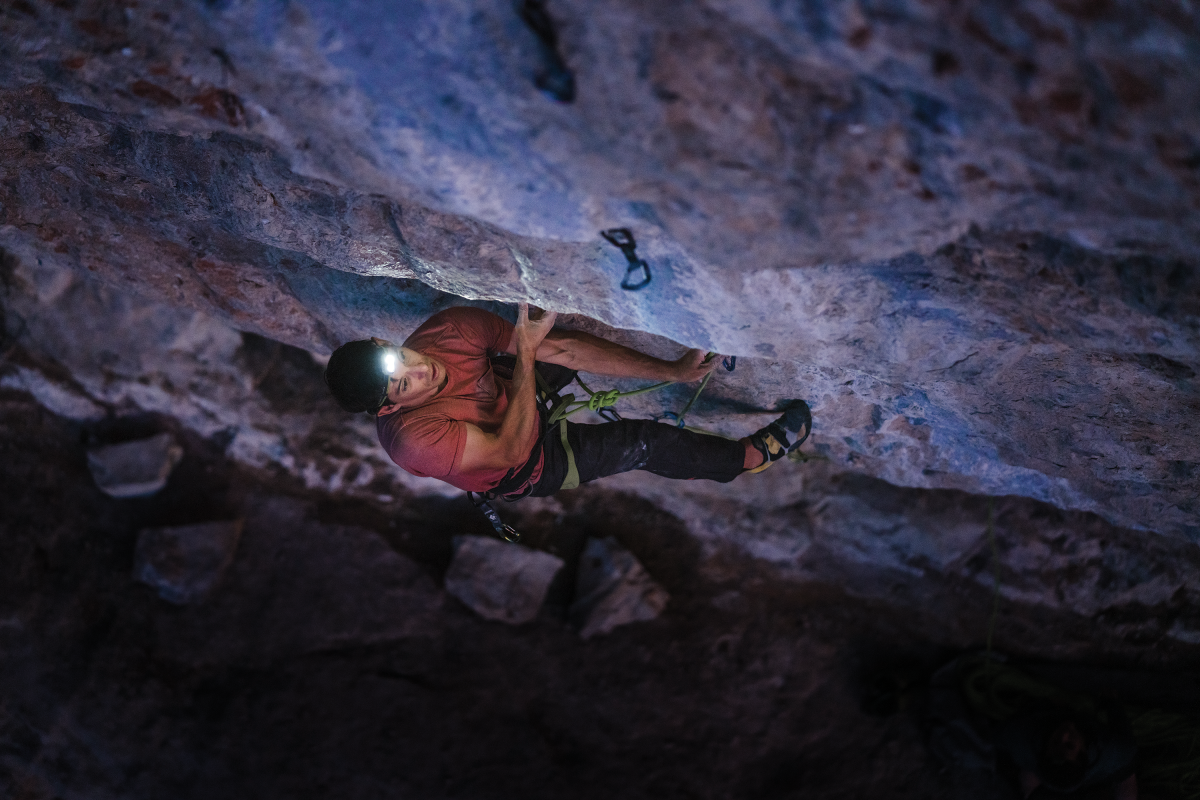
“They used to make fun of my dad,” Honnold says. “I would climb to the top, come down, and climb again. My dad was the belayer (holding the rope). He would have this epic loop of rope stretched across the floor. It was like a joke at the gym, but he would be like ‘whatever.’”
With Honnold’s skills quickly improving, he traveled around the state with his father for junior competitions. Mainstream sports were never part of his youth. He remembers physical education classes and running some, but he had little interest in any sport except climbing.
The death of his father (his parents had divorced) and both grandfathers within a few years were troubling. Honnold left UC Berkeley after his freshman year, took the family’s well-worn 2002 Ford Econoline van and began his climbing pilgrimage.
“It was a heavy family time, but I think the main thing I took away from that is a reminder that life is short,” Honnold said during a 2018 talk at the University of Southern California Performance Science Institute. “You should do the things you want to do. It was a reminder that you don’t have forever.
“I should do the things I want to do,” he continued. “That’s the biggest lesson I’ve taken from all of that. But climbing is just a fundamentally dangerous sport. I have had a lot of friends die in various accidents. This past year has been particularly grim. You’re constantly reminded. Every time something like that happens, you’re asking, ‘Am I doing the right thing? Am I doing what I want with my life? Am I making the right decisions? Am I on track?’”
Honnold’s climbing wanderlust lasted nearly a decade. He drove nearly 200,000 miles around the country, purchased bags of pasta for 69 cents at Walmart and was perfectly content at dinnertime. He earned less than $1,000 a month. The climber started the Honnold Foundation in 2012, giving one-third of his earnings to environmental concerns. It’s now raised more than $13 million.
Related: Northern California ‘Horse People’ Spare No Expense for Their Passion
Honnold’s nomadic life changed dramatically shortly after the “60 Minutes” broadcast. The segment, which aired three times, had a viewership CBS estimated at 20 million.
“At the time, the producer was like, ‘This is going to change your life,’” Honnold says. “I was like, ‘No way. How can a TV program change your life?’ And it kind of did change my life. All of my social media exploded. I did get a lot of corporate and public speaking-type offers. All of a sudden, I just had a lot more public exposure.”
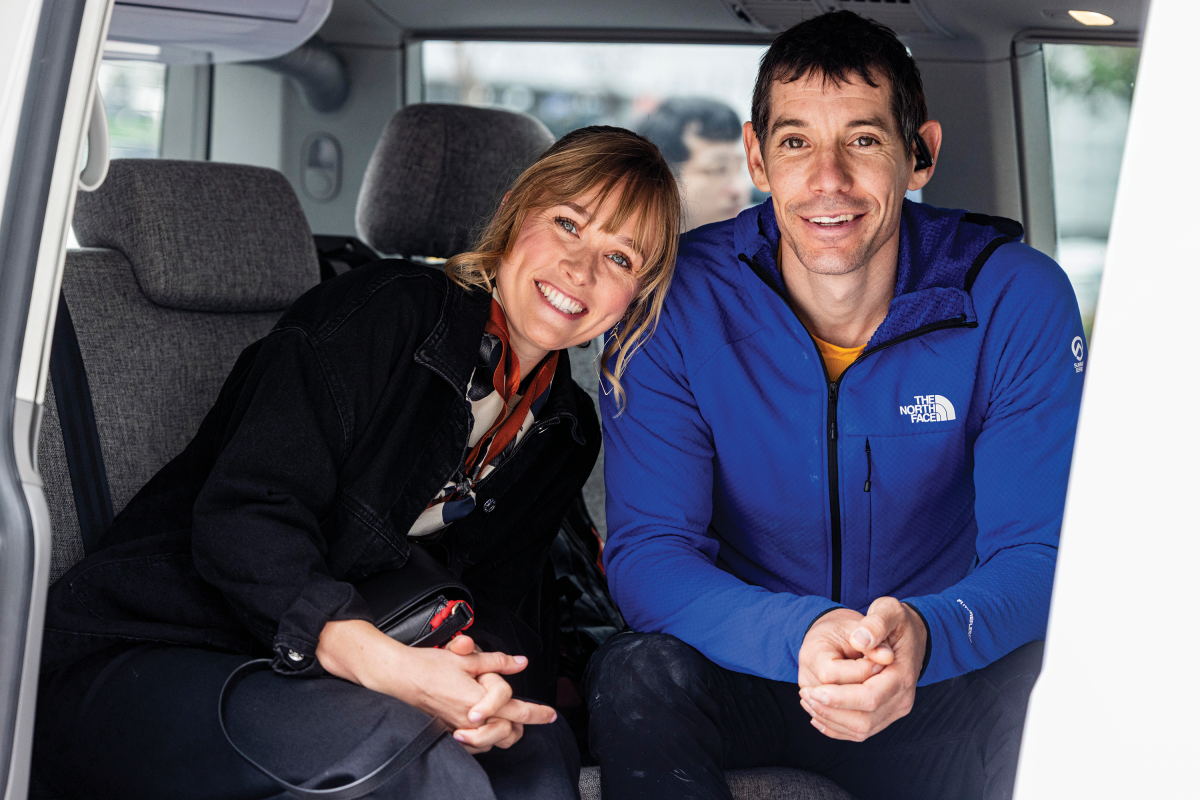
Corporate sponsorships arrived. Public speaking engagements, including a TED Talk and corporate presentations, were scheduled around his climbing conquests. Honnold purchased a new van. He wrote and co-wrote books and appeared at book signings, often staying twice as long as scheduled. He met his wife, Sanni McCandless Honnold, at a book signing in Seattle in 2015. The couple moved to Las Vegas in 2017 and married in 2020. Their daughter June was born in 2022; Alice followed in 2024.
Honnold met his wife, Sanni McCandless Honnold, at a book
signing. They married in 2020 and have two daughters. (Photo
courtesy of Netflix)
Honnold, who also hosts a podcast and co-hosts an outdoors-oriented cable network travel program, was so accustomed to living in a van that hotel stays took adjustment. He says the bathrooms were “far away.”
Through his 30 years in the sport, Honnold has had several, albeit infrequent, incidents. In 2012, Honnold had a plan to climb all 15 peaks in California with 14,000-plus feet of elevation. One day, he was on North Palisade in the Eastern Sierra and in trouble.
“Basically, this rock was falling on me, and I sort of Super Mario-styled it and triple-jumped down some ledges, and I stuck this ledge,” he says. “It was 6 feet, then 5 feet, then 4 feet farther. The rock went down my arm and scraped my leg. But I was fine. I was a little shaken up and a little concerned. But I didn’t fall off the mountain. That kind of stuff happens sometimes.”
The percentage of accidents among free soloists is small because a mistake of any consequence is likely a climber’s last.
Climbing magazine reported 68 free solo climbing deaths occurred in the U.S. in 60 years, beginning in 1950. Thirty deaths occurred via falls, 23 because of avalanches and 15 because of bad weather or heart attacks.
The niche within the niche sport doesn’t have an international governing body. Accident data is compiled from national park reports, climbing magazines, alpine clubs, news articles and climbing forums. Between 1980 and 2017, when Honnold free-soloed El Capitan, at least 13 prominent climbers had fallen to their deaths.
Last October, Balin Miller, 23, of Alaska, died on El Capitan when he accidentally rappelled off the end of his rope following a solo climb of a route called The Sea of Dreams. According to multiple reports, Miller’s effort was livestreamed on TikTok by an enthusiast in Yosemite Valley who didn’t know the climber. Miller fell 3,000 feet to his death.
Honnold is asked constantly about the dangers of his job. He doesn’t avoid discussing it, nor does he dwell on it. He completed his first free solo climb in 2005 and retains the discipline as a small segment of his occupation.
Related: Sacramento’s Daniel Susac Makes San Francisco Giants Roster Ahead of MLB Debut
After he completed his El Capitan ascent, Honnold rested for a short while, then called McCandless Honnold to share the news and inform her he’d be home in about six hours. After descending, he greeted a friend who asked Honnold what he was going to do. The climber replied that it was a good time for a hangboard workout.
While Honnold travels the world seeking his next climb, his schedule and family responsibilities means infrequent trips to Sacramento.
“But when I do go, I definitely go to the gym (Boulder Field),” he says. “I tend to go there because it’s a nice facility, and it’s owned by a friend. But many of the gyms in Sacramento I grew up in still exist, so I still have a soft spot for where I grew up.”
–
Stay up to date on business in the Capital Region: Subscribe to the Comstock’s newsletter today.
Recommended For You
Touchstone Brewing Company Climbs High
A microbrewery opens alongside Sacramento Pipeworks climbing gym
Ryan Campagna is a long-time climber, a home brewer and now, the founder of Touchstone Brewing Company.
Filling a Niche
Boutique gyms are helping satisfy the growing demand for unique workouts with activities such as rock-wall climbing and mixed martial arts
Thirty years ago, muscle gyms like Gold’s Gym were the norm and the aerobics craze started by Jane Fonda and Richard Simmons was in full swing. Now, the trend has turned full circle, back to boutique centers.
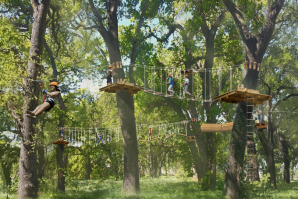
Capital Region’s First Tree-Top Adventure Park is Planned for West Sacramento
In 2016, when husband-and-wife team Kale Wisnia and Catherine Reon were scouting locations for Kletterwald USA — planned as the Sacramento region’s first tree top adventure park — they immediately fell in love with the undeveloped park, just 10 minutes from downtown Sacramento.
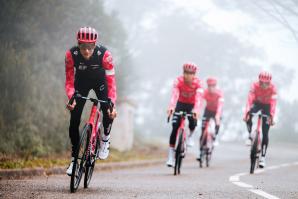
Roseville’s Neilson Powless Gets Ready for His Sixth Tour de France
He was one of only four U.S. riders in 2024 and the first citizen of a Native American nation to compete in the three-week elite race
The former Roseville High School standout long-distance runner is preparing for his sixth participation in the event, beginning July 5. The race stretches across the sunflower-packed flatlands of France, ascends into the snow-covered Alps and Pyrenees and often crosses country borders as if visiting nearby neighborhoods.